All species › Owls › Barn owls › Western Barn Owl
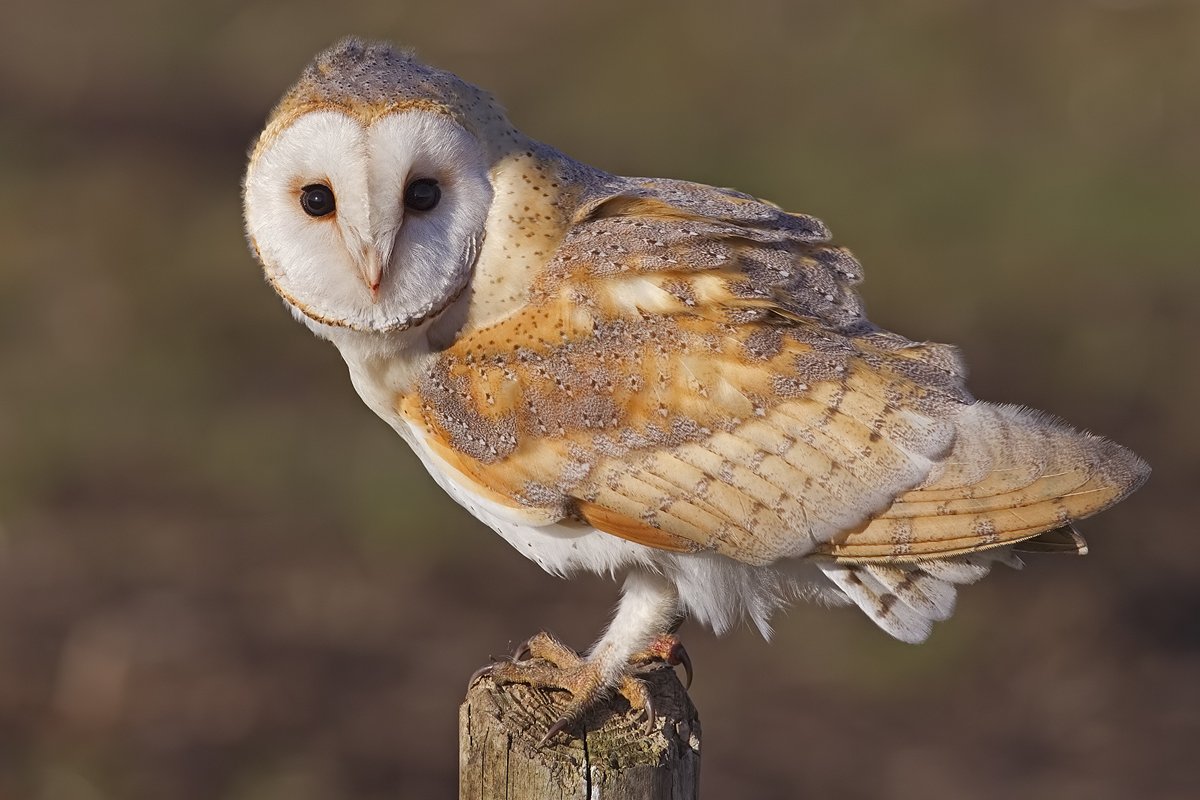
Western Barn Owl | Tyto alba
Kerkuil | Lechuza común
The pale ghost owl of farmland, oases and ruins, found in almost all of the region wherever rodents can be caught. It is common in the Nile Valley, the Jordan Valley and the oases, and in Israel and Jordan it is deployed with thousands of nest boxes as a natural rodent control.
Voice
Not a hoot but a long, hoarse, hissing shriek, shrrreeeesh, often in flight and audible from afar. Young and adults snore and hiss at the nest. After dark, mostly in winter and spring.
Recording: Philippe Grange — CC0 · converted to mono · xeno-canto
Identification
Slim and long-legged, with a large white heart-shaped face and small black eyes. Upperparts golden-brown to orange-brown with fine grey marbling and white specks; underparts white to creamy with at most a few fine dots. Birds of Egypt, the Levant, Iraq and Arabia (erlangeri) are paler and greyer above than north-west African alba. In flight the head looks small and the wings long and rounded, almost white below; flight light and wavering, low over the ground.
Confusion species
In headlights it looks like a big white moth; no other owl in the region is so pale. Short-eared Owl (Asio flammeus) and Marsh Owl (Asio capensis) are browner, with yellow or dark eyes in a rounder face and dark carpal patches. Long-eared Owl (Asio otus) is streaked with orange eyes and ear tufts. Little Owl (Athene noctua) is much smaller and stocky.
Habitat
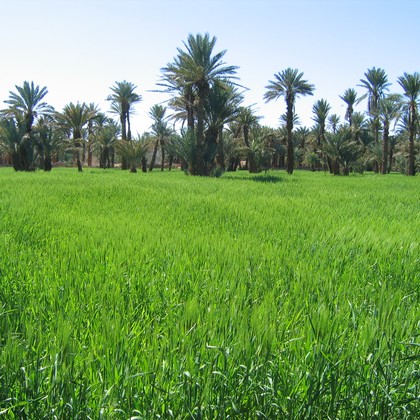
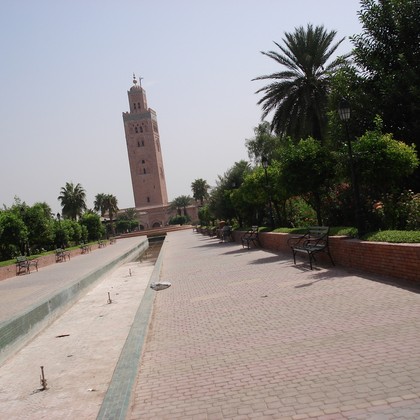
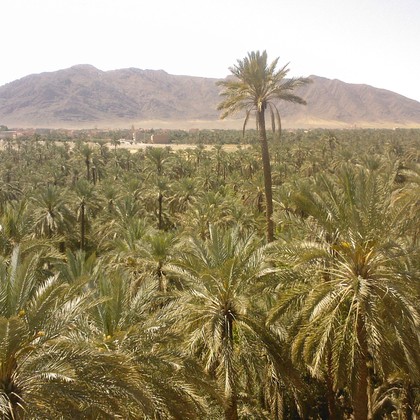
Open farmland, irrigated fields, date groves and olive groves, oases, river valleys and marsh edges; also towns, villages, old forts, ruins and wells. Nests in buildings, minarets, rock crevices, wells, hollow palms and nest boxes. Absent from bare sand desert and high mountains.
Where the bird is most at home, classified by the habitats of North Africa and the Middle East.
Range and movements
Morocco, Algeria and Tunisia: a widespread resident of the coastal plains, high plateaux and the oases of the northern Sahara. Libya: along the coast and in the oases of the Fezzan. Egypt: common in the Nile Valley and Delta and in the oases of the Western Desert. In the Levant common in Israel, Samaria and Judea, Jordan, Lebanon and Syria, especially in the Jordan and Hula valleys. Iraq: common in Mesopotamia. Saudi Arabia: scattered in the oases, irrigated farmland and towns of the interior and the Hejaz; Yemen: in the highlands and the Tihama. Oman, the United Arab Emirates, Qatar, Bahrain and Kuwait: a scarce to locally fairly common resident of towns, farmland and parks, which has increased with the spread of irrigation and building. Beyond the region in Europe and almost all of Africa; related barn owls inhabit the Americas and South Asia to Australia.
- Resident
- Summer visitor (c. Apr–Sep)
- Winter visitor (c. Oct–Mar)
- Passage (Mar–Apr, Oct–Nov)
- dark = core range, pale = thinly spread
How and when to look
Drive slowly after dark along a farm road in the Nile Delta, the Jordan Valley or an oasis and watch posts and verges. In the Hula Valley in Israel the nest boxes in the farmland are a good starting point; birds there sometimes hunt at dusk.
Conservation status
Not globally threatened. In the region it suffers from traffic and secondary poisoning by rat poison, but benefits from irrigation and nest boxes; the cross-border nest-box project of Israel and Jordan is regarded as a model of natural pest control.
Scientific name
Tyto alba | (Scopoli, 1769)
Scopoli described the species in 1769 as Strix alba; because it was later moved to another genus, the author and year stand in brackets. The genus Tyto was introduced in 1828 by Billberg. Tyto comes from Ancient Greek tutō 'owl'. alba is Latin for 'white', after the white underparts and pale face. The specimen the first description was based on came from Friuli, Italy.