All species › Swifts › Swifts › Plain Swift
Plain Swift | Apus unicolor
Madeiragierzwaluw | Vencejo unicolor
A small, dark swift of Madeira and the Canary Islands, which breeds just off the Moroccan coast but is a great rarity on the mainland. Because it is so hard to identify, its status in Morocco long remained unclear; photographed records date only from about 2010.
Voice
A scream like Common Swift's but thinner, higher and more clipped: sree-sree-sreeee, usually in chorus from a party.
Recording: Adrien Peillon — CC BY-NC-SA 4.0 · converted to mono · xeno-canto
Identification
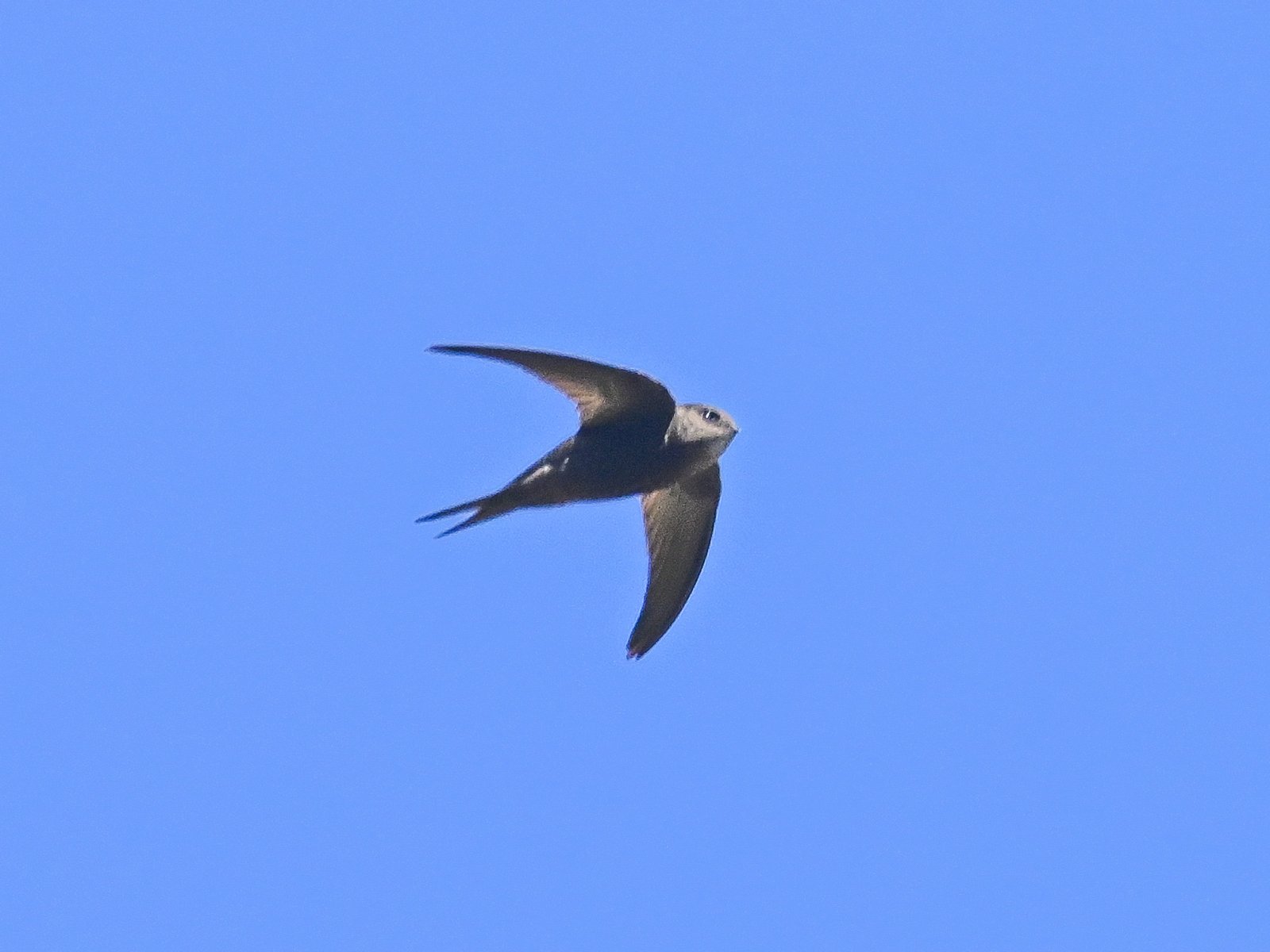
Smaller and slimmer than Common Swift, with relatively long, narrow wings and a long, deeply forked tail: a crossbow silhouette. Uniform sooty-brown to almost black, without markings; the throat patch is small, faint and greyish and vanishes at range. At close range pale fringes give the underparts a finely scaled look. Flight nervous and agile, with fast beats.
Confusion species
Common Swift (Apus apus) is larger and sturdier, with a broader wing base, a shallower tail fork and a clearer pale throat. Pallid Swift (Apus pallidus) is browner and paler, with a large pale throat patch, a dark eye mask and a pale inner wing. Single fly-overs often cannot be named with certainty; a record in Morocco needs good photographs.
Habitat
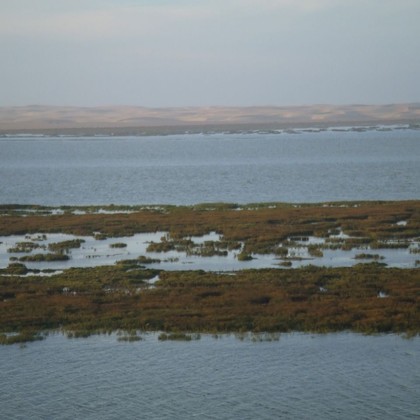
Breeds on cliffs, in ravines and in buildings on the Atlantic islands. On the mainland most likely over the Atlantic coast, sea cliffs and estuaries.
Where the bird is most at home, classified by the habitats of North Africa and the Middle East.

Range and movements
Morocco: rare; photographed records since about 2010, mainly along the Atlantic coast, and one report possibly indicating breeding, but breeding is unconfirmed. Canary birds tracked with geolocators head first east and then far south after breeding, probably across Morocco, Western Sahara and the western Sahara Desert, so the species is likely more frequent there than the number of records suggests. Reports from Saudi Arabia have been rejected; there are no certain records elsewhere in the region. Beyond the region it breeds on Madeira, Porto Santo, the Desertas and all the large Canary Islands; some winter in West Africa.
How and when to look
The best chances are on the Atlantic coast from Tarfaya to Agadir and the coast of Western Sahara, especially in early spring and autumn with easterly winds. Wait for a bird coming low along a cliff with the sun behind you, and photograph it.
Conservation status
Not globally threatened; the island populations are stable.
Scientific name
Apus unicolor | (Jardine, 1830)
Jardine described the species in 1830 as Cypselus unicolor; because it was later moved to another genus, the author and year stand in brackets. The genus Apus was introduced in 1777 by Scopoli. Apus is Latin for a swift, from Greek a- 'without' and pous 'foot', the ancients taking it for a kind of swallow without feet. unicolor is Latin for 'of one colour', from unus 'one' and color 'colour', after the uniformly dark plumage. The specimen the first description was based on came from Madeira.