All species › Gannets and cormorants › Cormorants › Socotra Cormorant
Socotra Cormorant | Phalacrocorax nigrogularis
Socotra-aalscholver | Cormorán de Socotora
A slim, dark marine cormorant found only in the Persian Gulf, the Gulf of Oman and the Arabian Sea: a true speciality of the region. It breeds in huge colonies on bare desert islands and fishes in long flocks on shoals of sardines and anchovies.
Voice
Almost silent away from the colony. In the colonies a constant low grunting, coughing and hissing from thousands of birds at once.
Recording: David Darrell-Lambert — CC BY-NC-SA 4.0 · converted to mono · xeno-canto
Identification
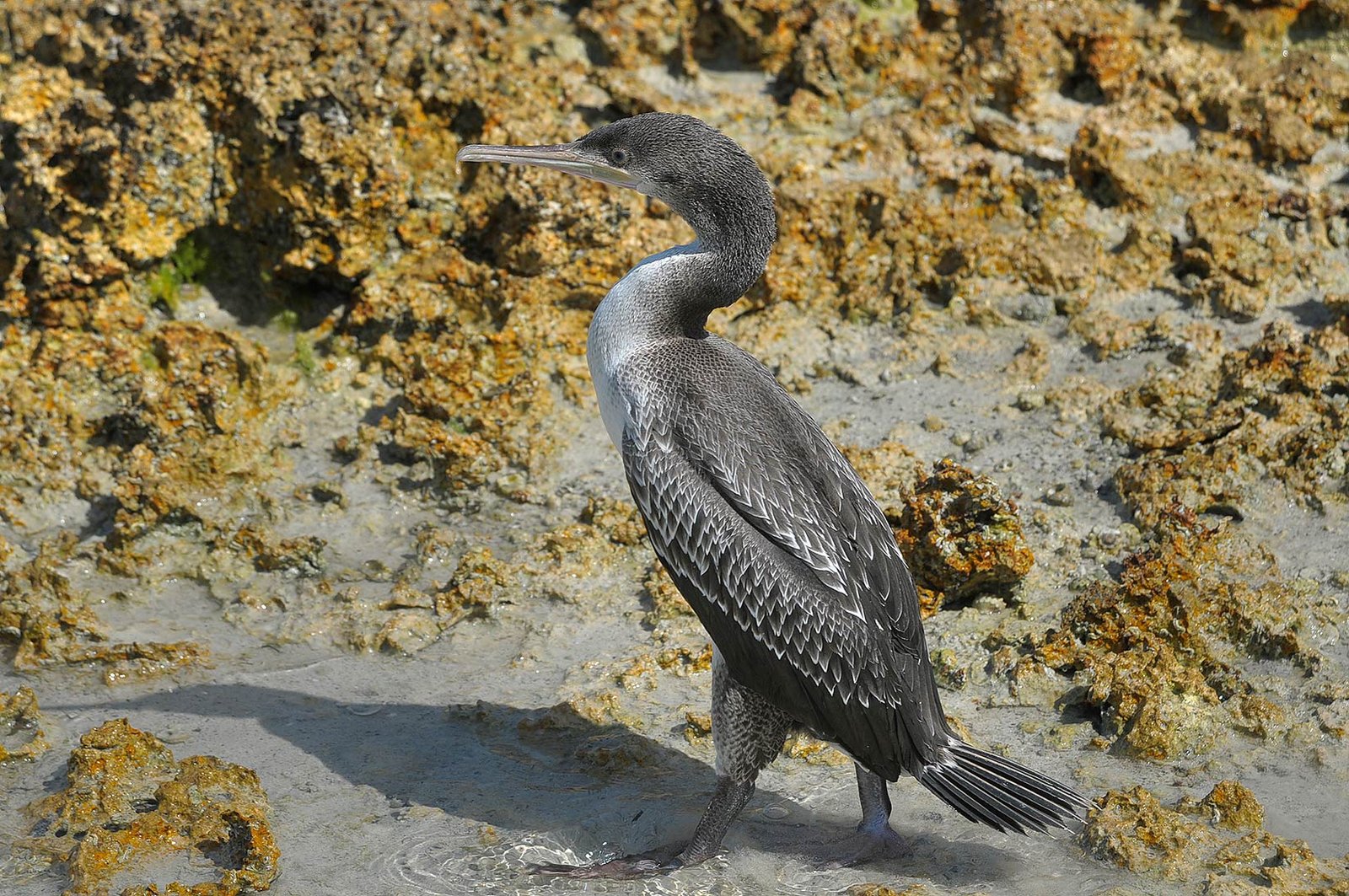
Medium-sized and slender, with a fairly short tail, a small head and a long, thin bill. Adults are wholly black with a greenish to bronze gloss and dark, not yellow, facial skin; in breeding plumage with white plumes behind the eye and fine white streaks on the neck and rump. Juveniles are pale brown with a dirty white throat and underparts, and have a pale bill. Flies in long, undulating lines low over the sea, with a straight neck and fast beats; often fishes in large, tightly packed groups.
Confusion species
Great Cormorant (Phalacrocorax carbo), which also occurs in the Gulf in winter, is larger and heavier, with a heavy bill, a white chin patch and yellow skin at the bill base; young Great Cormorants are darker brown. At a distance feeding flocks over a shoal can recall groups of Brown Booby (Sula leucogaster) or other seabirds, but cormorants swim and dive from the surface.
Habitat
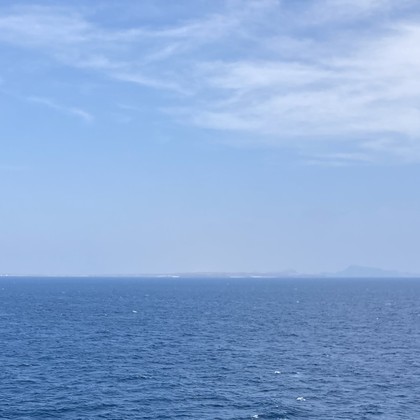
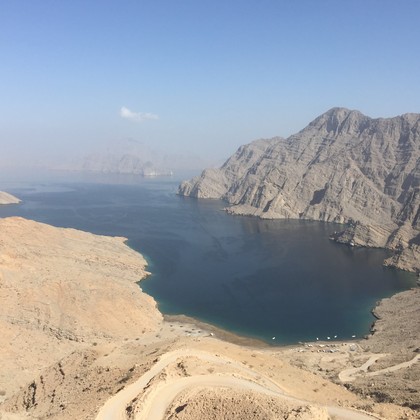
Shallow coastal seas, bays and the waters around islands. Breeds in dense colonies on the ground of flat, bare sandy and rocky islands; rests on sandbanks, rocks and shorelines. By day it fishes in large flocks on schooling fish in open water, often tens of kilometres from the colony.
Where the bird is most at home, classified by the habitats of North Africa and the Middle East.
Range and movements
Almost endemic to the region. The main colonies are in the Persian Gulf: in the United Arab Emirates on 9 to 12 islands with an estimated 57,000–83,000 pairs in all, Siniya being the largest colony; further on the Hawar Islands of Bahrain, on islands off the coast of Saudi Arabia and in small numbers in Qatar. It formerly bred in Kuwait but is now mainly a non-breeding visitor there. Outside the breeding season the birds wander throughout the Gulf and along the coast of Oman. Smaller numbers breed and winter along the Arabian Sea in Oman and Yemen, west to the Gulf of Aden; around Socotra, after which it is named, it occurs mainly outside the breeding season. A rare visitor to the southern Red Sea. Beyond the region only on the Iranian side of the Gulf and sporadically in the Gulf of Oman off Pakistan.
- Resident
- Summer visitor (c. Apr–Sep)
- Winter visitor (c. Oct–Mar)
- Passage (Mar–Apr, Oct–Nov)
- dark = core range, pale = thinly spread
How and when to look
From the coasts of Abu Dhabi, Umm al-Quwain (near Siniya) and Bahrain long lines of hundreds to thousands of birds are often seen flying low over the water in winter. It is also regularly seen on boat trips in Musandam (Oman) and off Qatar. Do not visit colonies: disturbance quickly leads to deserted nests.
Conservation status
Vulnerable on the Red List. The species depends on a small number of breeding islands, several of which have been lost to development, military use and disturbance. Other threats are oil pollution in the Gulf, drowning in fishing nets, egg collecting, feral cats and rats on the islands and changes in fish stocks. Mass mortality of young birds has been recorded in the colonies several times.
Scientific name
Phalacrocorax nigrogularis | Ogilvie-Grant & Forbes, 1899
Ogilvie-Grant & Forbes described the species in 1899 and placed it straight away in the genus where it still stands. The genus Phalacrocorax was introduced in 1760 by Brisson. Phalacrocorax is the Latinised form of Greek phalakrokorax, from phalakros 'bald' and korax 'raven'. nigrogularis is Latin for 'black-throated', from niger 'black' and gularis 'of the throat'. The specimen the first description was based on came from Socotra, Yemen.