All species › Passerines › Crows and jays › Rook
Rook | Corvus frugilegus
Roek | Graja
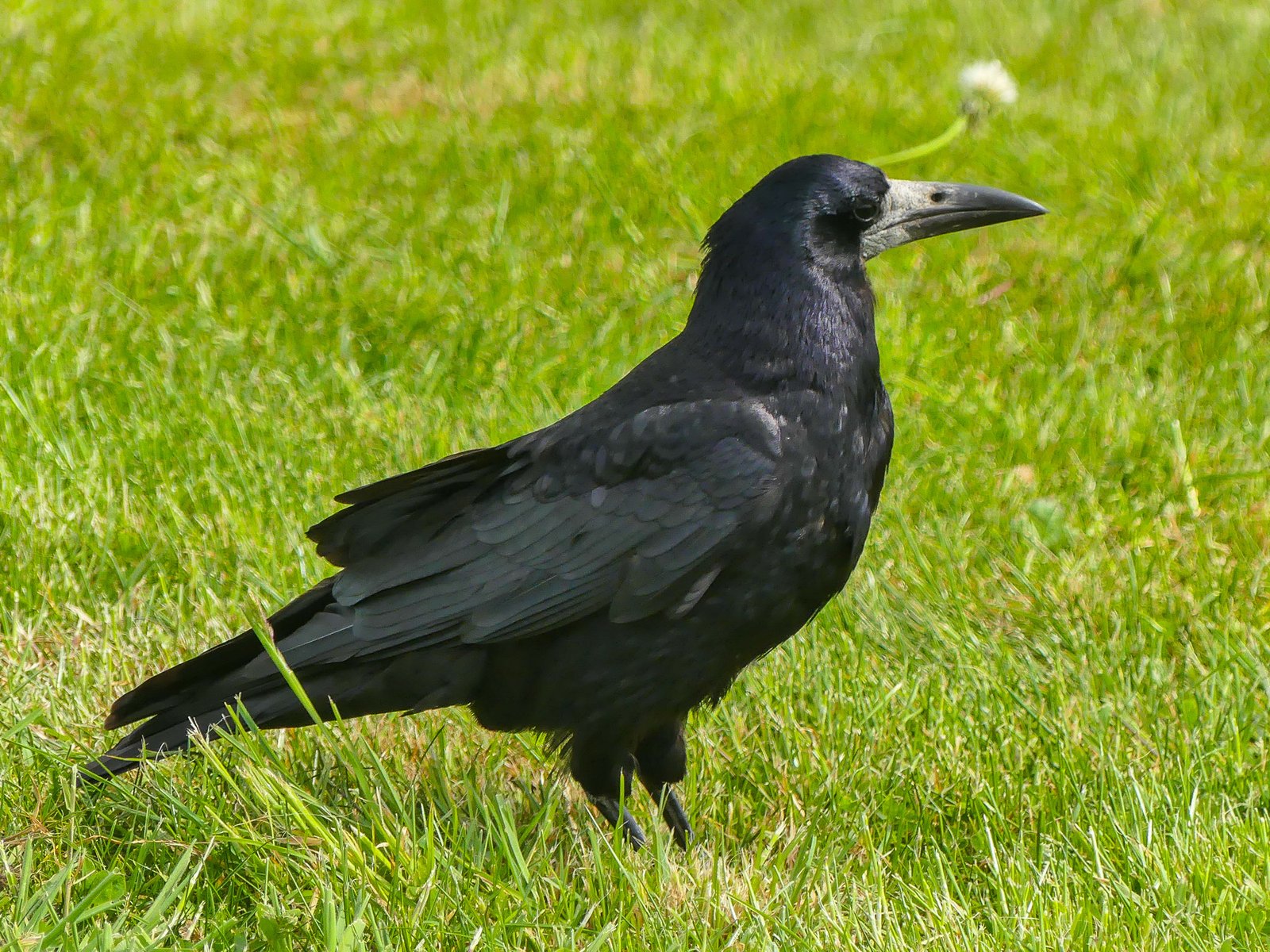
A large, social crow with a bare, greyish-white bill base, which reaches the open farmland of the north-east of the region as a winter visitor in flocks. The largest numbers winter in Iraq; in northern Israel and Syria flocks of tens to hundreds are regular.
Voice
A hoarse, flat kaah or gaah, less raucous and hard than Carrion Crow; flocks keep up a constant cawing.
Recording: Arjun Dutta — CC BY-NC-SA 4.0 · converted to mono · xeno-canto
Identification
41–49 cm. Black with a purple gloss, a pointed, straight bill with bare greyish-white skin around the bill base and face, a steep forehead and peaked crown, and loose 'trouser' feathers on the thighs. Juveniles have a feathered bill base until their first spring and then closely resemble Carrion Crow. In flight narrower wings with clearly fingered tips and a rounded tail; often flies in loose, noisy flocks with Eurasian Jackdaws.
Confusion species
Carrion Crow (Corvus corone), in the region mostly in the grey-and-black hooded form, has a heavier, curved bill with a feathered base and a flat crown; take special care with young Rooks. Northern Raven (Corvus corax) is much larger with a wedge-shaped tail. Eurasian Jackdaw (Coloeus monedula) is smaller, with a grey nape and pale iris.
Habitat
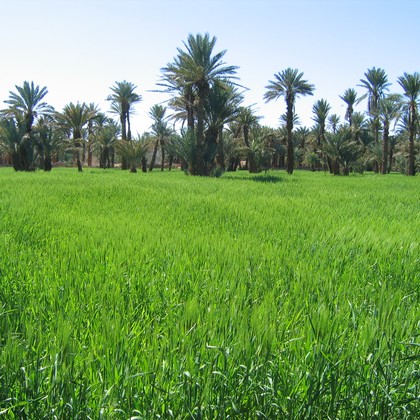
Open farmland, irrigated agriculture, pastures and stubble fields, often at rubbish tips and around villages. Feeds in flocks on the ground, mainly on grain, roots and invertebrates, and roosts communally in clumps of trees or reedbeds.
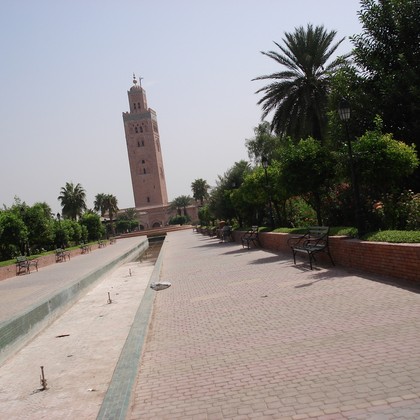
Where the bird is most at home, classified by the habitats of North Africa and the Middle East.
Range and movements
Winter visitor from October to March in the north-east of the region. Most numerous in Iraq, in the north and centre to around Baghdad and further south. Also in northern Syria and regularly in northern Israel (Hula Valley, Jezreel Valley). Rare and irregular in Jordan, Lebanon and Kuwait; virtually absent elsewhere in Arabia and North Africa. Breeds from western Europe through Turkey and Iran to East Asia.
- Resident
- Summer visitor (c. Apr–Sep)
- Winter visitor (c. Oct–Mar)
- Passage (Mar–Apr, Oct–Nov)
- dark = core range, pale = thinly spread
How and when to look
In winter the fields and fishponds of the Hula Valley in northern Israel are the best site, where flocks of Rooks and Eurasian Jackdaws feed together and fly to their roost in the evening.
Conservation status
Not globally threatened. No specific threats are known in the region; locally poisoning and persecution on farmland. Elsewhere in Europe it has declined through agricultural intensification.
Scientific name
Corvus frugilegus | Linnaeus, 1758
Linnaeus described the species in 1758 and placed it straight away in the genus where it still stands. He introduced the genus Corvus in that same work. Corvus is the Latin word for 'raven'. frugilegus means 'fruit-gathering', from frux (stem frug-) 'crop, fruit' and legere 'to pick', after its feeding on farmland. The specimen the first description was based on came from Sweden.