All species › Passerines › Shrikes › Isabelline Shrike
Isabelline Shrike | Lanius isabellinus
Daurische klauwier | Alcaudón isabel
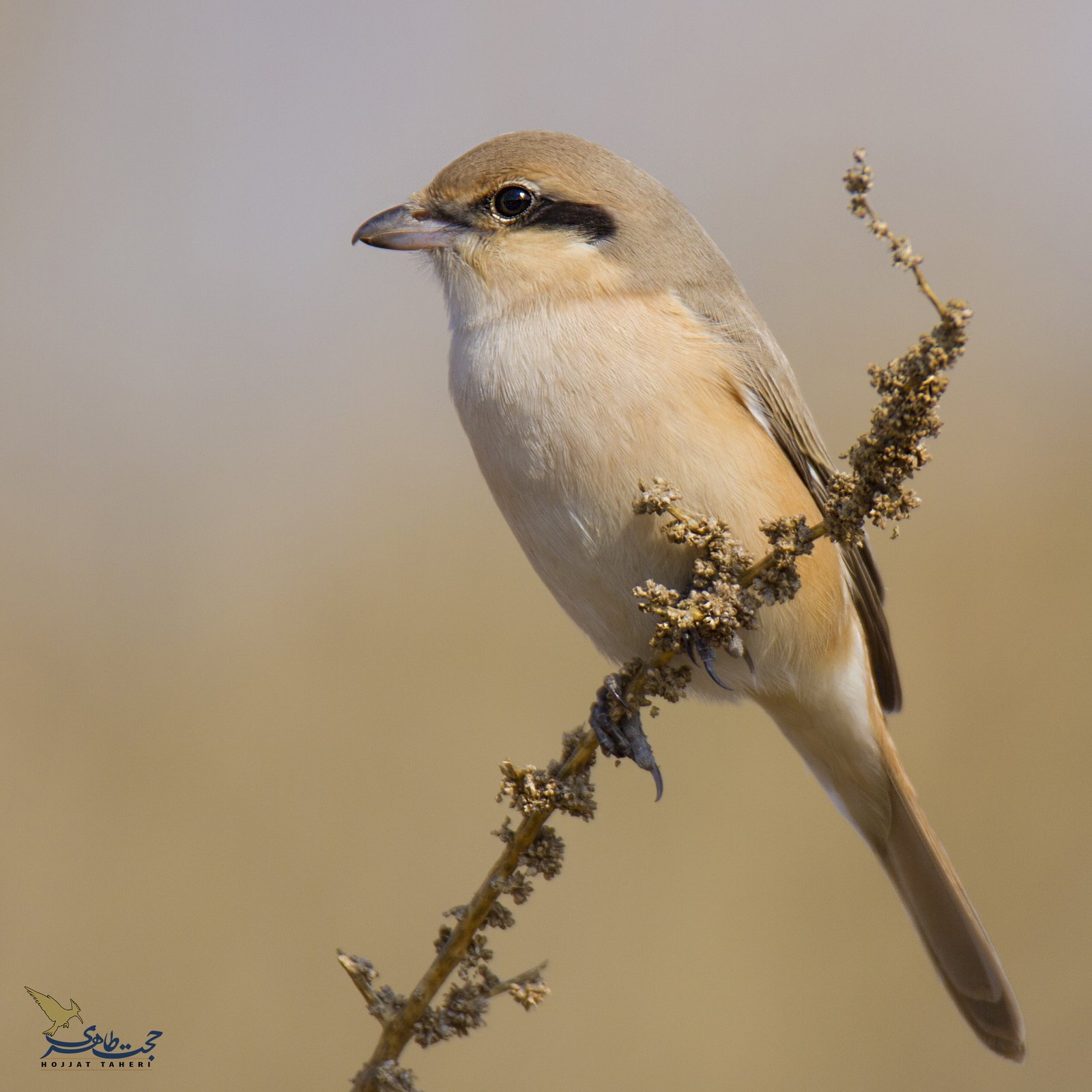
The Isabelline Shrike (Daurian Shrike) is a pale, sandy shrike of the steppes of Central Asia and Mongolia with a rufous tail. In the region it is the shrike that spends the winter in the desert scrub and farmland of eastern Arabia, where its close relative, the Red-tailed Shrike, mainly passes through.
Voice
In winter mainly a harsh chek and a hoarse, rattling trrr. The song, sometimes heard already in spring, is a soft, varied warble with mimicry.
Recording: David Darrell-Lambert — CC BY-NC-SA 4.0 · converted to mono · xeno-canto
Identification
16.5–18 cm. Paler and plainer than other shrikes: the upperparts are pale sandy grey to isabelline, with little contrast between crown and back; rump and tail are bright rufous. The male has a black mask, often with a faint pale supercilium, and a small white primary patch; underparts creamy with a warm buff wash. The female has a browner mask, no or a very small primary patch and fine barring on the flanks. First-winter birds are pale, with a brownish mask, finely scaled flanks and pale fringes to the wing-coverts.
Confusion species
Red-tailed Shrike (Lanius phoenicuroides) has a more distinctly rufous crown contrasting with a greyish-brown back, a prominent white supercilium and whiter underparts; intermediates occur and not every bird can be identified. Young Red-Backed Shrikes (Lanius collurio) are warmer brown, more heavily scaled on back and coverts and have a greyish-brown tail with white sides. Brown Shrike (Lanius cristatus) is darker brown with a longer, narrow, dull brown tail and a heavier bill.
Habitat
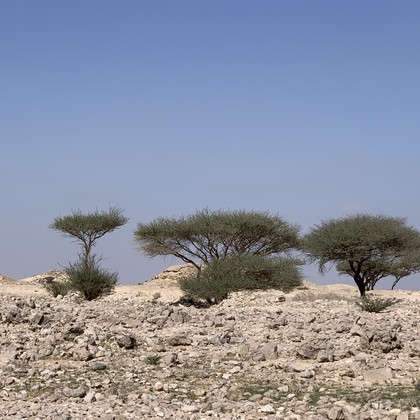
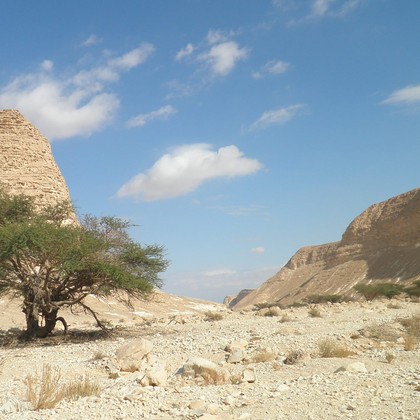
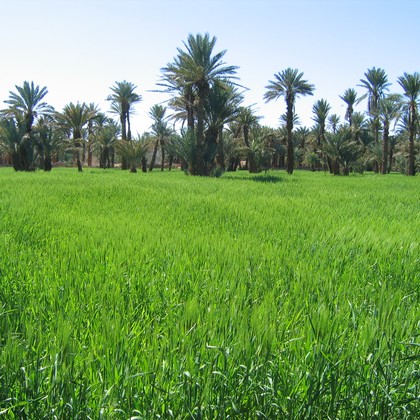
In winter dry, open country with bushes: acacia and Prosopis scrub, wadis, the edges of farmland, oases, parks, golf courses and waste ground on the edge of towns. Perches low on a bush or fence and drops to the ground for insects.
Where the bird is most at home, classified by the habitats of North Africa and the Middle East.
Range and movements
Winters from October to April mainly in the east and south of the Arabian Peninsula: common in the Emirates, Oman, Qatar and Bahrain, widespread in eastern and central Saudi Arabia, Kuwait and southern Iraq, and in Yemen. Further west, in Israel, Jordan and Egypt, a scarce winter visitor or migrant; in North Africa west of Egypt a vagrant. Beyond the region it breeds from eastern Kazakhstan and the Altai to Mongolia and northern China and also winters in north-east Africa, Pakistan and north-west India.
- Summer visitor (c. Apr–Sep)
- Winter visitor (c. Oct–Mar)
- Passage (Mar–Apr, Oct–Nov)
- dark = core range, pale = thinly spread
How and when to look
In winter it is easy to find in the Emirates and Oman in parks and on farmland, for example at Al Qudra and in the parks of Dubai and Abu Dhabi, or on the fields near Sohar and Salalah. Compare it with migrating Red-Tailed Shrikes in March and October: look at the contrast between crown and back and the colour of the underparts.
Conservation status
Not globally threatened. Little is known about population trends. In its winter quarters it benefits locally from irrigated farming and urban greenery; the classification of the group, with Red-tailed Shrike as a separate species, is relatively recent.
Scientific name
Lanius isabellinus | Hemprich & Ehrenberg, 1833
Hemprich & Ehrenberg described the species in 1833 and placed it straight away in the genus where it still stands. The genus Lanius was introduced in 1758 by Linnaeus. Lanius is Latin for 'butcher', from shrikes' habit of impaling prey on thorns and barbed wire. isabellinus is New Latin for 'greyish-yellow'; the colour name is said to go back to Isabella I of Castile, who reputedly vowed not to change her linen until Spain was freed from the Moors. The specimen the first description was based on came from Al Qunfudhah, Saudi Arabia.