All species › Divers › Divers › Common Loon
Common Loon | Gavia immer
IJsduiker | Colimbo grande
The large, heavy loon of the Canadian lakes and Iceland, wintering in Europe along the Atlantic coasts from Norway to Portugal. The region lies at the extreme southern edge of that winter range: only a few records are known from Morocco, and none from the rest of the region.
Voice
Silent in winter. On the breeding grounds the famous yodelling and laughing calls that ring out over North American lakes, including a drawn-out oo-AAH-ooo.
Recording: Jorge Valella Robledo — CC BY-NC-SA 4.0 · converted to mono · xeno-canto
Identification
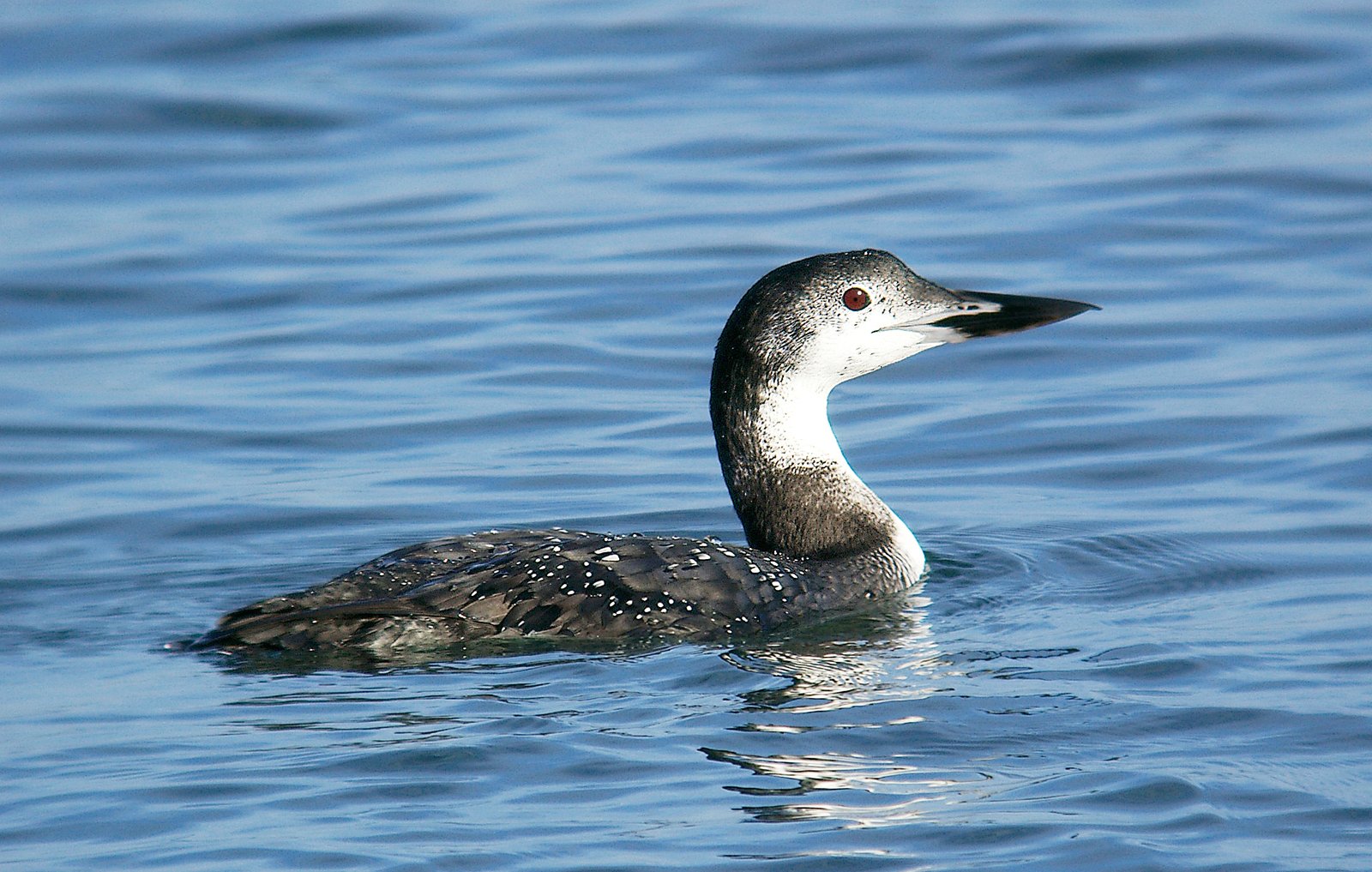
Large and massive, with a heavy, dagger-shaped bill, an angular head with a steep forehead and a thick neck. In winter plumage dark grey-brown above, the upperparts often with pale fringes, and white below; the border on the neck is irregular, with a dark half-collar cutting forward into the side of the neck. A pale eye-ring stands out in the dark face. In winter the bill is pale grey with a dark ridge. In summer plumage a glossy black head, a striped necklace and a black-and-white chequered back. In flight large and slow, with big feet projecting beyond the tail.
Confusion species
Arctic Loon (Gavia arctica) is smaller, with a slimmer bill, a rounder head, a neat straight neck border and a white flank patch at the waterline. Red-throated Loon (Gavia stellata) is much smaller and paler, with a thin, upturned bill. Great Cormorant (Phalacrocorax carbo) sits equally low in the water, but has a hooked bill, a longer tail and is all dark.
Habitat
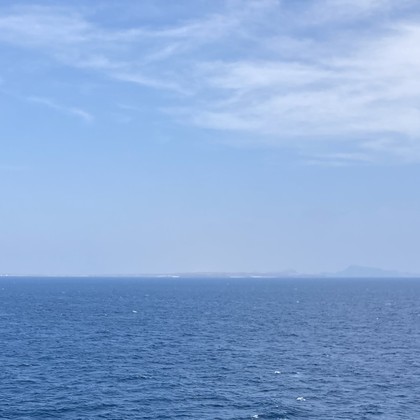
In winter coastal waters, bays and open sea close inshore, often slightly further out than the other loons. Dives for fish and crabs.
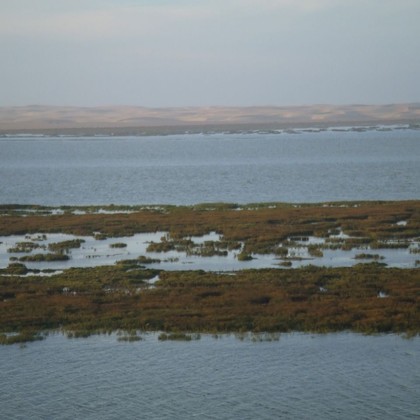
Where the bird is most at home, classified by the habitats of North Africa and the Middle East.
Range and movements
Morocco: vagrant with a few accepted records, almost all on the northern Atlantic coast and in the Strait of Gibraltar, in winter. No records are known from the other countries of the region. Elsewhere it breeds in Canada, Alaska, the northern United States, Greenland and Iceland; winters along the Atlantic and Pacific coasts of North America and in Europe from Norway and the British Isles to north-west Spain and Portugal, rarely in the western Mediterranean.
How and when to look
A sighting in the region is exceptional; the best chance comes from seawatching at Cap Spartel and from the harbour piers of Tangier and Larache after north-westerly winter storms. Photograph the head and neck border well and report the bird to the Moroccan rarities committee.
Conservation status
Globally not threatened. In North America sensitive to acidification and mercury pollution of lakes, recreation and lead poisoning from fishing weights; in the wintering areas to oil pollution and bycatch in gillnets. Of no significance for the region as a vagrant.
Scientific name
Gavia immer | (Brünnich, 1764)
Brünnich described the species in 1764 as Colymbus Immer; because it was later moved to another genus, the author and year stand in brackets. The genus Gavia was introduced in 1788 by Forster. Gavia is the Latin word for an unidentified seabird. immer goes back to a Norwegian name for the bird, akin to Icelandic himbrimi. It has also been linked to Swedish immer 'blackened ashes', for the dark plumage, and to Latin immergo 'to plunge in'. The specimen the first description was based on came from the Faroe Islands.