All species › Divers › Divers › Arctic Loon
Arctic Loon | Gavia arctica
Parelduiker | Colimbo ártico
A slender, contrasting loon of the large lakes of northern Europe and Siberia, wintering in large numbers on the Black Sea and the Caspian. From those wintering areas birds occasionally reach the eastern Mediterranean; in the region it is the loon most often encountered, though it remains a rarity.
Voice
Silent in winter. On the breeding grounds a loud, rolling, drawn-out call, kloo-ee-kloo-ee, and a croaking knarr.
Recording: Stanislas Wroza — CC BY-NC-SA 4.0 · shortened to the first 60 s, mono · xeno-canto
Identification
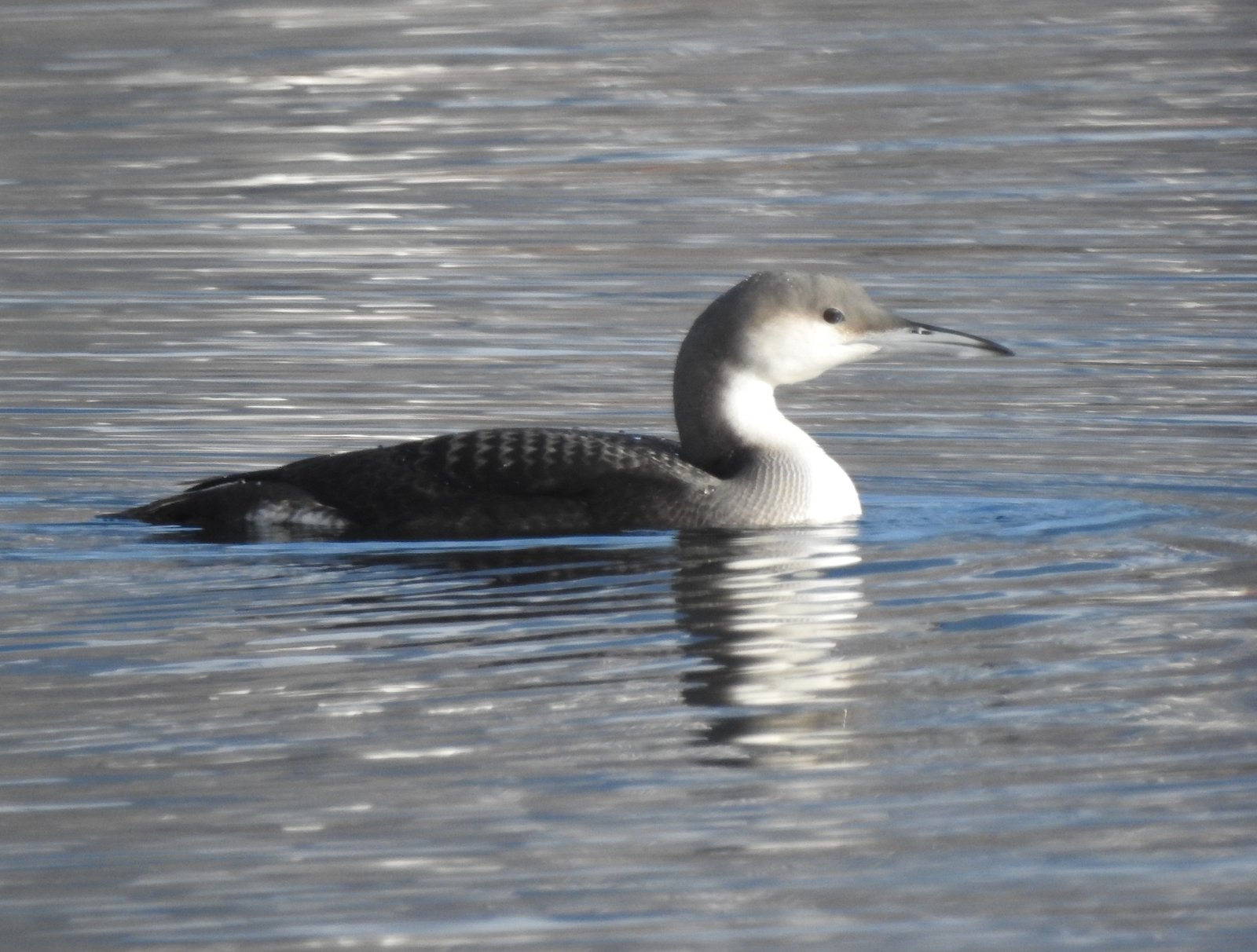
Medium-sized, with a straight, dagger-shaped bill held horizontally, a fairly rounded head and a sturdy neck. In winter plumage dark slate-grey above, without spots, with a sharp, straight border between the dark hindneck and the white foreneck; the eye sits in the dark area. Characteristic is a conspicuous white patch on the rear flank, just above the waterline. In summer plumage a grey head, a black throat with a purple-green sheen, black-and-white striped neck sides and a black back with white chequers. Juveniles have pale fringes to the back feathers, giving a scaly pattern.
Confusion species
Red-throated Loon (Gavia stellata) is smaller and slimmer, with a thin, upturned bill held tilted upwards, a paler, finely white-spotted back and more white on the face. Common Loon (Gavia immer) is larger, with a heavier bill, an angular head with a steep forehead bump and an irregular neck border with a dark half-collar. Pacific Loon (Gavia pacifica) lacks the white flank patch and often has a narrow dark chin strap. European Shag (Gulosus aristotelis) also sits low in the water, but is all dark with a hooked bill.
Habitat
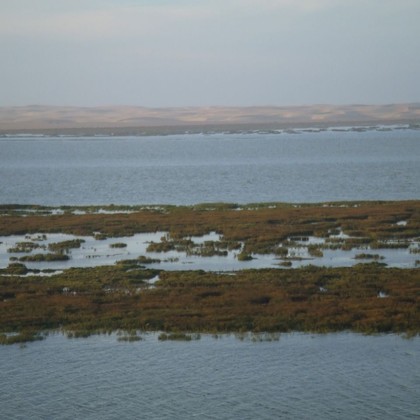
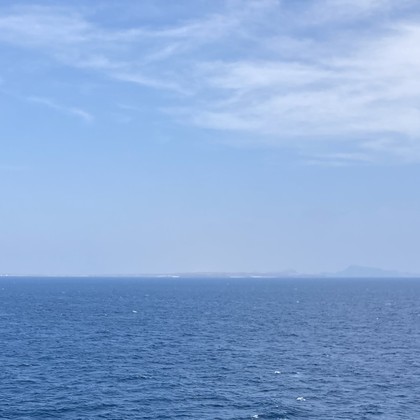
Coastal waters, bays and harbours, also open sea close inshore; sometimes large inland lakes. Dives for fish, often staying under water for a long time.
Where the bird is most at home, classified by the habitats of North Africa and the Middle East.
Range and movements
Israel: rare winter visitor and passage migrant, with over twenty accepted records, most on the Mediterranean coast (including Akko) and in the Gulf of Eilat, exceptionally on the Sea of Galilee (December 2006). Egypt: rare winter visitor on the Mediterranean coast and in the Gulf of Suez. Kuwait: vagrant in the Persian Gulf. Tunisia and Morocco: vagrant with a few accepted records. No confirmed records are known from Lebanon, Syria or the rest of Arabia, although they are to be expected in the Levant. Elsewhere it breeds from Scotland and Scandinavia through Russia and Siberia to the Lena; winters mainly on the Black Sea, the Caspian, the Adriatic and Aegean and along the coasts of north-west Europe.
- Winter visitor (c. Oct–Mar)
- Passage (Mar–Apr, Oct–Nov)
- dark = core range, pale = thinly spread
How and when to look
The Mediterranean coast of Israel and the beaches at Eilat give the best chance between December and March. Scan from a harbour pier on a calm sea; look for the white flank patch, which is visible even at a distance.
Conservation status
Globally not threatened, but the European breeding population is declining through fluctuating water levels, disturbance and nest predation on the breeding lakes. In winter sensitive to oil pollution and bycatch in gillnets. In the region a rare visitor without specific threats.
Scientific name
Gavia arctica | (Linnaeus, 1758)
Linnaeus described the species in 1758 as Colymbus arcticus; because it was later moved to another genus, the author and year stand in brackets. The genus Gavia was introduced in 1788 by Forster. Gavia is the Latin word for an unidentified seabird. arctica is Latin for 'northern' or 'of the Arctic', where the species breeds. The specimen the first description was based on came from Sweden.