All species › Pelicans, herons and ibises › Herons and bitterns › Black-Headed Heron
Black-Headed Heron | Ardea melanocephala
Zwartkopreiger | Garza cabecinegra
A large African heron of dry grassland and fields that reaches the region only as a vagrant, from across the Red Sea. In south-west Saudi Arabia it has been seen a few times since 2010, mostly at reservoirs and sewage ponds.
Voice
A loud, hoarse kuark on take-off; various croaking calls in the colony. Usually silent away from breeding sites.
Recording: Jonathan Onongo — CC BY-NC-SA 4.0 · converted to mono · xeno-canto
Identification
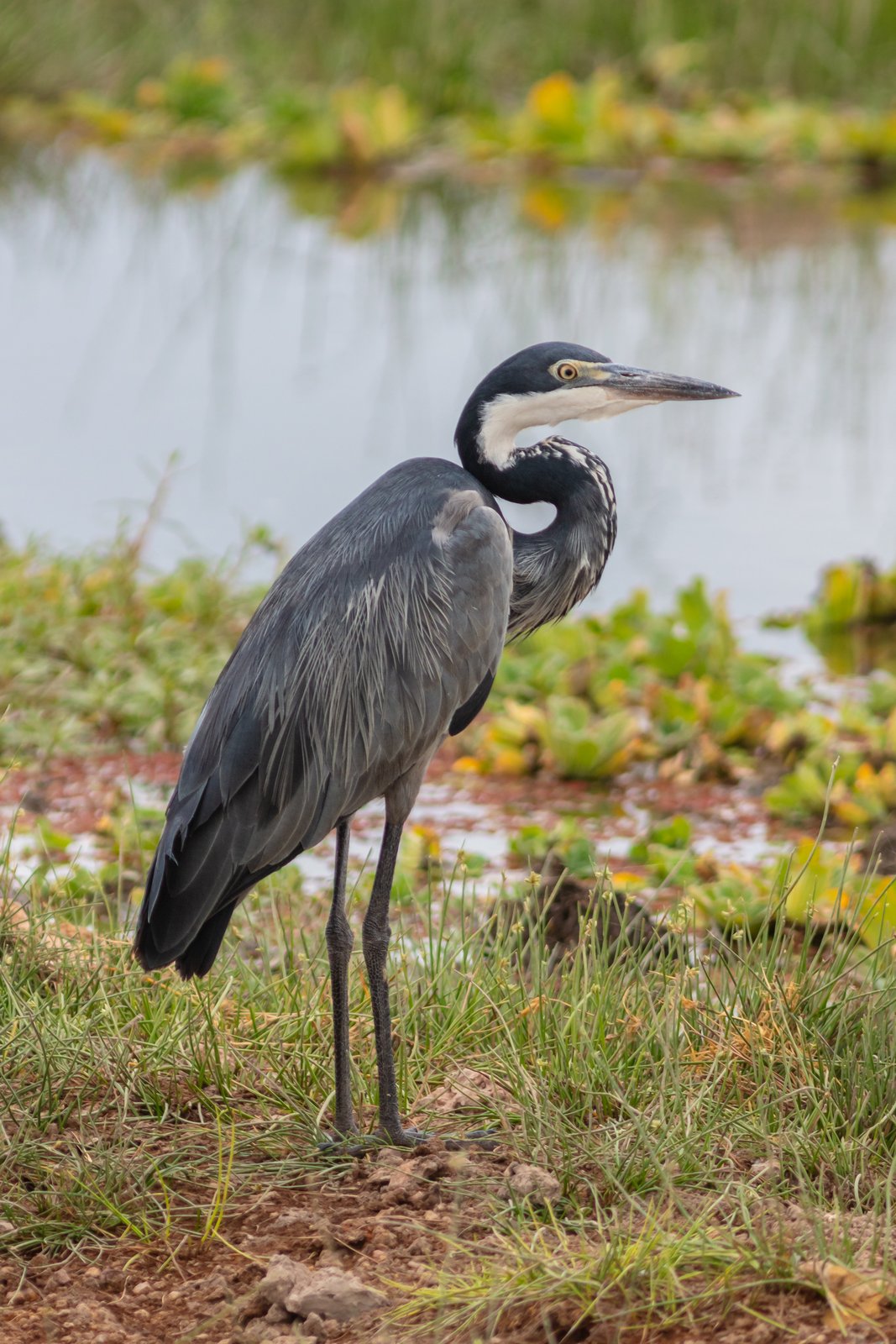
Slightly smaller than Grey Heron, with a black crown, hindneck and neck sides, a white throat and foreneck, and slate-grey back and wings. The bill is dark grey with a paler lower mandible, the legs are black. In flight the sharp contrast between the white underwing coverts and the black flight feathers is diagnostic, unlike the uniformly grey underwing of Grey Heron. Juveniles are greyer, with a grey head and neck and a white throat.
Confusion species
Grey Heron (Ardea cinerea) has a white head with only a black supercilium and crest, a white neck, a yellow bill and pale legs; in flight a uniformly grey underwing. Juvenile Black-Headed Herons resemble juvenile Grey Herons but have dark legs and a darker head and bill. Purple Heron (Ardea purpurea) is slimmer and rufous on the neck and head.
Habitat
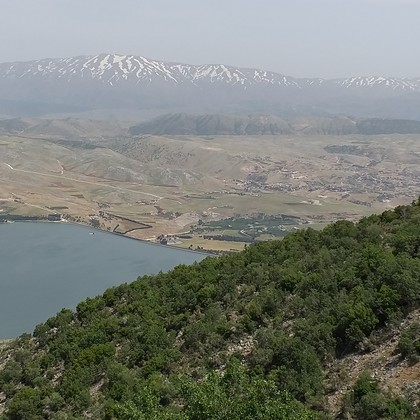
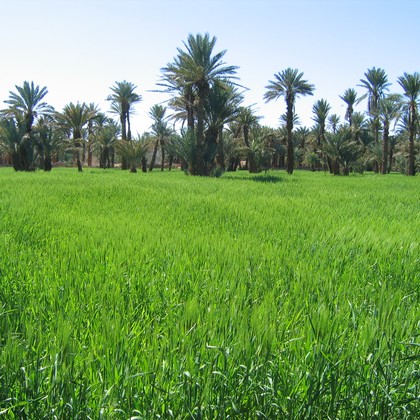
In Africa mainly dry grassland, farmland and savanna, often far from water, where it hunts rodents, lizards and large insects; also at the shores of lakes and rivers. In the region it has mostly been seen at reservoirs, sewage ponds and in wadis with water.
Where the bird is most at home, classified by the habitats of North Africa and the Middle East.
Range and movements
In Saudi Arabia a vagrant to the south-west with a handful of records: Wadi Dhamat near Shuqayri (July 2010), Malaki Dam lake (two birds, January 2011), Yanbu sewage ponds (April 2011) and Sabya sewage lagoons (June and November 2013). A few records are also known from the Tihama of Yemen. No certain records from the rest of the region. Beyond the region a common resident in sub-Saharan Africa, from Senegal to Ethiopia, Eritrea and Sudan and south to South Africa.
How and when to look
In south-west Saudi Arabia and the Tihama, check every large dark-headed heron at reservoirs and sewage ponds, such as at Sabya and Malaki. A bird in flight is instantly recognisable by its black-and-white underwing.
Conservation status
Not globally threatened, and common and increasing in many parts of Africa. In the region a vagrant; the small number of records despite the proximity of Eritrea and Sudan suggests the Red Sea is a considerable barrier, although the species is probably under-reported in Yemen.
Scientific name
Ardea melanocephala | Children & Vigors, 1826
Children & Vigors described the species in 1826 and placed it straight away in the genus where it still stands. The genus Ardea was introduced in 1758 by Linnaeus. Ardea is the Latin word for 'heron'. melanocephala comes from the Greek melas, 'black', and kephalē, 'head' — for the black head and hindneck. The specimen the first description was based on came from unknown; possibly near Lake Chad.