All species › Pelicans, herons and ibises › Herons and bitterns › Chinese Pond Heron
Chinese Pond Heron | Ardeola bacchus
Chinese ralreiger | Garcilla china
An East Asian pond heron that reaches the region only very exceptionally. Only birds in breeding plumage can be identified with certainty; in non-breeding plumage it passes virtually unnoticed among the Indian Pond Herons of eastern Arabia.
Voice
Usually silent; on take-off a harsh kraa, as in the other pond herons.
Recording: Ray Tsu 诸仁 — CC BY-NC-SA 4.0 · converted to mono · xeno-canto
Identification
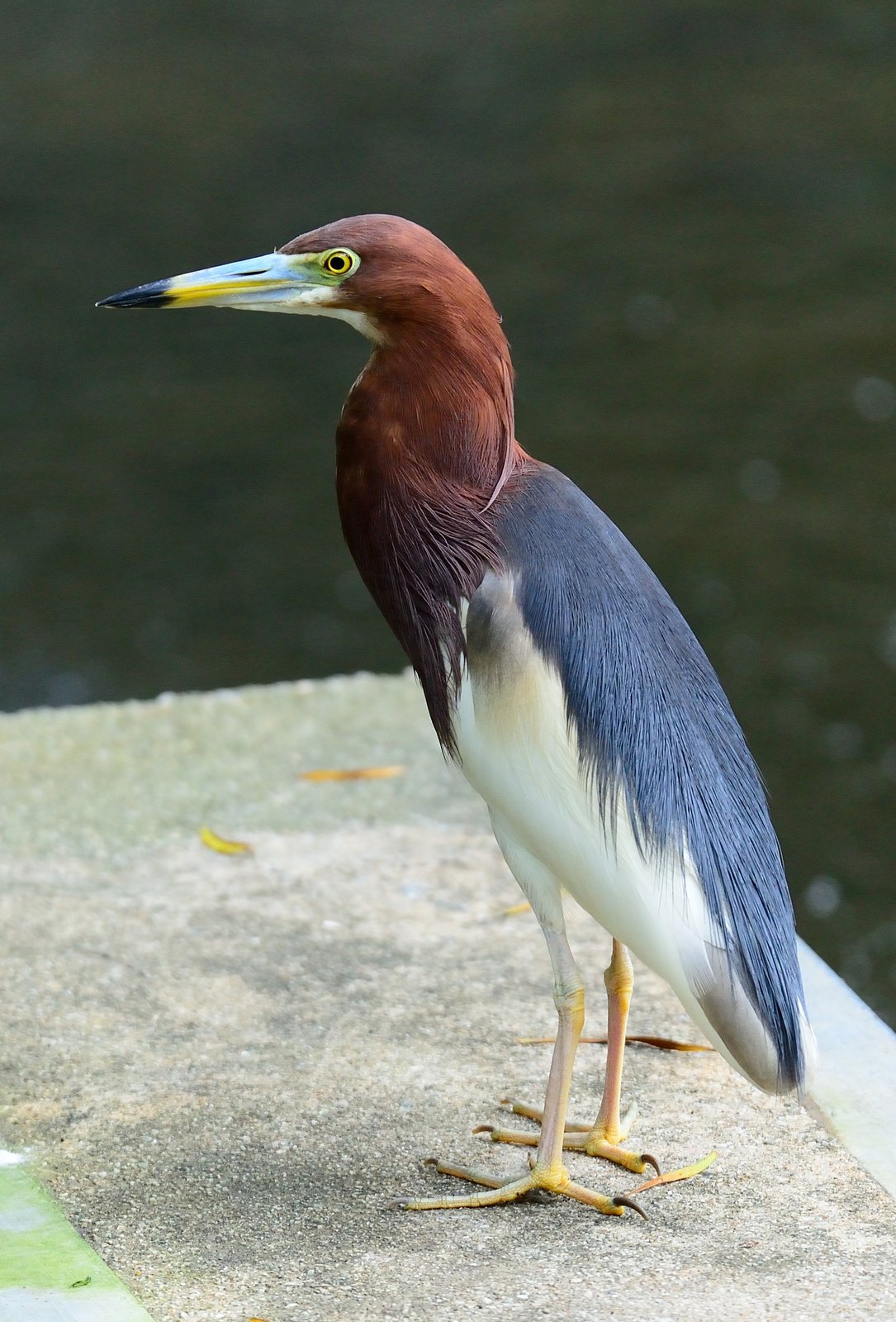
A small, stocky heron, slightly larger and heavier than Indian Pond Heron, with white wings, rump and tail that contrast sharply in flight. In breeding plumage the head, neck and breast are deep chestnut, the back and long mantle plumes slate-grey to almost black and the belly white; the bill is yellow with a dark tip and the legs are yellow. In non-breeding plumage it is brown with a heavily streaked head, neck and breast and a dark grey-brown back, like its relatives.
Confusion species
Indian Pond Heron (Ardeola grayii) has a pale buff head and neck and a maroon back in breeding plumage, roughly the reverse colour pattern. In non-breeding plumage both, and Squacco Heron (Ardeola ralloides) too, cannot be reliably separated in the field; an identification of a non-breeding bird is therefore almost never acceptable. A Chinese Pond Heron moulting into breeding plumage, with the first chestnut feathers in the neck, is the moment to recognise it.
Habitat
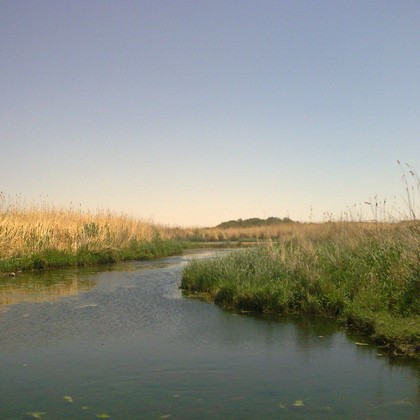
Sewage ponds, pools, ditches and flooded fields with dense waterside vegetation; in the region always with or at the same sites as Indian Pond Herons.
Where the bird is most at home, classified by the habitats of North Africa and the Middle East.
Range and movements
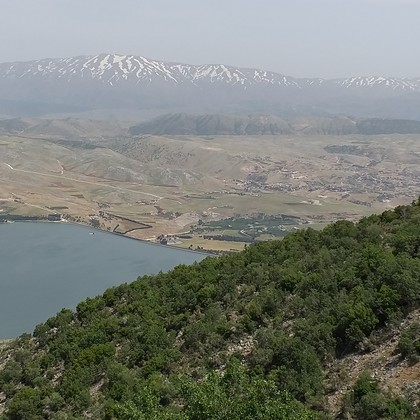
An extremely rare vagrant to eastern Arabia, with only a few records, mainly from Oman and the United Arab Emirates, of birds in (moult to) breeding plumage in spring. No certain records are known from the rest of the region. Beyond the region it breeds in China, Korea and adjacent South-East Asia and winters in South-East Asia; vagrants reach India, Pakistan, Japan and Europe, among others.
How and when to look
In March and April check every pond heron on the sewage ponds of Oman and the Emirates that is starting to darken on the neck. Photographs are essential: a record is only accepted when breeding plumage is clearly visible.
Conservation status
Not globally threatened and common in East Asia. In the region a vagrant with no regular site; the small number of records is partly because non-breeding birds are unidentifiable, so it probably occurs more often than is known.
Scientific name
Ardeola bacchus | (Bonaparte, 1855)
Bonaparte described the species in 1855 as Buphus bacchus; because it was later moved to another genus, the author and year stand in brackets. The genus Ardeola was introduced in 1822 by Boie. Ardeola is Latin, a diminutive of ardea 'heron', so 'little heron'. bacchus refers to Bacchus, the Roman god of wine, after the wine-red head and neck in breeding plumage. The specimen the first description was based on came from the Malay Peninsula.