All species › Gamebirds › Pheasants and partridges › Black Francolin
Black Francolin | Francolinus francolinus
Zwarte frankolijn | Francolín ventrinegro
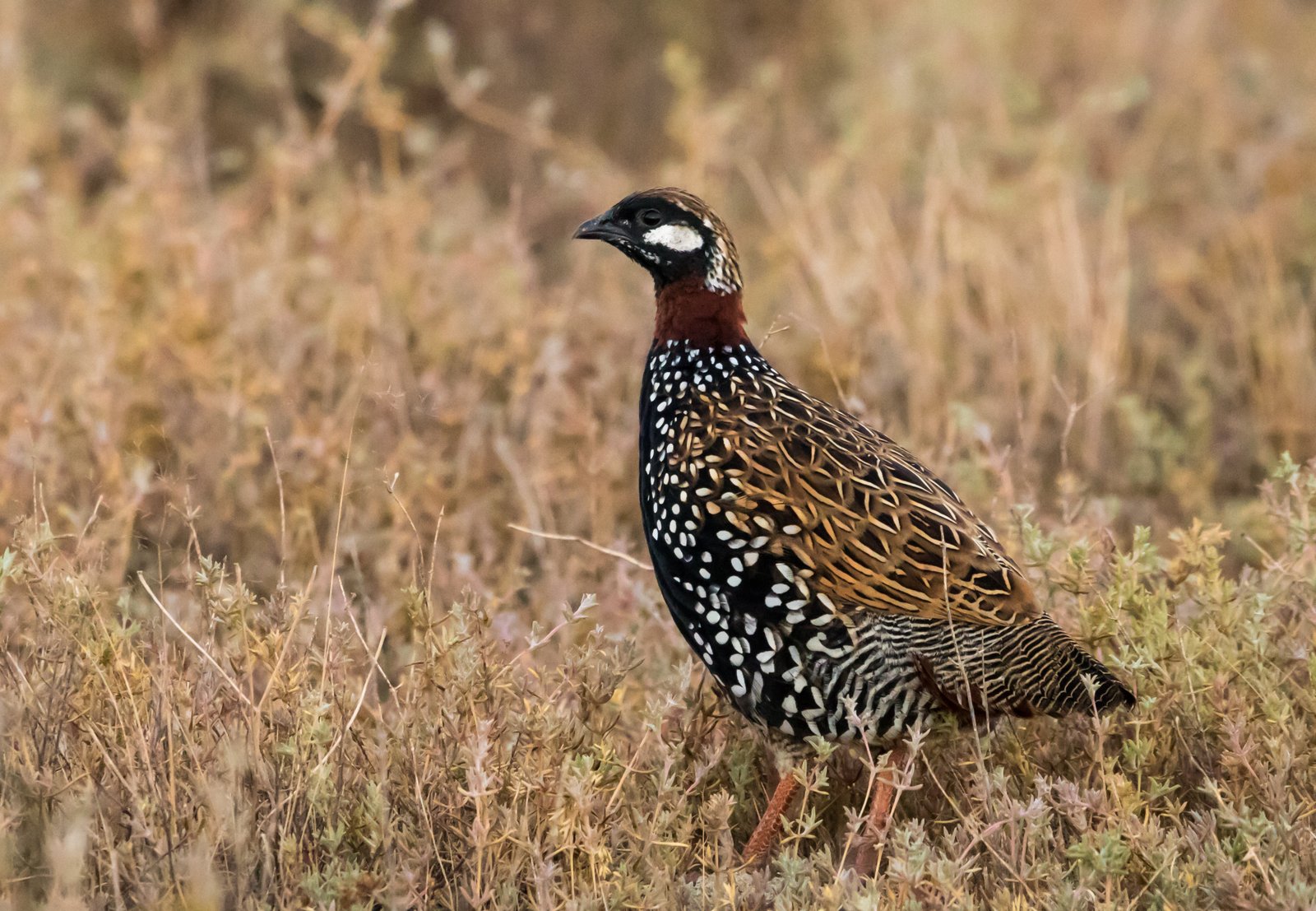
The male is the most striking gamebird of the Levant and Mesopotamia: jet black with a snow-white cheek patch, a chestnut collar and a mass of white spots on the flanks. Yet it is seldom seen well. Usually all you get is its harsh, rhythmic call from a field or reed edge, and a glimpse of a black bird showing itself on a bank or a stone.
Voice
A harsh, grating, rhythmic refrain of six or seven syllables, chik-cheek-cheek, kerr-ki-kerr, shrill and metallic and audible at long range. The male calls from a vantage point (a bank, a stone, a post) mainly at dawn and towards evening, in spring also during the day. When alarmed a rapid kik-kik-kik.
Recording: Gary Elton — CC BY-NC-SA 4.0 · converted to mono · xeno-canto
Identification
About 35 cm, sturdy and short-tailed. The male is largely black, with a white cheek patch below the eye, a broad chestnut collar and chestnut on the lower belly and undertail coverts. Breast and flanks black with dense white spots; back and wings brown with cream fringes and black marks. The tail is finely barred black and white. The female is warm brown with dark scaling and spots, a pale face with a dark eye-stripe, and a clear rufous patch on the nape. Legs orange-red, bill black. The male carries a spur on the tarsus. Flushes with a loud whirr and flies off low and straight.
Confusion species
The male is unmistakable. The female may recall Gray Francolin (Ortygornis pondicerianus), which occurs only in southern Iraq and eastern Arabia: that species is greyer, finely barred all over rather than spotted, with a plain buff throat and no rufous nape patch. Chukar Partridge (Alectoris chukar) is grey with an outlined white throat and red bill and lives on dry rocky slopes, not in damp lowlands. Common Quail (Coturnix coturnix) is much smaller.
Habitat
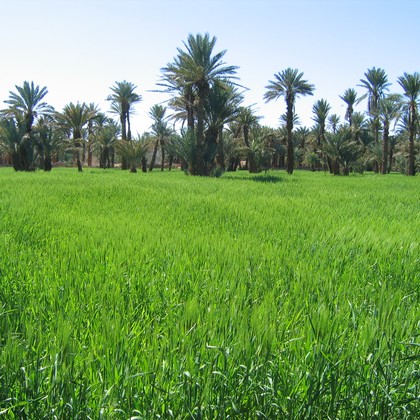
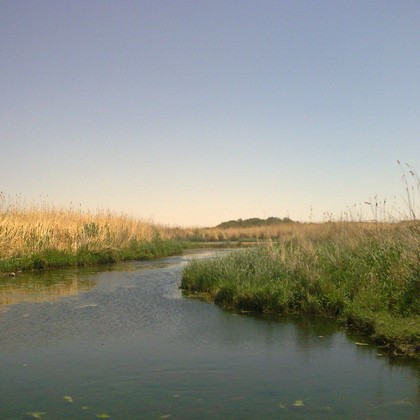
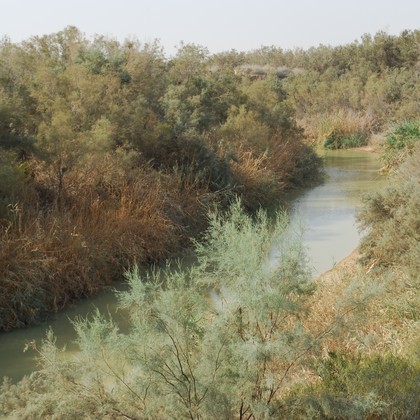
Damp, densely vegetated lowlands with variety: reed edges and rank growth along marshes, rivers and irrigation channels, tamarisk and Prosopis scrub, fields of cereals, cotton and sugar cane, fallow land and orchards. In the Jordan Valley and the Hula Valley also around fishpond complexes. Avoids bare, dry terrain. Eats seeds, shoots, tubers and insects, which it scratches up from the ground.
Where the bird is most at home, classified by the habitats of North Africa and the Middle East.
Range and movements
Within the region in Israel (Hula Valley, Upper and Middle Jordan Valley, Bet She'an Valley and locally the coastal plain), in the Jordan Valley in Jordan, and in Iraq on the plains of the Euphrates and Tigris and in the southern marshes, with outliers into Kuwait. In Syria and Lebanon rare and local, and its status there is unclear. Iraqi birds belong to the subspecies F. f. arabistanicus. Beyond the region from Cyprus and southern Turkey through the Caucasus and Iran to north-eastern India and Nepal.
- Resident
- Summer visitor (c. Apr–Sep)
- Winter visitor (c. Oct–Mar)
- Passage (Mar–Apr, Oct–Nov)
- dark = core range, pale = thinly spread
How and when to look
In April and May in the Hula Valley or the Bet She'an Valley, at sunrise along the edges of fishponds and fields: the call cannot be missed. Then scan the banks and stones the male stands on to call. Driving slowly along farm tracks works better than walking.
Conservation status
Not globally threatened. In the Levant the species declined sharply in the twentieth century through hunting and the draining of marshes, but in Israel it has recovered well after protection and with irrigated agriculture. In Iraq the draining of the Mesopotamian marshes cost habitat; the restoration of parts of them after 2003 helps. Hunting remains a significant factor in Syria and Iraq.
Scientific name
Francolinus francolinus | (Linnaeus, 1766)
Linnaeus described the species in 1766 as Tetrao Francolinus; because it was later moved to another genus, the author and year stand in brackets. The genus Francolinus was introduced in 1819 by Stephens. Francolinus is a Latinisation of francolin, taken through French from Italian francolino; the origin of that Italian word is unknown. The species name repeats the genus name. The specimen the first description was based on came from Cyprus.