All species › Parrots › African and New World parrots › Yellow-naped Amazon
Position in the tree Birds Aves › Birds with a flexible palate Neognathae › All other modern birds Neoaves › Landbirds Telluraves › Falcons, parrots and passerines Australaves › Falcons and passerines Eufalconimorphae › Parrots and passerines Psittacopasserae
Yellow-naped Amazon | Amazona auropalliata
Geelnekamazone | Loro nuca amarilla
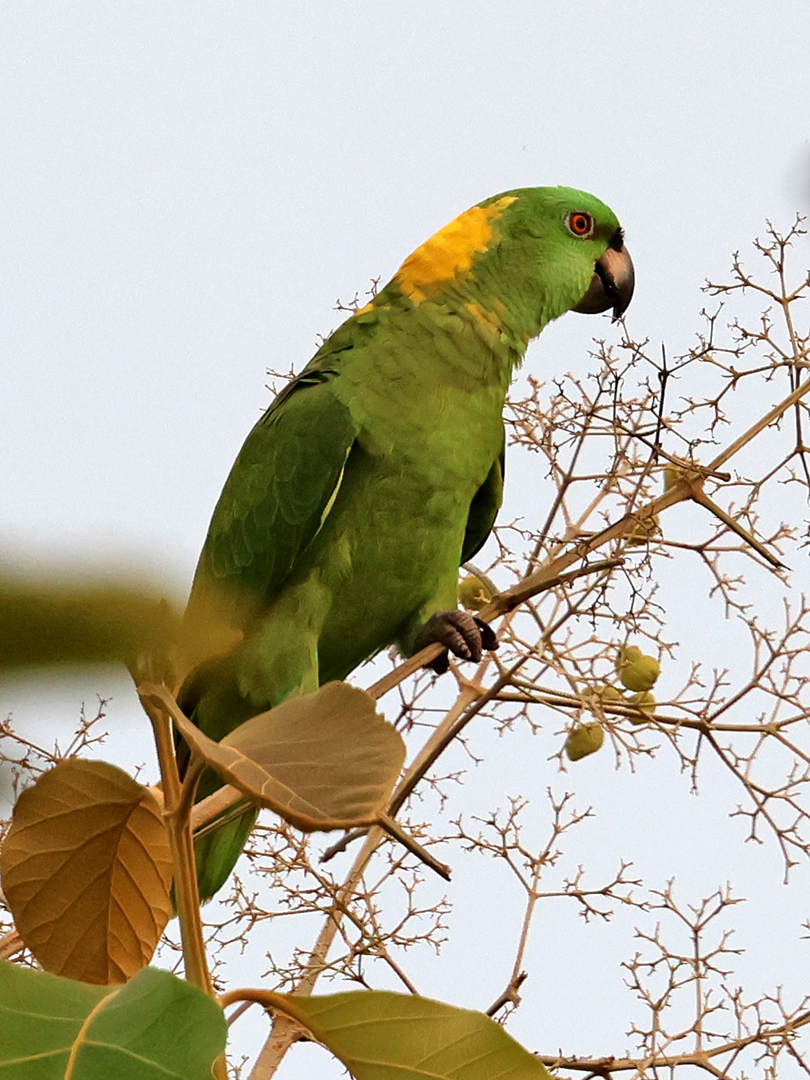
The Yellow-naped Amazon is a large green amazon with a yellow patch on the nape. It occurs only in the guide area, mainly in the dry Pacific lowlands from southern Mexico to northwestern Costa Rica. Its talking ability makes it highly sought after as a cage bird, and nest poaching has reduced the wild population to a fraction of its former size.
Voice
Loud, deep and rolling; a rough krrah and kroo-kroo, often in duets between partners. Wild populations have regional dialects in their contact calls.
Recording: Manuel Grosselet — CC BY-NC-SA 4.0 · shortened to the first 60 s, mono · xeno-canto
Identification
35–38 cm. Mostly green, with a yellow patch on the hindcrown and nape that is larger in older birds; sometimes a little yellow on the forehead. A red speculum shows on the secondaries, the primaries are bluish and the short, broad tail has a yellowish-green tip. The bill and legs are dark grey. Young birds lack the yellow nape. Birds from the Mosquitia of Honduras and Nicaragua (A. a. parvipes) have red on the bend of the wing. Male and female are alike.
Confusion species
The Yellow-headed Amazon Amazona oratrix has a yellow head instead of a yellow nape and a pale bill. The Yellow-crowned Amazon Amazona ochrocephala, only in Panama, has a yellow forehead and a red bend of the wing. The Red-lored Amazon Amazona autumnalis is smaller and has a red forehead. Young Yellow-naped Amazons without yellow resemble the Mealy Amazon Amazona farinosa, but that species has a white eye-ring and a pale base to the bill.
Habitat
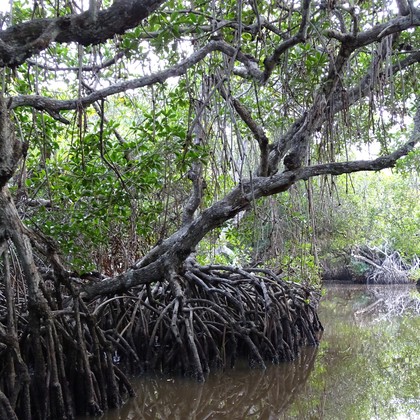
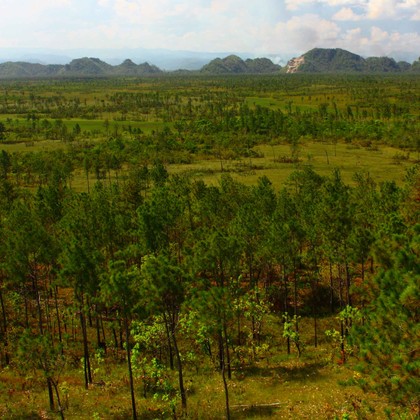
Tropical dry forest and semi-deciduous forest, gallery forest along rivers, mangroves, savanna and pasture with scattered large trees, and in the Mosquitia pine savanna; mostly in the lowlands below 600 m. It eats seeds, fruit and flowers. It nests in a cavity in a large tree, often in pasture with isolated trees.
Where the bird is most at home, classified by the vegetation units of Mexico and Central America.




Range and movements
Only in the guide area. Along the Pacific side from extreme southeastern Oaxaca and Chiapas through Guatemala, El Salvador, Honduras and Nicaragua to northwestern Costa Rica (Guanacaste). Also in the pine savannas of the Mosquitia in northeastern Honduras and Nicaragua, and on the Bay Islands of Honduras. It has disappeared or become very scarce in many parts of its range.
- Resident
- dark = core range, pale = thinly spread
How and when to look
In Guanacaste, Costa Rica, small groups can still be seen in and around Palo Verde and Santa Rosa National Parks, especially early in the morning and at sunset, when they fly between roost and feeding areas.
Conservation status
Critically Endangered. The population has declined very steeply over a few decades, mainly through the taking of chicks from nests for the cage-bird trade and the clearance of dry forest. Nests are robbed even in protected areas.
Scientific name
Amazona auropalliata | (Lesson, 1842)
Lesson described the species in 1842 as Psittacus (amazona) auro-palliatus; because it was later moved to another genus, the author and year stand in brackets. The genus Amazona was introduced in 1830 by Lesson. Amazona comes from 'Amazone', the French name Buffon gave to various tropical American parrots because they came from the Amazon region. auropalliata is Latin, from aurum 'gold' and palliatus 'cloaked', after the yellow patch on the nape. The specimen the first description was based on came from Realejo, Nicaragua.