All species › Passerines › Tanagers and allies › Yellow-bellied Seedeater
Position in the tree Birds Aves › Birds with a flexible palate Neognathae › All other modern birds Neoaves › Landbirds Telluraves › Falcons, parrots and passerines Australaves › Falcons and passerines Eufalconimorphae › Parrots and passerines Psittacopasserae
Yellow-bellied Seedeater | Sporophila nigricollis
Geelbuikdikbekje | Semillero ventriamarillo
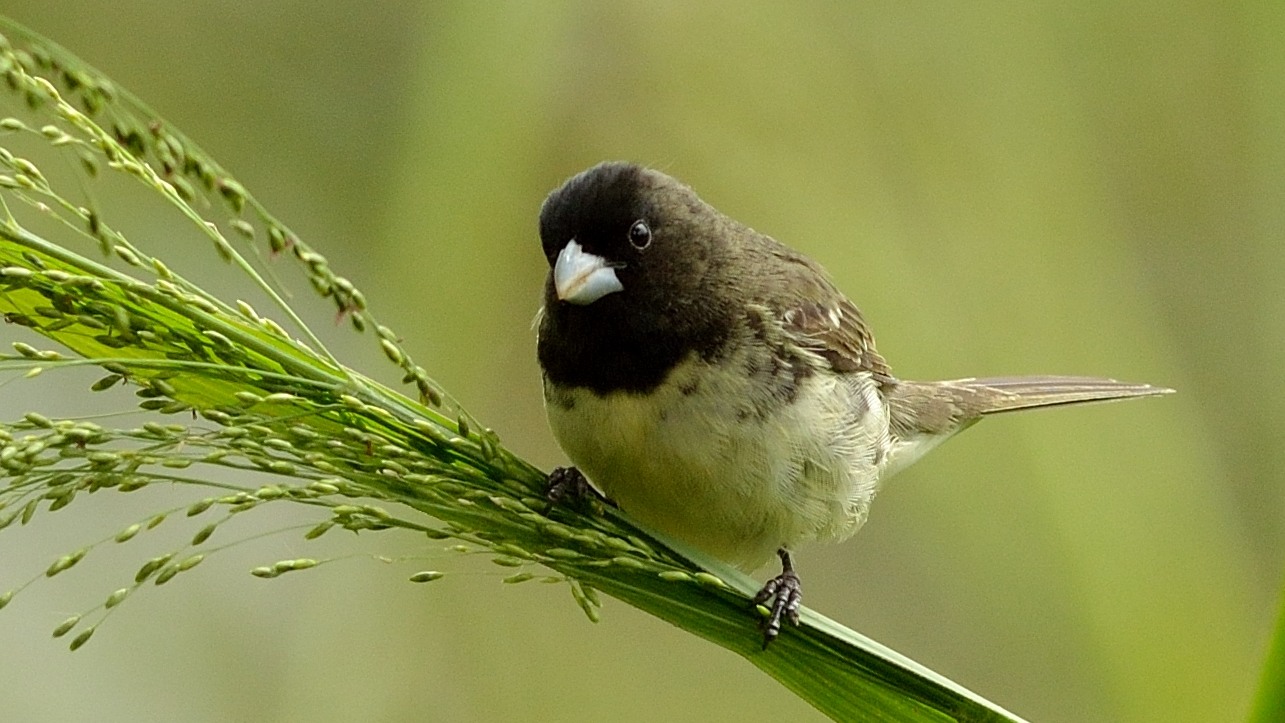
The Yellow-bellied Seedeater is a small seed-eater of grassland and pasture that in the guide area occurs only in Panama and southern Costa Rica. The male has a black head and breast above a pale yellow belly; the female is olive brown. The species is slowly spreading north as pastures are created.
Voice
The song is a short, fast series of clear, somewhat husky notes, often ending in a buzzy bzee-bzee. The call is a soft chee.
Recording: Marco Andrés Urvina Alejandro — CC BY-NC-SA 4.0 · converted to mono · xeno-canto
Identification
10–11 cm. Short, thick, rounded bill, pale bluish grey in the male, darker in the female. The male is olive green above, with a black head, throat and upper breast, and pale yellow to yellowish white below; there is no or only a small white wing speculum. The female is olive brown above and pale buffy yellow below, without wing bars.
Confusion species
The male Yellow-faced Grassquit Tiaris olivaceus has a yellow eyebrow and yellow throat beside the black and a more pointed bill. The male Variable Seedeater Sporophila corvina has a black bill and no olive green back; females of the two species are almost impossible to separate, although female Yellow-bellied are slightly yellower below. Morelet's Seedeater Sporophila morelleti has white wing bars.
Habitat
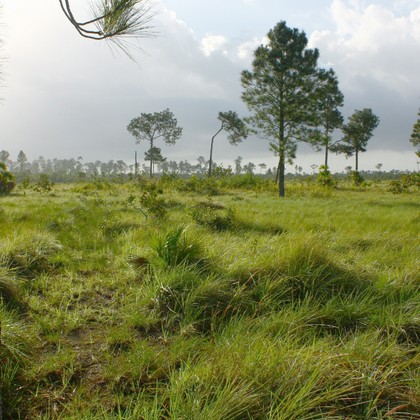
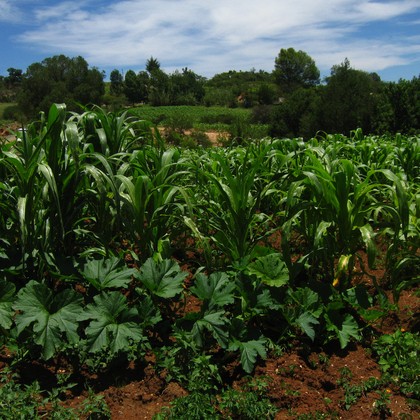
Grassland, pasture with bushes, rank roadsides, overgrown fields and clearings with tall grass, especially in hills and foothills up to about 1500 m. Lives in pairs or small groups, often with other seedeaters; feeds mainly on grass seed.
Where the bird is most at home, classified by the vegetation units of Mexico and Central America.


Range and movements
In the guide area mainly in Panama, on both sides of the mountains, and in southern Costa Rica, where the species has spread since the late twentieth century. Beyond the guide area from Colombia and Venezuela to northern Argentina and eastern Brazil, and on Trinidad.
- Resident
- dark = core range, pale = thinly spread
How and when to look
In southern Costa Rica and western Panama most records come from pastures and grassland in hill country. The pale bill and black head of the male are the best features in mixed flocks of seedeaters.
Conservation status
Not threatened (LC). Common in much of its range; benefits from deforestation. Trapped as a cage bird.
Scientific name
Sporophila nigricollis | (Vieillot, 1823)
Vieillot described the species in 1823 as Pyrrhula nigricollis; because it was later moved to another genus, the author and year stand in brackets. The genus Sporophila was introduced in 1844 by Cabanis. Sporophila is Greek, from sporos 'seed' and philos 'lover': 'seed-lover'. nigricollis is Latin, from niger 'black' and collum 'neck', after the male's black head and throat. The specimen the first description was based on came from Brazil.