All species › Passerines › Tanagers and allies › Cinnamon-rumped Seedeater
Position in the tree Birds Aves › Birds with a flexible palate Neognathae › All other modern birds Neoaves › Landbirds Telluraves › Falcons, parrots and passerines Australaves › Falcons and passerines Eufalconimorphae › Parrots and passerines Psittacopasserae
Cinnamon-rumped Seedeater | Sporophila torqueola
Kaneelstuitdikbekje | Semillero rabadilla canela
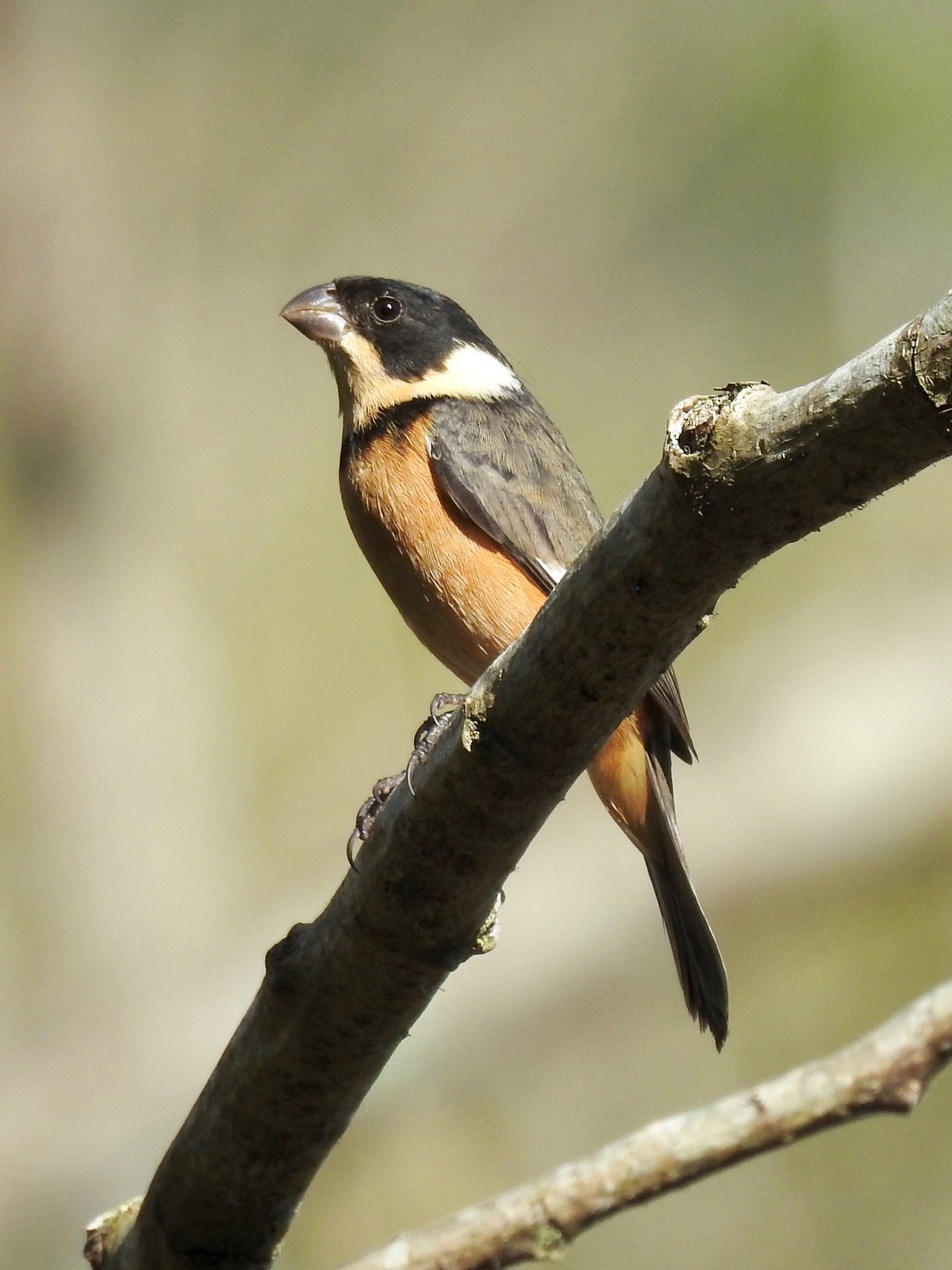
The Cinnamon-rumped Seedeater is a small seed-eater of grassland and field edges in western Mexico. The male has a black head, a white collar and cinnamon underparts; the female is buffy brown. It is endemic to Mexico and was treated as one species together with Morelet's Seedeater until 2018.
Voice
The song is a clear series of whistled notes, often ending in a few repeated, descending notes, similar to that of Morelet's Seedeater. The call is a soft, nasal cheh.
Recording: Manuel Grosselet — CC BY-NC-SA 4.0 · shortened to the first 60 s, mono · xeno-canto
Identification
10–11 cm. Short, thick, rounded bill, blackish in the male, horn-coloured in the female. The male has a black head and back, a white throat and a white collar, often a narrow black breast band, and cinnamon underparts and rump. The black wings have a white wing speculum and narrow white wing bars. The female is olive brown above, warm buff below, with buffy wing bars and a buffy brown rump.
Confusion species
Morelet's Seedeater Sporophila morelleti has white to pale buffy yellow underparts and a grey or pale rump; the females are very similar, but those of Cinnamon-rumped are warmer in colour. The male Ruddy-breasted Seedeater Sporophila minuta is greyish brown above without a black head or collar. Lesser Goldfinch Spinus psaltria has yellow underparts and a more pointed bill.
Habitat
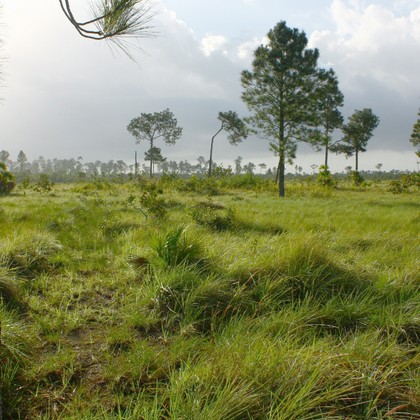
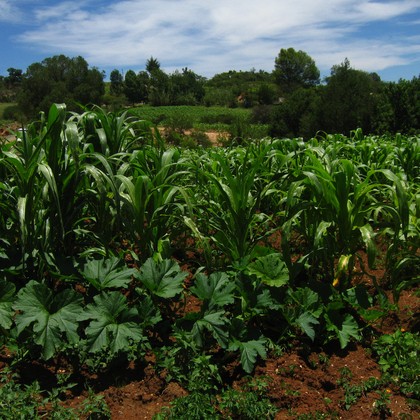
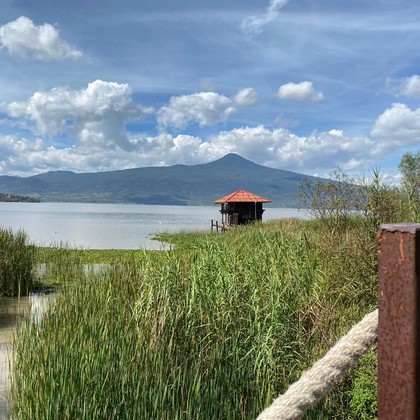
Grassland, rank roadsides, field edges, scrub along streams and clearings in dry forest and thorn scrub, from sea level to about 2000 m in the interior. Lives in pairs or flocks, often with other seed-eaters; feeds mainly on grass seed.
Where the bird is most at home, classified by the vegetation units of Mexico and Central America.


Range and movements
Endemic to Mexico: on the Pacific side from Sinaloa and Nayarit south to Oaxaca, and in the interior, including the Balsas basin and the southern part of the central highlands. In southern Oaxaca its range meets that of Morelet's Seedeater.
- Resident
- dark = core range, pale = thinly spread
How and when to look
The cinnamon rump and underparts of males are visible in flight and on a perch. In areas where it meets Morelet's Seedeater it is worth looking for both species in the same flock.
Conservation status
Not threatened (LC). Common in suitable open country; trapped as a cage bird, which may affect numbers locally.
Scientific name
Sporophila torqueola | (Bonaparte, 1850)
Bonaparte described the species in 1850 as Spermophila torqueola; because it was later moved to another genus, the author and year stand in brackets. The genus Sporophila was introduced in 1844 by Cabanis. Sporophila is Greek, from sporos 'seed' and philos 'lover': 'seed-lover'. torqueola is a diminutive of Latin torques 'collar': 'with a little collar', after the dark breast band. The specimen the first description was based on came from Mexico City.