All species › Storks › Storks › Wood Stork
Position in the tree Birds Aves › Birds with a flexible palate Neognathae › All other modern birds Neoaves › Birds of the elements Elementaves › Tropicbirds and waterbirds Phaethoquornithes › Core waterbirds Aequornithes
Wood Stork | Mycteria americana
Kaalkopooievaar | Cigüeña americana
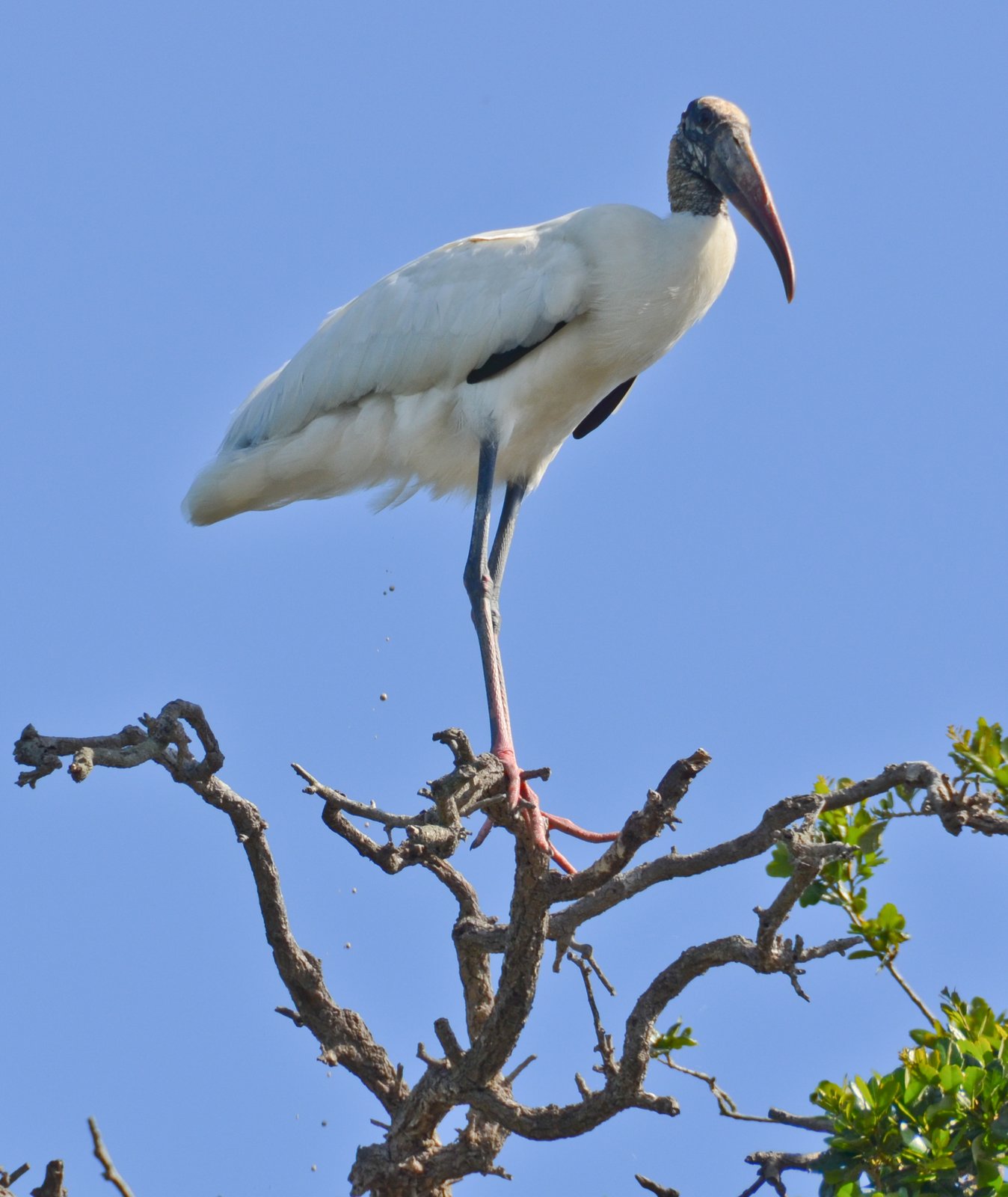
The Wood Stork is the commonest stork in the guide area: a large, white marsh bird with a bare grey head and a heavy, slightly decurved bill. It feeds by touch, with the bill half open in shallow water, and so depends on pools that shrink in the dry season and in which fish become concentrated. In the guide area it breeds in colonies in the lowlands from Mexico to Panama.
Voice
Adults are almost silent; at the colony they clatter their bills and hiss. Young in the nest give a persistent, loud begging nyah-nyah.
Recording: Sue Riffe — CC BY-NC-SA 4.0 · converted to mono · xeno-canto
Identification
83–115 cm, with long legs and a wingspan of around one and a half metres. The plumage is white, with black flight feathers and a black tail, which in flight form a broad black trailing edge to the wing. The head and upper neck are bare, grey and scaly in texture; the bill is thick at the base, dark horn-coloured and slightly decurved towards the tip. The legs are black with pink feet. The sexes are alike. Juveniles have a grey-brown, partly feathered head and neck and a yellow bill. It flies with the neck outstretched and the legs trailing, often soaring high on thermals, sometimes in flocks.
Confusion species
Jabiru Jabiru mycteria is much larger, with an all-white wing, a black bare head and neck with a red band and a heavy, slightly upturned bill. American White Ibis Eudocimus albus is much smaller, with a red, more strongly decurved bill and only black wingtips. Great Egret Ardea alba is all white, with a yellow, straight bill, and flies with the neck retracted. American White Pelican Pelecanus erythrorhynchos also has black flight feathers but is heavier, with short legs and a long, flat bill. Soaring high, the stork can recall King Vulture Sarcoramphus papa, which has a similar black-and-white wing pattern but a short neck, a short tail and no projecting legs.
Habitat
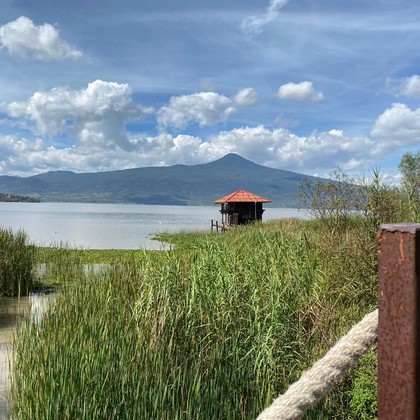
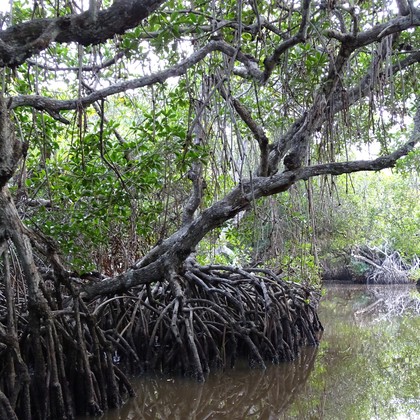
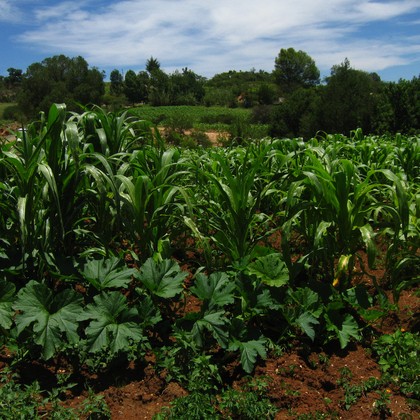
Freshwater and brackish marshes, flooded savannas, shallow lagoons, mangroves, rice fields, fish ponds and lake edges, mainly in the lowlands. It feeds where shallow water holds fish, often in small groups, walking with the bill in the water and sometimes stirring with a foot. It breeds in colonies in trees in or near water, often in mangroves or on islets in marshes, usually in the dry season, when the pools shrink.
Where the bird is most at home, classified by the vegetation units of Mexico and Central America.



Range and movements
In Mexico in the lowlands of both coasts, with breeding colonies in Tabasco, Campeche, Yucatán and Chiapas among other places; outside the breeding season birds wander north along the Pacific coast to Sinaloa and Sonora and along the Gulf coast to Tamaulipas. Further in the lowlands of all of Central America, from Belize and Guatemala to Panama, with large numbers in the wetlands of Belize, the Mosquitia and Guanacaste. Outside the guide area in the south-eastern United States, on Cuba and in South America to northern Argentina.
- Resident
- dark = core range, pale = thinly spread
How and when to look
Good places are the Pantanos de Centla in Tabasco, La Encrucijada in Chiapas, Crooked Tree in Belize and Palo Verde in Costa Rica, where in the dry season hundreds of birds can gather at shrinking pools. In the afternoon flocks often soar high on thermals.
Conservation status
Not threatened. In the guide area locally common, but dependent on large wetlands. Threats are the drainage of marshes, changes in water management that disrupt the drying of pools, the felling of nesting trees and disturbance of colonies.
Scientific name
Mycteria americana | Linnaeus, 1758
Linnaeus described the species in 1758 and placed it straight away in the genus where it still stands. He introduced the genus Mycteria in that same work. Mycteria comes from the Greek muktēr, 'snout, nose' — for the large, heavy bill. americana means 'American'; Linnaeus based the species on Marcgrave's account from Brazil. The specimen the first description was based on came from Brazil.