All species › Storks › Storks › Jabiru
Position in the tree Birds Aves › Birds with a flexible palate Neognathae › All other modern birds Neoaves › Birds of the elements Elementaves › Tropicbirds and waterbirds Phaethoquornithes › Core waterbirds Aequornithes
Jabiru | Jabiru mycteria
Jabiroe | Jabirú
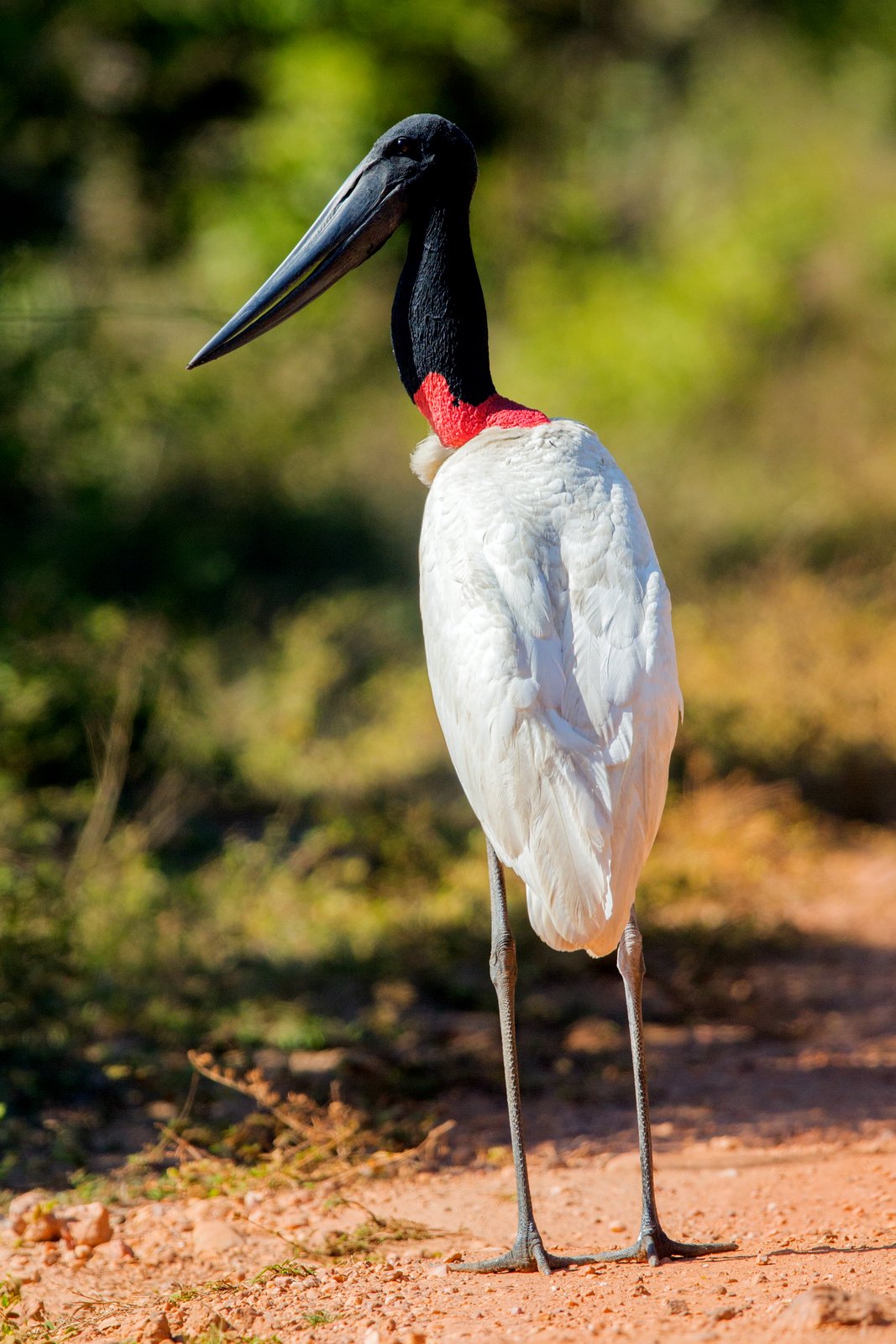
The Jabiru is the largest stork in the Americas and the tallest flying bird of the guide area: a white giant with a bare black head and neck, a red band at the base of the neck and a heavy, slightly upturned bill. In the guide area it is a scarce resident of large marshes and wet savannas in the lowlands, from south-eastern Mexico to Costa Rica.
Voice
Almost silent. At the nest the birds clatter their bills, for instance when greeting the partner.
Recording: JAYRSON ARAUJO DE OLIVEIRA — CC BY-NC-SA 4.0 · converted to mono · xeno-canto
Identification
122–140 cm, with a wingspan of well over two metres. The plumage is all white, including the flight feathers. The head and upper neck are bare and black; at the base of the neck is a broad band of bare red skin that can swell and turns brighter red in display. The bill is black, very long and heavy, thick at the base and slightly upturned towards the tip. The legs are long and black. The sexes are alike, but the male is larger. Juveniles are grey-brown with a dark head and gradually turn white. It flies with the neck outstretched and the legs trailing, on slow beats, and readily soars on thermals.
Confusion species
Wood Stork Mycteria americana is smaller, with black flight feathers and tail forming a black trailing edge in flight, a grey bare head and a slightly decurved bill. Maguari Stork Ciconia maguari, a very rare vagrant, has black flight feathers, a feathered white neck and a straight grey bill. Great Egret Ardea alba is much slimmer, with a yellow bill and a feathered white neck, and flies with the neck retracted.
Habitat
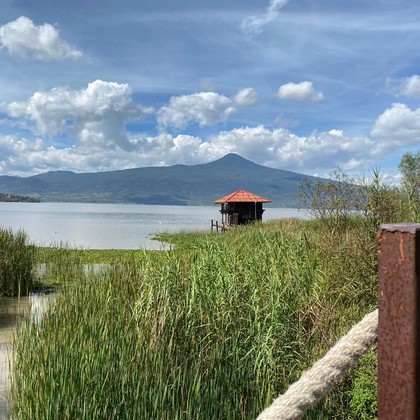
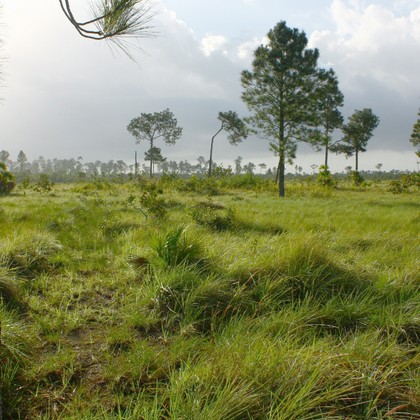
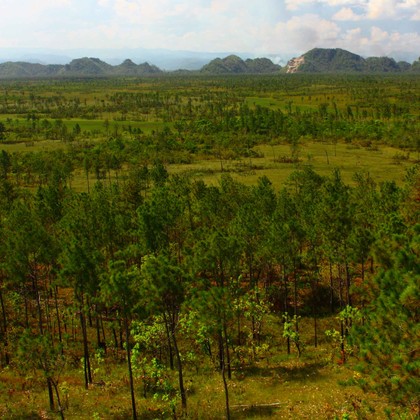
Open freshwater marshes, wet and flooded savannas, pine savannas with pools, the shores of lagoons and lakes and clearings in floodplain forest, in the lowlands. It walks slowly through shallow water and takes fish, frogs, snakes, young caimans and large invertebrates. It breeds in pairs, not in colonies; the nest is a very large platform of sticks high in an isolated tree, used for years in succession. In the guide area the breeding season falls in the dry season.
Where the bird is most at home, classified by the vegetation units of Mexico and Central America.

Range and movements
In Mexico scarce in the lowlands of Tabasco, Campeche, Chiapas and the Yucatán Peninsula, with a few breeding pairs in the large wetlands. In Belize the largest numbers in the guide area, especially in the northern half, with breeding sites in the wet savannas. Further locally in northern Guatemala, in the Mosquitia of Honduras and Nicaragua and in northern Costa Rica; in Panama a rare visitor. Outside the breeding season birds occasionally wander far from the breeding areas. Outside the guide area in South America, from Colombia and Venezuela to northern Argentina.
- Resident
- dark = core range, pale = thinly spread
How and when to look
Crooked Tree in Belize is the best-known site; in the dry season the birds feed there along the shrinking lagoons and nests can be seen from the causeway or by boat. In Costa Rica Caño Negro and Palo Verde offer a chance, in Mexico the Pantanos de Centla and the wetlands of southern Campeche. Soaring on thermals, the all-white wings are the best feature.
Conservation status
Not threatened globally, but scarce and local in the guide area; in Mexico the species is legally listed as endangered. Threats are the drainage of wetlands, the felling of nest trees, disturbance at nests and locally hunting.
Scientific name
Jabiru mycteria | (Lichtenstein, 1819)
Lichtenstein described the species in 1819 as Ciconia mycteria; because it was later moved to another genus, the author and year stand in brackets. The genus Jabiru was introduced in 1906 by Hellmayr. Jabiru is the Tupi name for this large stork. mycteria is Greek, from muktēr 'snout, nose', after the huge bill. The specimen the first description was based on came from Brazil.