All species › Waders, gulls and terns › Sandpipers and allies › White-rumped Sandpiper
Position in the tree Birds Aves › Birds with a flexible palate Neognathae › All other modern birds Neoaves › Birds of the elements Elementaves › Cranes and waders Gruimorphae
White-rumped Sandpiper | Calidris fuscicollis
Bonapartes strandloper | Correlimos culiblanco
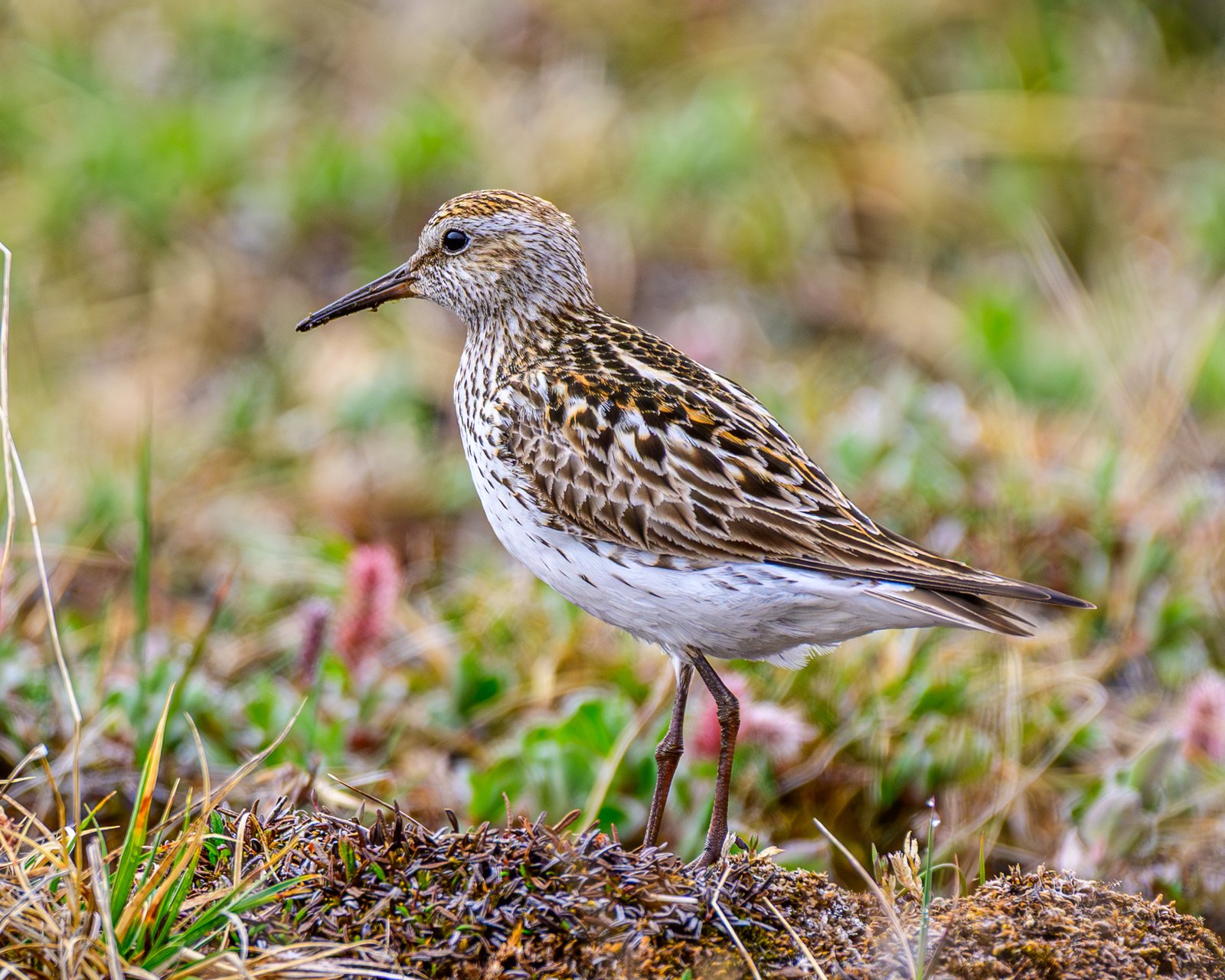
The White-rumped Sandpiper is a long-winged sandpiper with a narrow white rump band that makes one of the longest migrations of any shorebird, between the North American tundra and southern South America. In autumn it largely crosses the Atlantic Ocean, so in the guide area it is a scarce passage migrant, mainly in late spring.
Voice
A high, thin, squeaky tseet or jeet, like a bat or an insect.
Recording: Jacob Wijpkema — CC BY-NC-SA 4.0 · converted to mono · xeno-canto
Identification
15–18 cm, slender, with long wings whose tips project well beyond the tail at rest. Bill short, straight to slightly drooping, black with a small pale reddish-brown base to the lower mandible; legs black. In spring grey-brown above with rufous tones on the crown and scapulars and fine dark streaks on the breast that extend well along the flanks; a white supercilium. In flight a narrow wing bar and a narrow white band across the rump, above a dark tail.
Confusion species
Baird's Sandpiper Calidris bairdii is also long-winged but browner and buffier, with a dark centre to the rump and unstreaked flanks. Semipalmated Sandpiper Calidris pusilla and Western Sandpiper Calidris mauri are smaller and more compact, with shorter wings and a dark rump. Stilt Sandpiper Calidris himantopus also has a white rump, but has long greenish legs and a longer bill.
Habitat
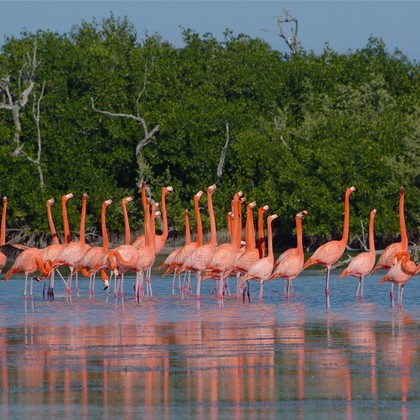
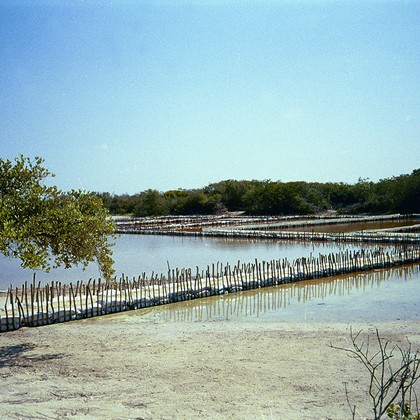
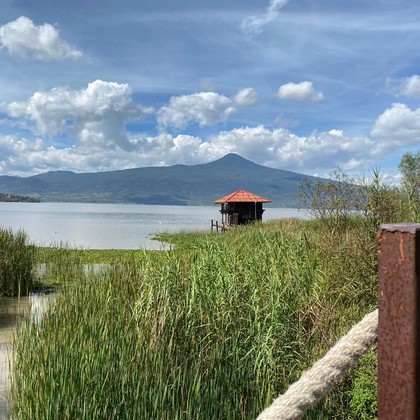
Mudflats, lagoons, salt pans, flooded grassland, rice fields and the shores of lakes and ponds. It often feeds in mixed flocks with other sandpipers, walking through shallow water.
Where the bird is most at home, classified by the vegetation units of Mexico and Central America.

Range and movements
Scarce to rare passage migrant, mainly in spring along the Gulf coast of Mexico, on the Yucatán Peninsula and along the Caribbean side of Central America; rare on the Pacific side and inland. In autumn the species is only seldom seen in the guide area. Outside the guide area it breeds on the tundra of Alaska and Arctic Canada and winters in southern South America, mainly in Argentina, Uruguay and southern Brazil.
- Passage (Mar–Apr, Oct–Nov)
- dark = core range, pale = thinly spread
How and when to look
Mixed sandpiper flocks on the mudflats and flooded fields along the Gulf coast offer the best chance in May; on take-off the narrow white rump band gives the species away, and at rest the long wingtips.
Conservation status
Vulnerable. Counts along the migration route and in the wintering areas point to a steep decline. Possible causes are the loss of wet grassland and stopover sites along the migration route and changes on the Arctic breeding grounds.
Scientific name
Calidris fuscicollis | (Vieillot, 1819)
Vieillot described the species in 1819 as Tringa fuscicollis; because it was later moved to another genus, the author and year stand in brackets. The genus Calidris was introduced in 1804 by Merrem. Calidris goes back to Ancient Greek kalidris or skalidris, a name Aristotle used for an unidentified grey waterside bird. fuscicollis combines Latin fuscus 'dusky, brown' with -collis '-necked', so 'dusky-necked'. The specimen the first description was based on came from Paraguay.