All species › Waders, gulls and terns › Sandpipers and allies › Least Sandpiper
Position in the tree Birds Aves › Birds with a flexible palate Neognathae › All other modern birds Neoaves › Birds of the elements Elementaves › Cranes and waders Gruimorphae
Least Sandpiper | Calidris minutilla
Kleinste strandloper | Correlimos menudillo
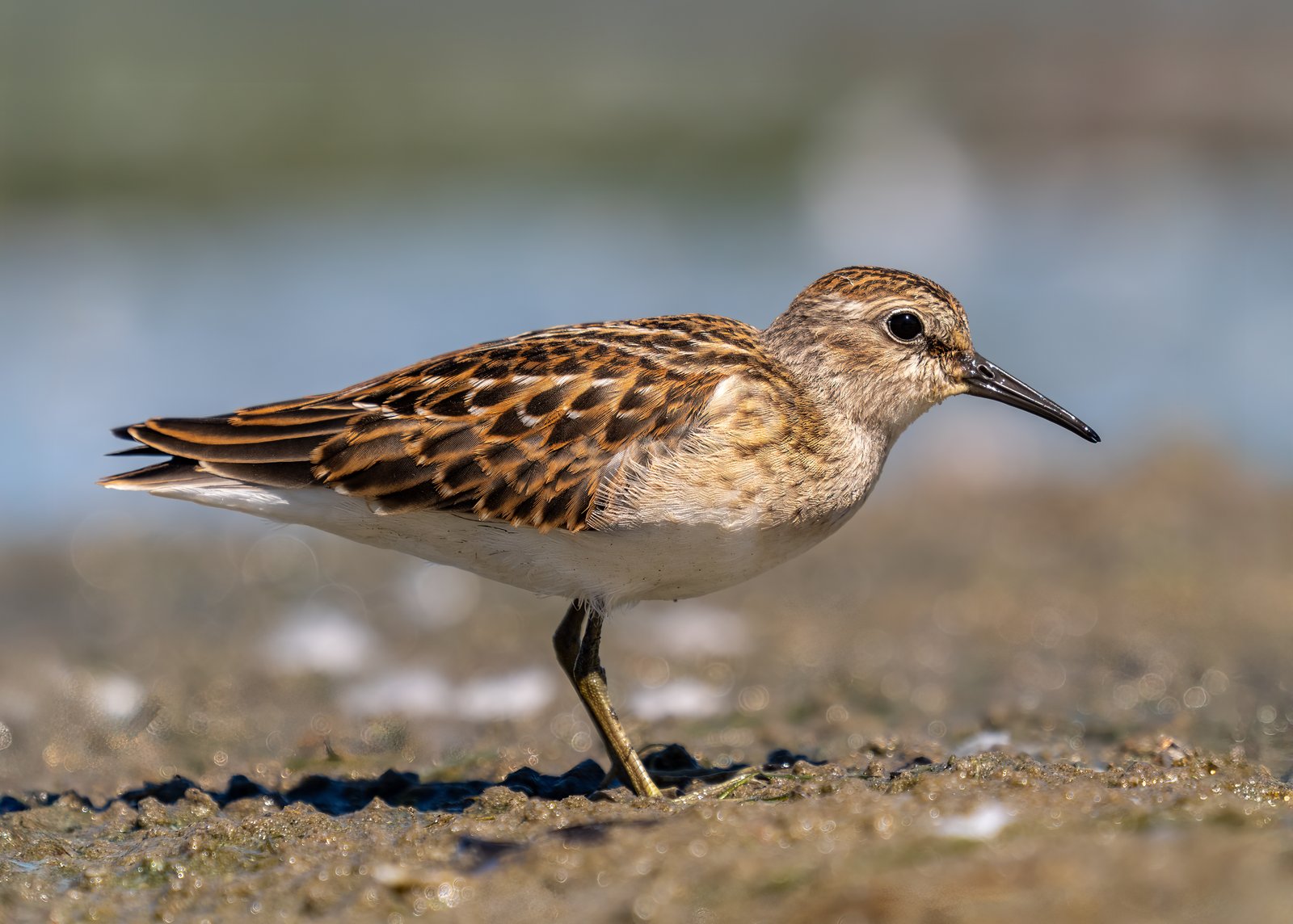
The Least Sandpiper is the smallest shorebird in the world and in winter the most widespread small sandpiper in the guide area. It occurs both on the coast and inland, up to the plateau, and more often than other sandpipers feeds along vegetated shores and the edges of freshwater ponds.
Voice
A high, rolling, rising krreet or prreeet, often on taking flight.
Recording: Jeff Stewart — CC BY-NC-SA 4.0 · converted to mono · xeno-canto
Identification
13–15 cm, small and compact, with a hunched posture. The bill is short, thin, pointed and slightly drooping at the tip; the legs are yellow to greenish, but can look dark when muddy. Browner than the other small sandpipers, with a brown, finely streaked breast band. In non-breeding plumage grey-brown above with dark feather centres; juveniles are warm rufous, with white fringes forming a V on the back. In flight a narrow wing bar and a dark centre to the rump and tail.
Confusion species
Semipalmated Sandpiper Calidris pusilla and Western Sandpiper Calidris mauri are greyer, with black legs, and stand more upright. Pectoral Sandpiper Calidris melanotos shares the pattern of yellow legs and streaked breast but is much larger. Baird's Sandpiper Calidris bairdii is larger and longer-winged, with black legs.
Habitat
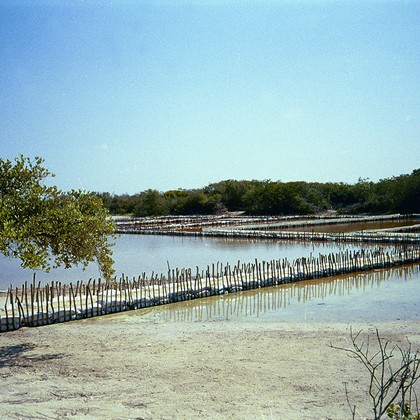
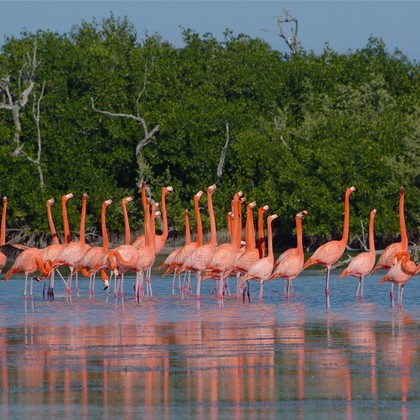
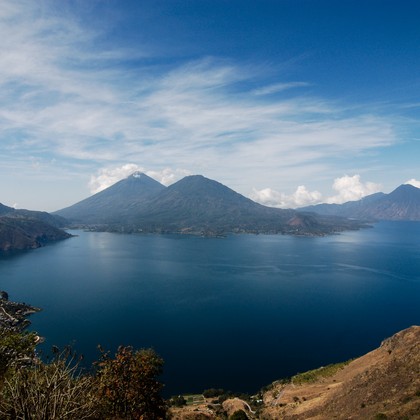
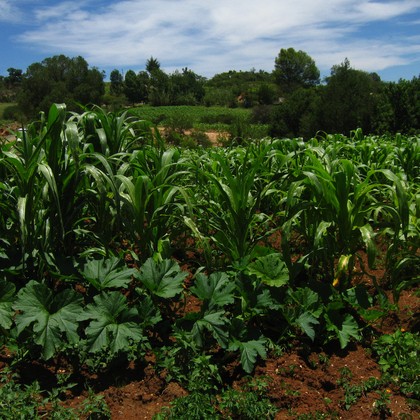
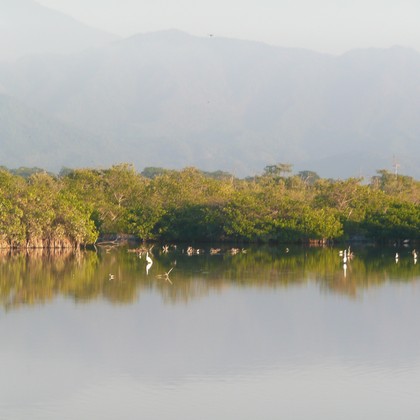
Muddy shores of lagoons, salt pans, estuaries, lakes, ponds and rivers, freshwater marshes, sewage ponds, shrimp ponds, rice fields and the muddy edges of mangroves, from sea level to the plateau. It likes to feed among low vegetation and algae, often in small flocks.
Where the bird is most at home, classified by the vegetation units of Mexico and Central America.


Range and movements
Winter visitor and passage migrant throughout the guide area, from Baja California and northern Mexico to Panama, on both coasts and inland, up to the Mexican Plateau and the highlands of Guatemala. Most numerous in Mexico; somewhat less common in southern Central America. Outside the guide area the species breeds on the tundra and in the boreal zone of Alaska and Canada and winters from the southern United States and the Caribbean to northern South America.
- Winter visitor (c. Oct–Mar)
- dark = core range, pale = thinly spread
How and when to look
Almost any muddy pond edge, salt pan or sewage pond holds Least Sandpipers in winter. Leg colour is the quickest feature, but only when the legs are clean; otherwise the brown colour and hunched posture help.
Conservation status
Near Threatened. Long-term counts in North America point to a decline. In the guide area stopover sites are being lost through the filling and draining of marshes and lagoons, shrimp farming and the clearing of mangroves, but the species also uses man-made ponds.
Scientific name
Calidris minutilla | (Vieillot, 1819)
Vieillot described the species in 1819 as Tringa minutilla; because it was later moved to another genus, the author and year stand in brackets. The genus Calidris was introduced in 1804 by Merrem. Calidris goes back to Ancient Greek kalidris or skalidris, a name Aristotle used for an unidentified grey waterside bird. minutilla is Medieval Latin for 'very small'. The specimen the first description was based on came from Halifax, Nova Scotia.