All species › Swifts › Swifts › White-naped Swift
Position in the tree Birds Aves › Birds with a flexible palate Neognathae › All other modern birds Neoaves › Birds of the elements Elementaves › Nightjars and swifts Strisores
White-naped Swift | Streptoprocne semicollaris
Witnekgierzwaluw | Vencejo nuca blanca
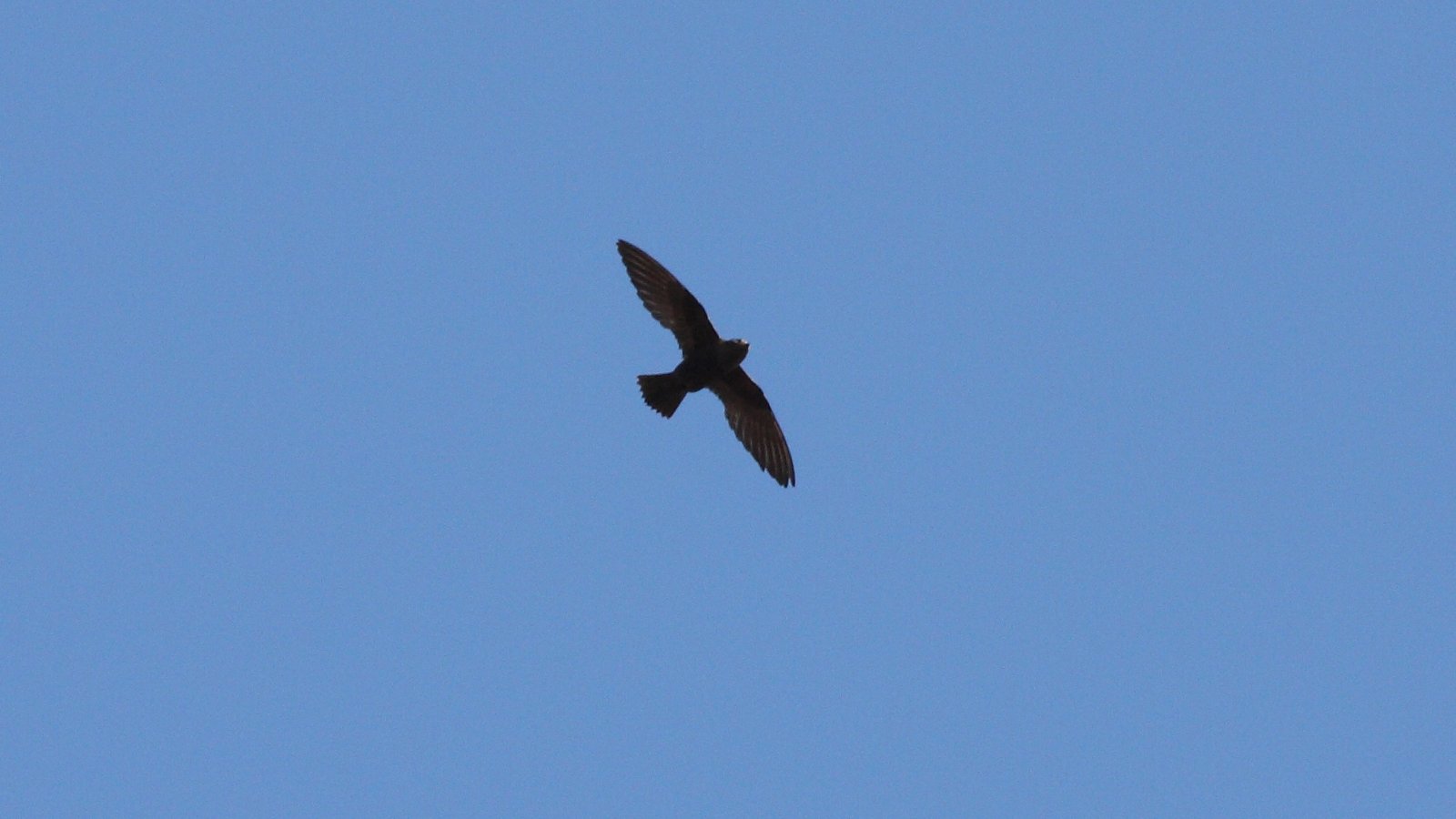
The White-naped Swift occurs only in Mexico and, at around 175 grams, is one of the largest swifts in the world. Flocks hunt high and fast over the mountains and barrancas of the west and centre of the country, often together with White-collared Swifts. Little is known about its breeding biology and movements; the birds roost and nest in caves and deep gorges.
Voice
Loud, harsh screams and a shrill, scratchy twitter, mainly from flocks at roosting and nesting sites; the sound resembles that of White-collared Swift but is poorly described.
Recording: Matthew L. Brady — CC BY-NC-SA 4.0 · converted to mono · xeno-canto
Identification
22–25 cm, very large and heavily built, with long, broad, sickle-shaped wings and a short, square or slightly notched tail. The plumage is blackish brown, with a faint gloss on the upperparts. A broad white band runs across the nape and sides of the neck but does not join on the throat: throat and breast are dark. The sexes are alike. Juveniles have a narrower, less clean nape band. In flight the heavy build with broad-based wings is striking as well as the size.
Confusion species
White-collared Swift Streptoprocne zonaris is slightly smaller and slimmer and has a complete white collar that is widest on the breast; from below no white is visible on White-naped Swift. Juvenile White-collared Swifts with an incomplete collar look more similar, but lack the broad white nape band. American Black Swift Cypseloides niger is much smaller and has no white in the plumage. White-throated Swift Aeronautes saxatalis is much smaller and has a white throat, breast and flank patches.
Habitat
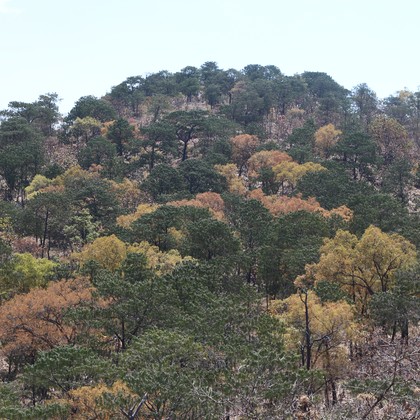
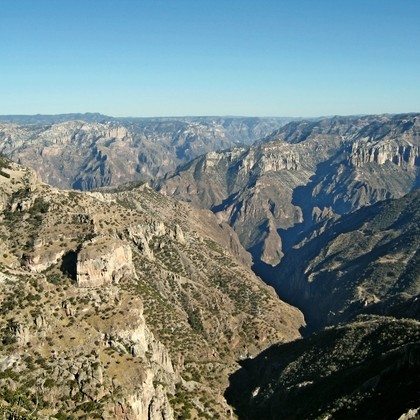
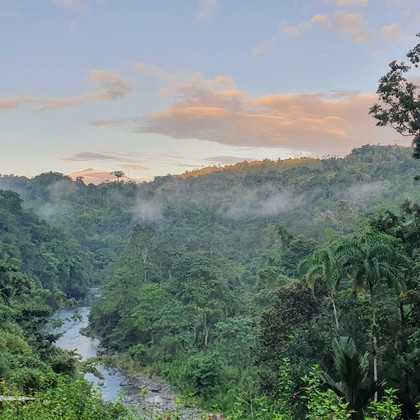
Hunts over pine-oak forest and tropical dry forest in hill and mountain country, over deep barrancas and river gorges and over open ground at the forest edge, from about 300 to above 2500 m. Feeds on flying insects. Nests and roosts in caves, sinkholes and deep, damp gorges, sometimes near waterfalls; the birds fly far from these sites to hunt.
Where the bird is most at home, classified by the vegetation units of Mexico and Central America.



Range and movements
Only in Mexico. On the Pacific slope and in the interior from south-western Chihuahua, Durango and Sinaloa south through Nayarit, Jalisco and Michoacán to Guerrero, and in the central highlands in the State of México, Morelos and around Mexico City. Scattered records east to Puebla, Hidalgo and Oaxaca and a small number from Chiapas, where its status is unclear. Flocks probably wander outside the breeding season, but regular migration is not known.
- Resident
- Summer visitor (c. Apr–Sep)
- Winter visitor (c. Oct–Mar)
- Passage (Mar–Apr, Oct–Nov)
- dark = core range, pale = thinly spread
How and when to look
The best chances are along the mountain roads and barrancas of Sinaloa and Durango, such as the road from Mazatlán to Durango, and in the forested hills of Morelos and Guerrero. Check flocks of large swifts carefully: White-naped Swifts show no white from below, while from above or the side the white nape band stands out.
Conservation status
Not threatened. The species has a limited range within Mexico, but appears to be fairly common locally. Numbers and trends are poorly known; disturbance of the few known caves and gorges with roosting and nesting sites is a possible risk.
Scientific name
Streptoprocne semicollaris | (de Saussure, 1859)
De Saussure described the species in 1859 as Acanthylis semicollaris; because it was later moved to another genus, the author and year stand in brackets. The genus Streptoprocne was introduced in 1906 by Oberholser. Streptoprocne is Greek, from streptos 'collar' and Procne, the figure of Greek myth turned into a swallow, after the coloured collar. semicollaris is Latin, from semi 'half' and collaris 'collared', after the white half-collar on the nape. The specimen the first description was based on came from San Joaquín, near Mexico City.