All species › Passerines › Tanagers and allies › White-lined Tanager
Position in the tree Birds Aves › Birds with a flexible palate Neognathae › All other modern birds Neoaves › Landbirds Telluraves › Falcons, parrots and passerines Australaves › Falcons and passerines Eufalconimorphae › Parrots and passerines Psittacopasserae
White-lined Tanager | Tachyphonus rufus
Zwarte tangare | Tangara filiblanca
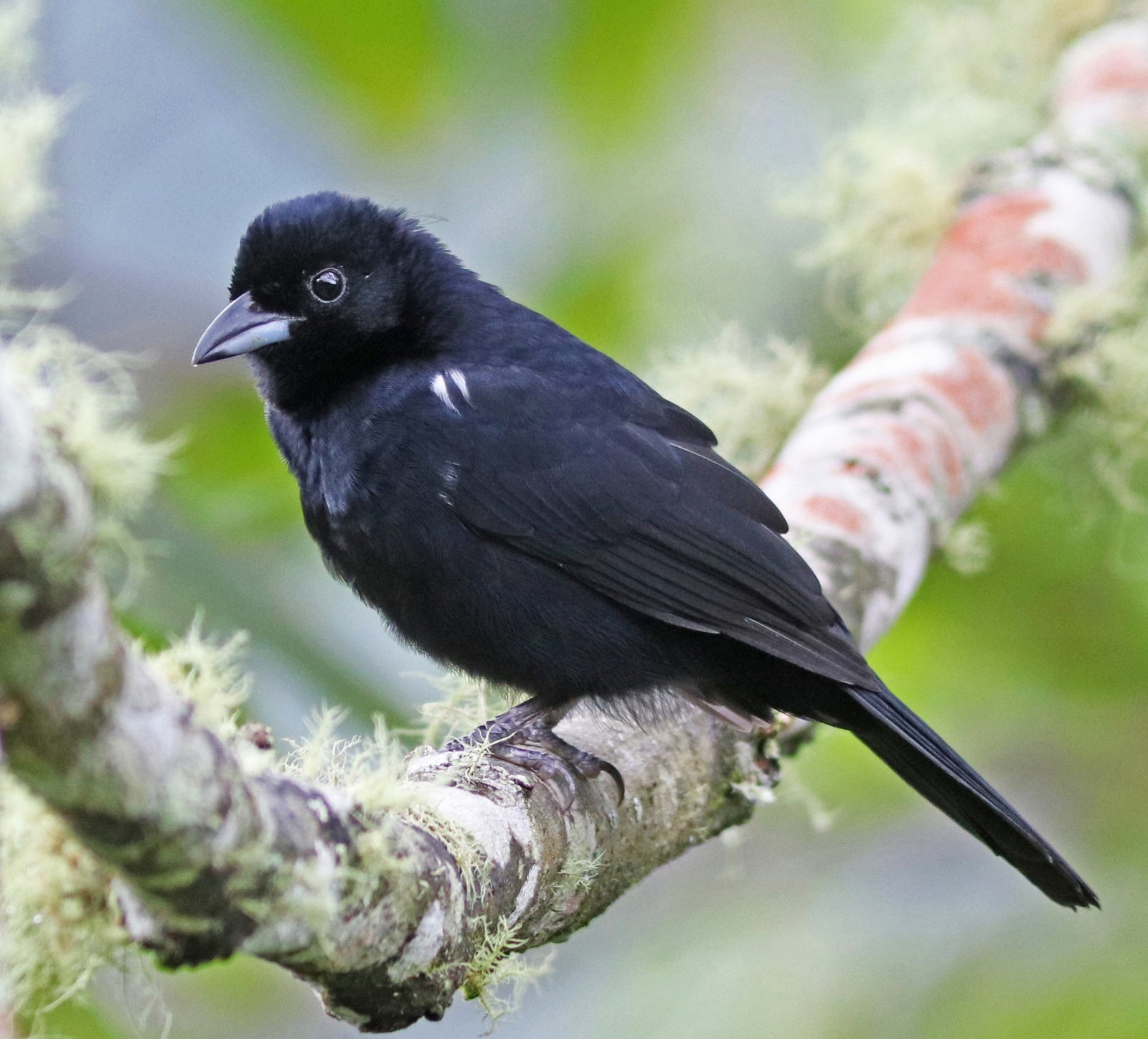
The White-lined Tanager is a tanager of semi-open country in which male and female are completely differently coloured: the male is entirely black, the female uniformly rufous-brown. Pairs stay together throughout the year. In the guide area it occurs in Costa Rica and Panama.
Voice
The song is a repeated series of short, whistled phrases such as chee-chew chee-chew. The call is a short chek.
Recording: JAYRSON ARAUJO DE OLIVEIRA — CC BY-NC-SA 4.0 · converted to mono · xeno-canto
Identification
16–18 cm. A medium-sized, slender tanager with a fairly long tail and a pointed bill; the lower mandible has a blue-grey base. The male is glossy black with a narrow white edge at the shoulder, often hidden at rest; in flight the white underwing coverts show well. The female is entirely warm rufous-brown, slightly paler below.
Confusion species
Melodious Blackbird Dives dives is larger and entirely black, without white in the wing, and has a black bill. The male Tawny-crested Tanager Tachyphonus delatrii is smaller, has an orange crest and lives in groups inside forest. The male White-shouldered Tanager Loriotus luctuosus is smaller and has a large white shoulder patch. The rufous-brown female may be confused with Rufous Mourner Rhytipterna holerythra, which has a broader bill and perches upright inside forest.
Habitat
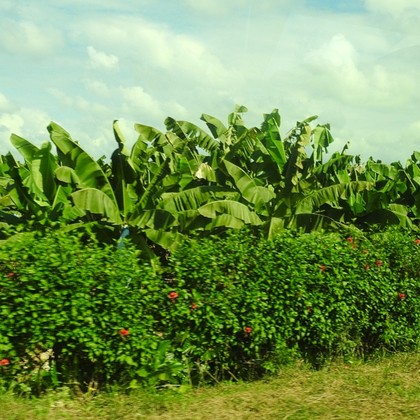
Forest edges, clearings, scrub, gardens, plantations and pastures with trees, from sea level to about 1500 m. It avoids the interior of closed forest. It eats fruit, insects and nectar.
Where the bird is most at home, classified by the vegetation units of Mexico and Central America.




Range and movements
Costa Rica, mainly on the Caribbean slope and in the south on the Pacific slope, and almost all of Panama. Outside the guide area in much of tropical South America south to southern Brazil and on Trinidad.
- Resident
- dark = core range, pale = thinly spread
How and when to look
Common in gardens and at fruit feeders in the lowlands of Costa Rica and Panama; pairs often sit together in a shrub at the edge of a clearing.
Conservation status
Not threatened (LC). Common and benefits from logging and the opening up of forest.
Scientific name
Tachyphonus rufus | (Boddaert, 1783)
Boddaert described the species in 1783 as Tangara rufa; because it was later moved to another genus, the author and year stand in brackets. The genus Tachyphonus was introduced in 1816 by Vieillot. Tachyphonus is Greek, from takhus 'fast' and phōneō 'to speak': 'fast talker'. rufus is Latin for 'rufous, red', after the rufous female. The specimen the first description was based on came from Cayenne, French Guiana.