All species › Passerines › New World sparrows › Volcano Junco
Position in the tree Birds Aves › Birds with a flexible palate Neognathae › All other modern birds Neoaves › Landbirds Telluraves › Falcons, parrots and passerines Australaves › Falcons and passerines Eufalconimorphae › Parrots and passerines Psittacopasserae
Volcano Junco | Junco vulcani
Vulkaanjunco | Junco volcanero
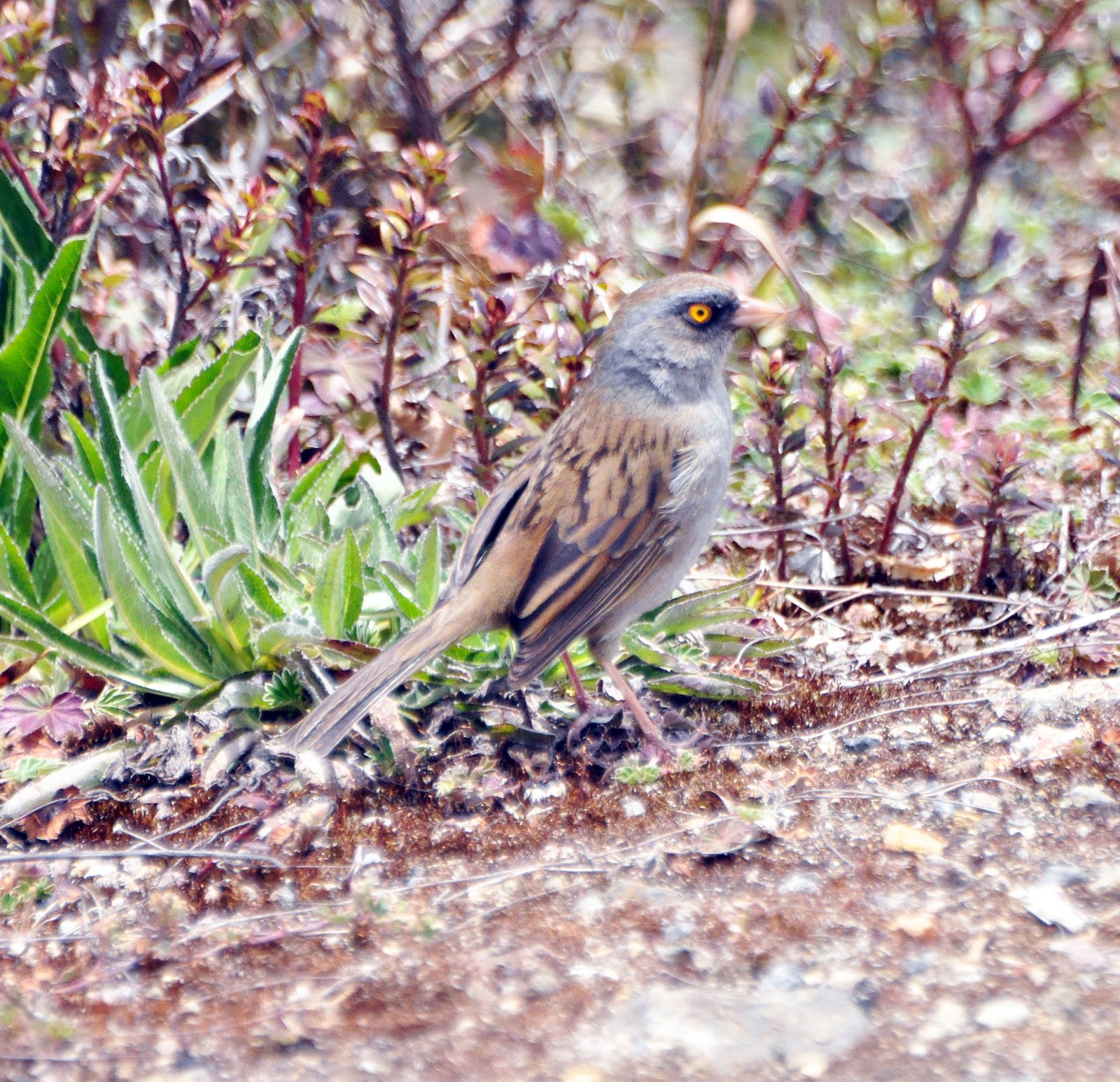
The Volcano Junco is a large, brown junco of the high mountains of Costa Rica and western Panama, with yellow-orange eyes set in a black mask. It lives around and above the treeline in páramo and scrub on the highest peaks and is often quite tame there.
Voice
The song is a short, varied series of high, squeaky notes and trills. Call a dry, high tseet.
Recording: Brian Cox — CC BY-NC-SA 4.0 · converted to mono · xeno-canto
Identification
15–17 cm. Iris yellow to orange-yellow, surrounded by black lores and eye patch. Head and underparts greyish brown, throat and belly paler. Back and wings warm brown with dark streaks. Bill pink to yellowish, with a darker tip. Legs pink. Little or no white in the tail. The sexes are alike; young birds are more heavily streaked.
Confusion species
No other junco occurs within its range. Large-footed Finch Pezopetes capitalis is larger, olive-green with a black head with a grey crown stripe and lives in the understorey of bamboo and forest. Slaty Flowerpiercer Diglossa plumbea is smaller, uniformly slate grey and has a thin, upturned bill with a hooked tip.
Habitat
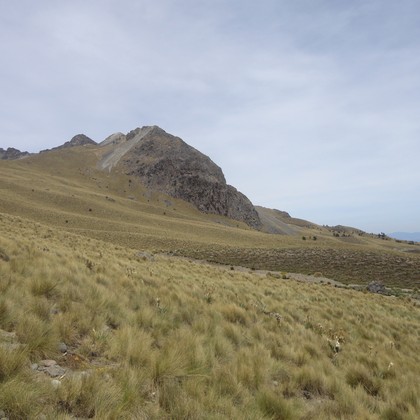
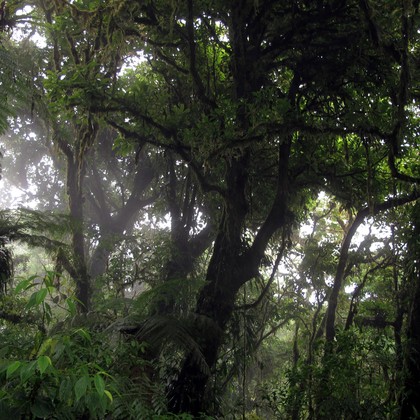
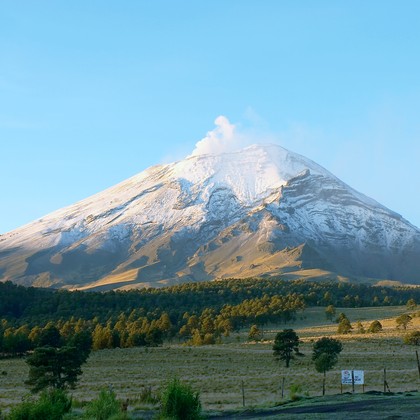
Páramo, dense scrub, grassland and open lava fields on the highest volcanoes and ridges, mostly above 2800 m; also the edges of low montane forest and open ground along roads and around buildings on the summits. It forages on the ground for seeds and insects.
Where the bird is most at home, classified by the vegetation units of Mexico and Central America.
Range and movements
Endemic to the highlands of Costa Rica and western Panama: the summits of Irazú and Turrialba, the Cordillera de Talamanca including Cerro de la Muerte and Chirripó, and Volcán Barú in Chiriquí.
- Resident
- dark = core range, pale = thinly spread
How and when to look
Regularly seen at Cerro de la Muerte along the Pan-American Highway and on the summit of Irazú, where it often feeds on the ground along the road and at viewpoints.
Conservation status
Not threatened (LC). Locally common within a small range; climate warming may shrink its habitat on the highest peaks.
Scientific name
Junco vulcani | (Boucard, 1878)
Boucard described the species in 1878 as Zonotrichia vulcani; because it was later moved to another genus, the author and year stand in brackets. The genus Junco was introduced in 1831 by Wagler. Junco comes from Latin iuncus meaning 'rush'. vulcani is Latin for 'of the volcano', after Irazú volcano in Costa Rica where the species was discovered. The specimen the first description was based on came from Irazú volcano, Costa Rica.