All species › Passerines › New World sparrows › Rufous-collared Sparrow
Position in the tree Birds Aves › Birds with a flexible palate Neognathae › All other modern birds Neoaves › Landbirds Telluraves › Falcons, parrots and passerines Australaves › Falcons and passerines Eufalconimorphae › Parrots and passerines Psittacopasserae
Rufous-collared Sparrow | Zonotrichia capensis
Roodkraaggors | Chingolo común
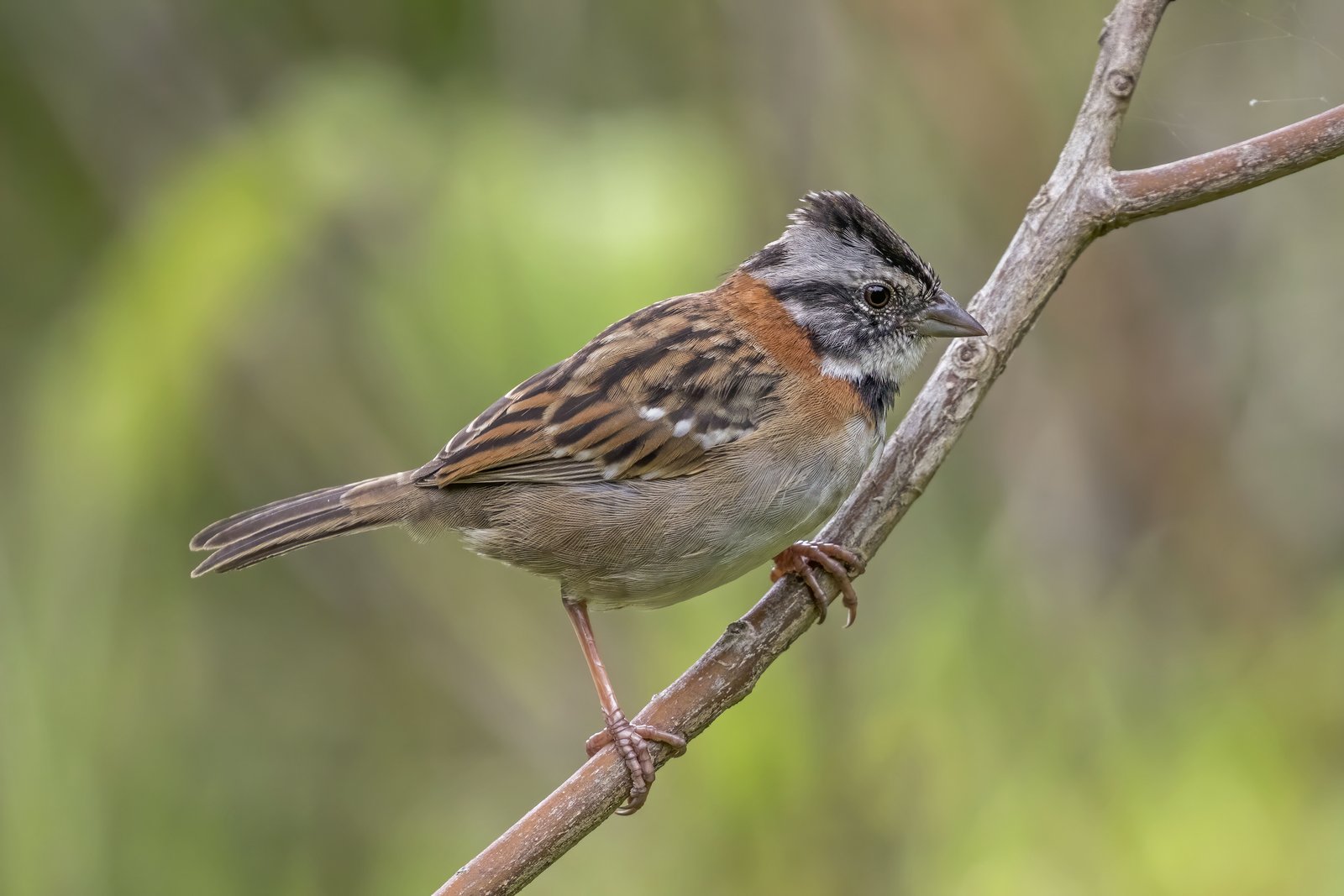
The Rufous-collared Sparrow is a small sparrow with a grey, black-striped head, a rufous collar and a short crest. From Mexico to Tierra del Fuego it is one of the most widespread birds of open country in the mountains, and it readily lives close to people. In the guide area it occurs in the highlands from Chiapas to Panama.
Voice
The song is a short, clear phrase of usually two or three slurred whistles followed by a short trill; its exact form varies from region to region. It sings a great deal, also in the middle of the day, often from roofs, fences and posts. Call a sharp chip.
Recording: Guillermo Menéndez (gmmv80) — CC BY-NC-SA 4.0 · converted to mono · xeno-canto
Identification
13–15 cm. Head grey with black crown stripes and a black eye-stripe; the crown feathers are often raised into a short crest. Rufous collar on the nape and sides of the neck, with a small black patch on each side of the upper breast. Throat white, underparts greyish white. Back brown with black streaks, two narrow white wing bars. Young birds lack the collar, are browner and heavily streaked on the head and breast.
Confusion species
Young birds can resemble Lincoln's Sparrow Melospiza lincolnii, which winters in the same area, but that species has a buff breast band with fine black streaks and a grey supercilium. White-crowned Sparrow Zonotrichia leucophrys, a winter visitor to northern and central Mexico, has a black-and-white striped head without a rufous collar and hardly ever occurs alongside Rufous-collared Sparrow.
Habitat
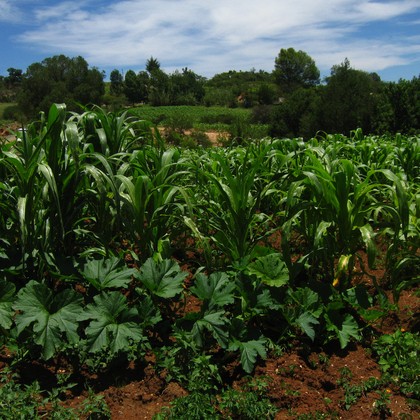
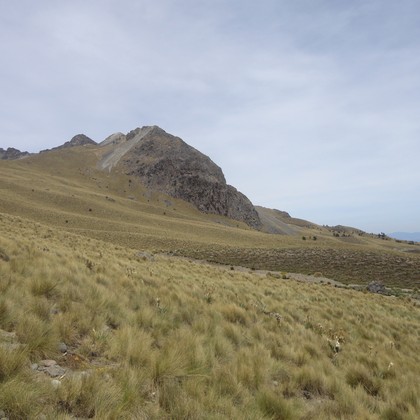
Open and semi-open country in the mountains: pastures, fields, scrub, coffee plantations, gardens, parks and villages, from about 600 m to above 3000 m. It forages on the ground for seeds and insects, often on paths, yards and lawns.
Where the bird is most at home, classified by the vegetation units of Mexico and Central America.



Range and movements
Highlands of Chiapas, Guatemala, El Salvador and Honduras, locally in Nicaragua, and in Costa Rica and western Panama; in the Central Valley of Costa Rica also common in towns. Outside the guide area across much of South America, from Colombia and Venezuela to Tierra del Fuego, and on Hispaniola.
- Resident
- dark = core range, pale = thinly spread
How and when to look
In the Central Valley of Costa Rica, including San José, one of the commonest birds in gardens and parks; also regular in the towns of the Chiapas and Guatemalan highlands.
Conservation status
Not threatened (LC). Very common and benefits from deforestation and the spread of open, human-used land.
Scientific name
Zonotrichia capensis | (Müller, 1776)
Müller described the species in 1776 as Fringilla capensis; because it was later moved to another genus, the author and year stand in brackets. The genus Zonotrichia was introduced in 1832 by Swainson. Zonotrichia is Greek, from zōnē 'band' and thrix 'hair'. capensis refers to the Cape of Good Hope, an error: the bird described actually came from Cayenne in French Guiana. The specimen the first description was based on came from Cayenne, French Guiana (originally given in error as 'Cape of Good Hope').