All species › Passerines › New World warblers › Virginia's Warbler
Position in the tree Birds Aves › Birds with a flexible palate Neognathae › All other modern birds Neoaves › Landbirds Telluraves › Falcons, parrots and passerines Australaves › Falcons and passerines Eufalconimorphae › Parrots and passerines Psittacopasserae
Virginia's Warbler | Leiothlypis virginiae
Virginiazanger | Chipe de Virginia
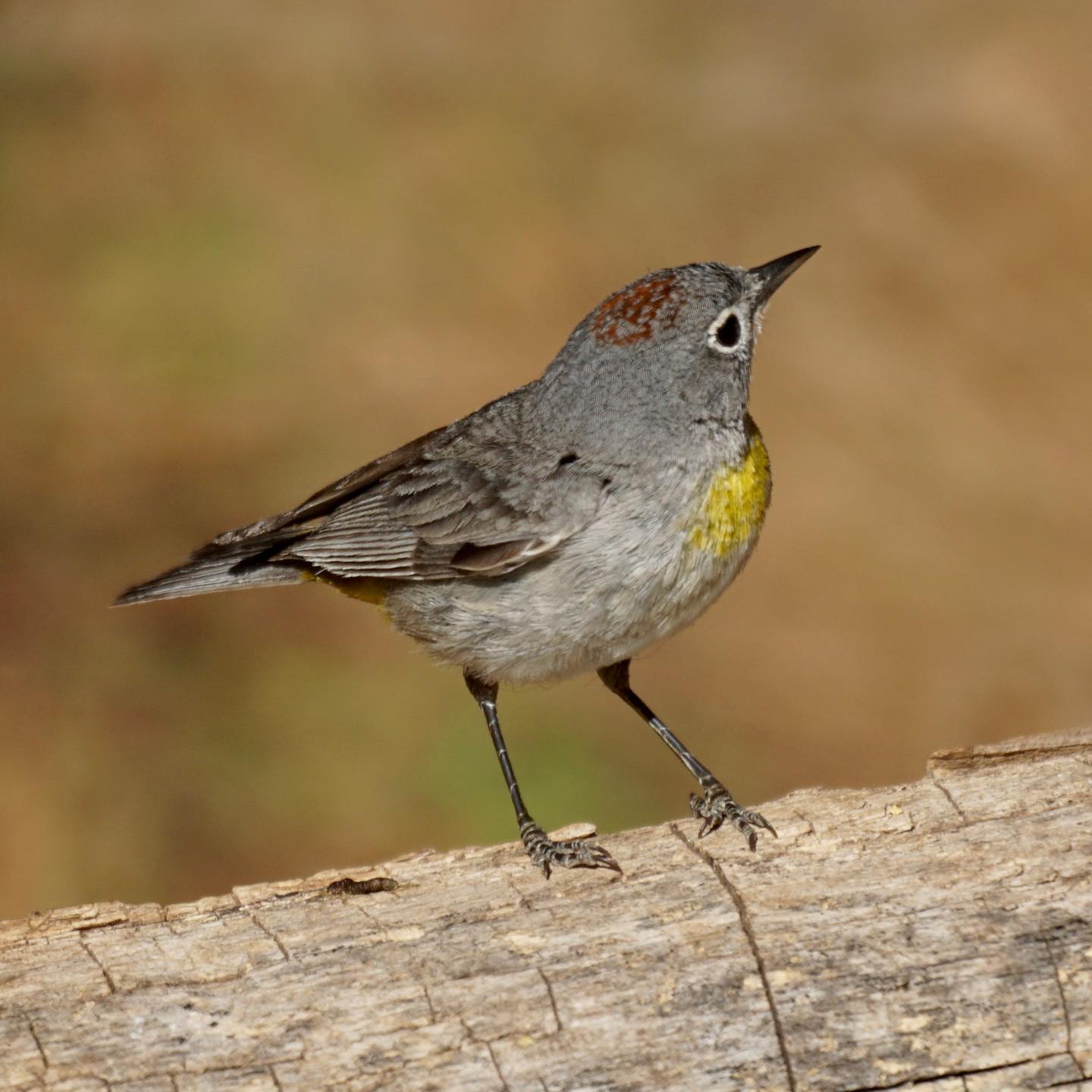
The Virginia's Warbler is a small grey warbler with a white eye-ring, a yellow rump and yellow undertail coverts. It breeds in dry mountain country in the interior of the western United States and winters in western and southern Mexico. While feeding it constantly bobs its tail.
Voice
The song is a loose series of sweet, two-syllabled notes that become faster and lower at the end, such as chewee-chewee-chewee-chit-chit. The call is a sharp, metallic chink.
Recording: Sue Riffe — CC BY-NC-SA 4.0 · shortened to the first 60 s, mono · xeno-canto
Identification
10–12 cm. Small and slim, with a fine, pointed bill. Upperparts plain grey, rump and uppertail coverts yellowish green. A distinct pale eye-ring on a grey head; the adult male has a chestnut patch in the centre of the crown, often concealed. Underparts greyish white with a yellow patch on the breast, larger in the male; undertail coverts bright yellow. Young birds and many females have little or no yellow on the breast and no crown patch.
Confusion species
Colima Warbler Leiothlypis crissalis is larger, browner grey and has ochre undertail coverts and no yellow on the breast; it breeds in the mountains of north-eastern Mexico and winters in the south-west. Lucy's Warbler Leiothlypis luciae has a rufous rump and no yellow in the plumage. Nashville Warbler Leiothlypis ruficapilla also has a white eye-ring and a grey head, but an entirely yellow throat and underparts and olive-green upperparts.
Habitat
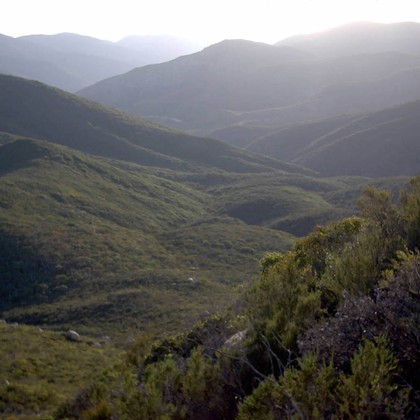
In winter dry scrub, thorn scrub, edges of dry forest and brushy slopes in hills and lower mountains, also open pine-oak woodland; mainly between about 1000 and 2500 m. It searches for insects in low vegetation and shrubs, often in mixed flocks with other warblers.
Where the bird is most at home, classified by the vegetation units of Mexico and Central America.




Range and movements
Breeds in the interior of the western United States, from Nevada, Utah and Colorado to Arizona and New Mexico. Migrates through north-western and central Mexico. In the guide area it winters from Nayarit and Jalisco through Michoacán, Guerrero, Morelos and Puebla to Oaxaca.
- Winter visitor (c. Oct–Mar)
- dark = core range, pale = thinly spread
How and when to look
In winter found on brushy, dry slopes in Morelos and Oaxaca, where it often joins mixed flocks of insect-eating birds. The constant tail-bobbing and the yellow rump help with identification.
Conservation status
Not threatened (LC). Fairly common in its breeding range; in the guide area a regular winter visitor. Loss of dry scrub and dry forest in the wintering areas is a possible threat.
Scientific name
Leiothlypis virginiae | (Baird, 1860)
Baird described the species in 1860 as Helminthophaga virginiae; because it was later moved to another genus, the author and year stand in brackets. The genus Leiothlypis was introduced in 2008 by Sangster. Leiothlypis is Ancient Greek, from leios 'plain, smooth' and thlypis, an unidentified small bird mentioned by Aristotle. virginiae honours Mary Virginia Childs Anderson (1833–1912), wife of the US Army surgeon William Wallace Anderson, who collected the first specimens. The specimen the first description was based on came from Fort Burgwyn, Taos County, New Mexico.