All species › Passerines › New World blackbirds, troupials and allies › Tricolored Blackbird
Position in the tree Birds Aves › Birds with a flexible palate Neognathae › All other modern birds Neoaves › Landbirds Telluraves › Falcons, parrots and passerines Australaves › Falcons and passerines Eufalconimorphae › Parrots and passerines Psittacopasserae
Tricolored Blackbird | Agelaius tricolor
Driekleurtroepiaal | Tordo tricolor
The Tricolored Blackbird is a close relative of Red-winged Blackbird with a very small range, almost entirely in California. It breeds in dense colonies that sometimes hold tens of thousands of pairs. In the guide area only a small population occurs in north-western Baja California.
Voice
The song is a nasal, groaning kaa-oo, less musical than that of Red-winged Blackbird. The call is a low chuk. Colonies produce a constant, harsh chatter.
Recording: Ed Pandolfino — CC BY-NC-SA 4.0 · shortened to the first 60 s, mono · xeno-canto
Identification
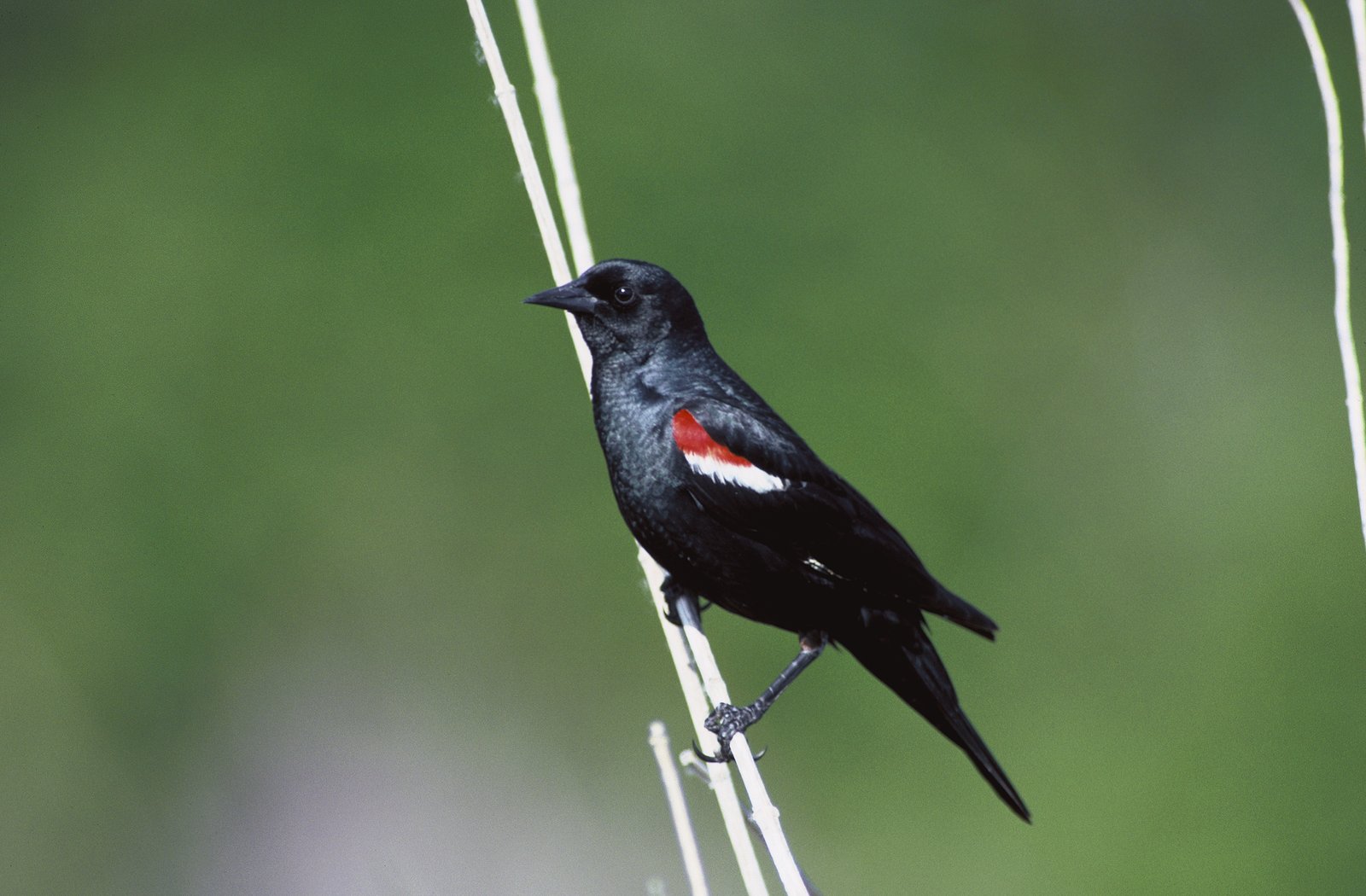
18–24 cm. Male glossy blue-black with a deep red shoulder patch that has a broad white lower edge; at rest the white edge is often the most visible part. Bill slim, pointed and black. Female smaller, dark grey-brown, with faint streaks on breast and belly and a paler throat; the belly often almost uniformly dark.
Confusion species
Red-winged Blackbird Agelaius phoeniceus has a more orange-red shoulder patch with a yellow or buff edge and a slightly thicker bill; the female is browner, with clearer pale streaks below and a warmer tone to the face. In winter the two species mix in flocks, where each bird can only be separated by these features.
Habitat
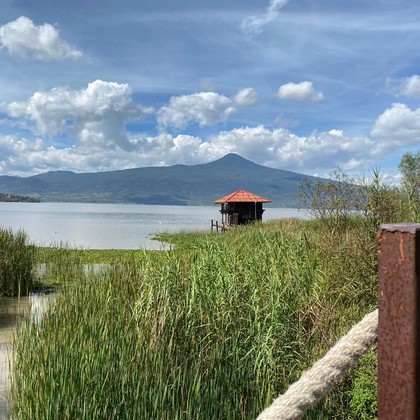
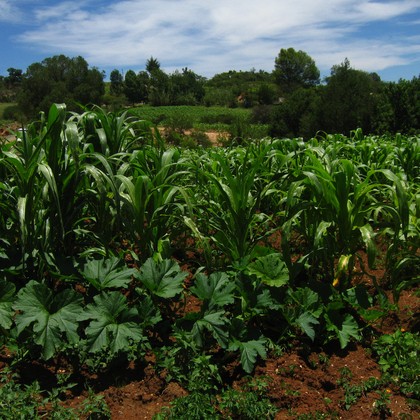
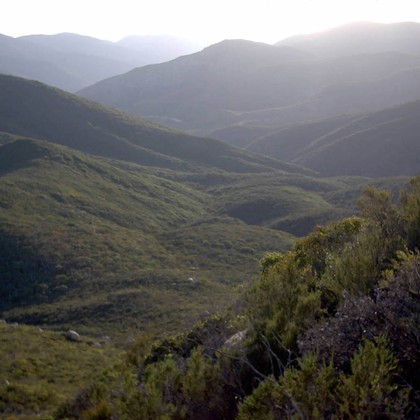
Freshwater marshes with cattails and bulrushes, wet pastures and grain fields, in which colonies sometimes nest; also thorny scrub and bramble thickets near water. It forages in grassland and fields, often far from the colony. It eats insects, especially grasshoppers in the breeding season, and also seeds and grain.
Where the bird is most at home, classified by the vegetation units of Mexico and Central America.

Range and movements
Almost restricted to California, with small numbers in Oregon, Washington and Nevada. In the guide area only in north-western Baja California, where a small population stays year-round; numbers there are low and fluctuate strongly.
- Resident
- dark = core range, pale = thinly spread
How and when to look
In Baja California best searched for at damp sites with cattails near farmland; check blackbird flocks there carefully for males with white edges to the red shoulder patch.
Conservation status
Endangered (EN). The world population has declined steeply within a few decades through loss of marshes, harvesting of grain fields holding breeding colonies and pesticide use. Because the species nests in very large colonies, the loss of a single colony can affect a large part of the population.
Scientific name
Agelaius tricolor | (Audubon, 1837)
Audubon described the species in 1837 as Icterus tricolor; because it was later moved to another genus, the author and year stand in brackets. The genus Agelaius was introduced in 1816 by Vieillot. Agelaius is Greek, from agelaios 'gregarious, of a flock', after the birds feeding and roosting in large flocks. tricolor is Latin for 'three-coloured', after the black, red and white of the male, with its white-edged red shoulders. The specimen the first description was based on came from Santa Barbara, California (USA).