All species › Passerines › Tanagers and allies › Thick-billed Seed Finch
Position in the tree Birds Aves › Birds with a flexible palate Neognathae › All other modern birds Neoaves › Landbirds Telluraves › Falcons, parrots and passerines Australaves › Falcons and passerines Eufalconimorphae › Parrots and passerines Psittacopasserae
Thick-billed Seed Finch | Sporophila funerea
Diksnavelzaadkraker | Semillero piquigrueso
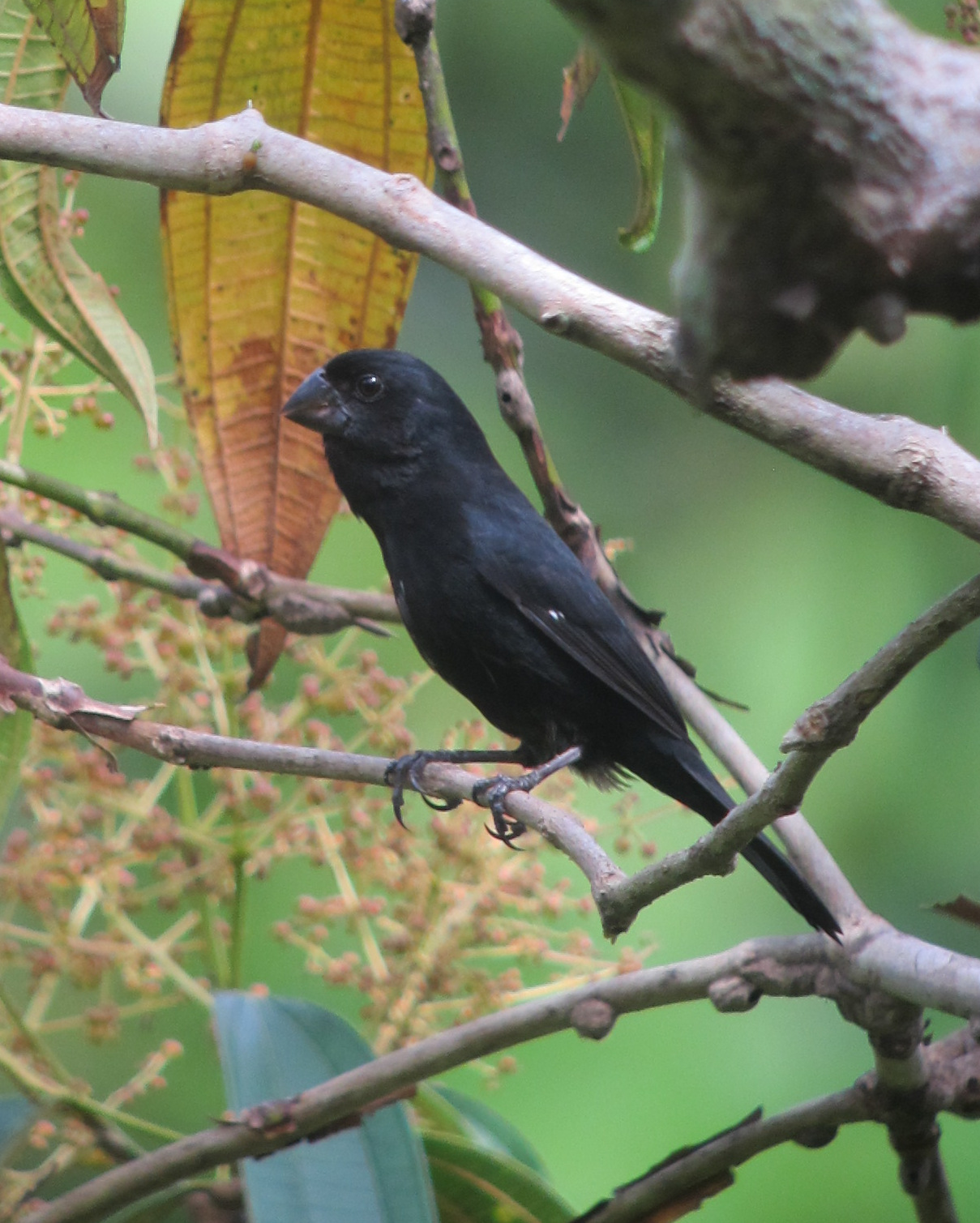
The Thick-billed Seed Finch is a small, stocky bird with a very heavy bill with a straight upper edge. The male is black with a small white wing patch, the female warm brown. It lives in rough, grassy places at forest edges and in wet pastures, from southern Mexico to Panama.
Voice
Song a long, varied, melodious series of whistled and twittering notes, often sustained for a long time from an exposed perch. Call a sharp chek.
Recording: Stephan Risch — CC BY-NC-SA 4.0 · converted to mono · xeno-canto
Identification
11–12 cm. Bill black, very heavy and deep, with an almost straight culmen. Male entirely black, with a small white patch at the base of the primaries and white underwing coverts that show in flight. Female warm dark brown above and rufous-brown to cinnamon below. Young birds resemble females.
Confusion species
Nicaraguan Seed Finch Sporophila nuttingi is larger and has an even heavier, pale pink to flesh-coloured bill. Variable Seedeater Sporophila corvina has a smaller, more rounded bill; black males on the Caribbean slope resemble Thick-billed Seed Finch but sometimes show white on the belly or rump. Blue-black Grassquit Volatinia jacarina is glossy blue-black and has a thin, pointed bill.
Habitat
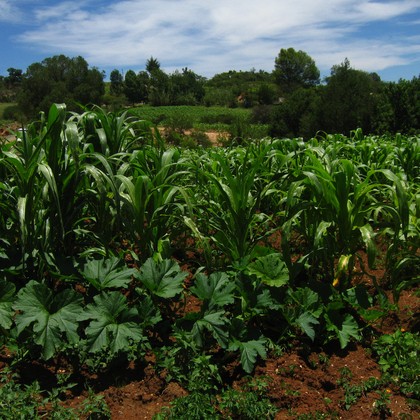
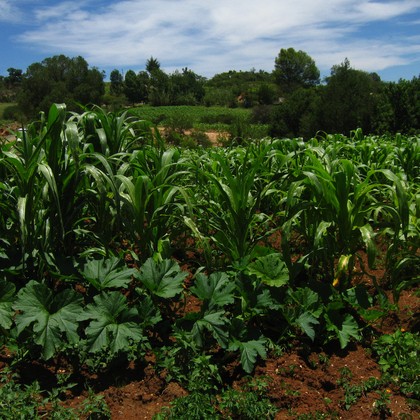
Rough, grassy places at forest edges, overgrown pasture, scrub, wet grassland, marsh edges and roadsides in humid regions, from sea level to about 1200 m. It eats mainly seeds of grasses and sedges.
Where the bird is most at home, classified by the vegetation units of Mexico and Central America.



Range and movements
Caribbean slope of southern Mexico (from southern Veracruz, northern Oaxaca, Tabasco and Chiapas), through Belize, Guatemala, Honduras and Nicaragua to Costa Rica, where it also occurs on the southern Pacific slope; in Panama on both slopes. Outside the guide area in northern and western Colombia and western Ecuador.
- Resident
- dark = core range, pale = thinly spread
How and when to look
Singing males often perch on a fence post or shrub in rough, wet pasture. Regularly seen around lodges in the Caribbean lowlands of Costa Rica, for example at La Selva.
Conservation status
Not threatened (LC). Fairly common; trapped for the cage-bird trade in many places, causing local declines.
Scientific name
Sporophila funerea | (Sclater, 1860)
Sclater described the species in 1860 as Oryzoborus funereus; because it was later moved to another genus, the author and year stand in brackets. The genus Sporophila was introduced in 1844 by Cabanis. Sporophila is Greek, from sporos 'seed' and philos 'lover': 'seed-lover'. funerea is Latin for 'funereal', after the all-black plumage of the male. The specimen the first description was based on came from Suchapam, Oaxaca, Mexico.