All species › Passerines › New World sparrows › Spotted Towhee
Position in the tree Birds Aves › Birds with a flexible palate Neognathae › All other modern birds Neoaves › Landbirds Telluraves › Falcons, parrots and passerines Australaves › Falcons and passerines Eufalconimorphae › Parrots and passerines Psittacopasserae
Spotted Towhee | Pipilo maculatus
Gevlekte towie | Toquí moteado
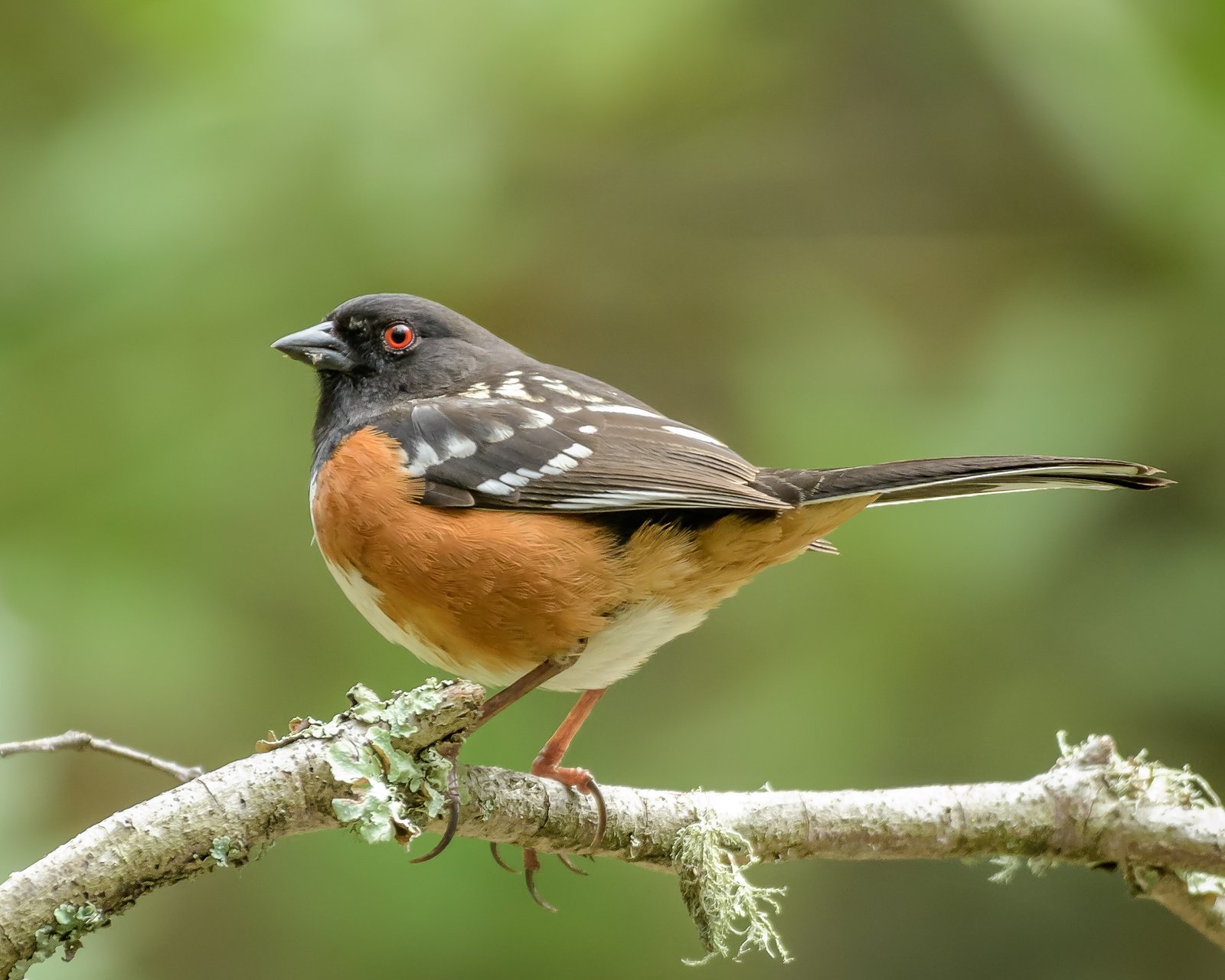
The Spotted Towhee is a large, long-tailed sparrow with a black head, rufous flanks and white spots on the back and wings. It lives on the ground in the undergrowth of montane and oak woodland and turns over the litter by scratching with both feet together. In the guide area it is a resident of the highlands of northern and central Mexico.
Voice
The call is a raspy, rising or falling zhreee, often from dense cover. The song is a short, dry trill, sometimes preceded by one or a few separate notes.
Recording: Ed Pandolfino — CC BY-NC-SA 4.0 · converted to mono · xeno-canto
Identification
17–21 cm. Male with black head, throat and breast, red eye and black upperparts with white spots on the scapulars and wing coverts and two white wingbars. Flanks rufous, centre of belly white. Long black tail with white corners, visible mainly in flight. The female resembles the male but is dark greyish brown rather than black on the head and upperparts. Juveniles are brown and heavily streaked. Birds from the hybrid zone in central Mexico may show an olive-green back, a white throat or a faint breast band.
Confusion species
Collared Towhee Pipilo ocai of the highlands of central and southern Mexico has a rufous crown, a white throat, a black breast band and an olive-green back without white spots; where both species meet, many intermediates occur. Black-headed Nightingale-Thrush Catharus mexicanus and other thrushes lack the rufous flanks and white spots. Dark-eyed Junco Junco hyemalis is smaller, with a pink bill and white outer tail feathers.
Habitat
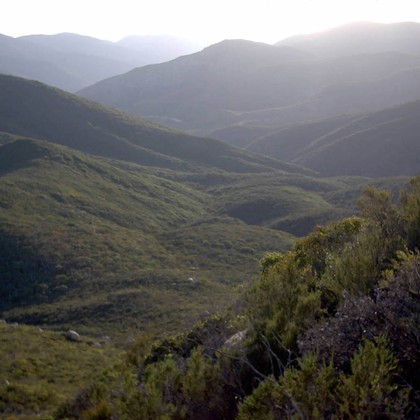
Undergrowth and edges of pine-oak, oak and conifer forest in the mountains, chaparral, rough scrub and overgrown gardens, mostly between about 1500 and 3500 m; in Baja California also lower. It searches the ground for seeds, insects and berries. The nest is on or just above the ground under dense shrubs.
Where the bird is most at home, classified by the vegetation units of Mexico and Central America.



Range and movements
From south-western Canada through the western United States. In the guide area in the mountains of northern Baja California and in the highlands of the Sierra Madre Occidental and Oriental, south through the Trans-Mexican Volcanic Belt to Oaxaca. In winter also in low-lying areas of northern Mexico.
- Resident
- dark = core range, pale = thinly spread
How and when to look
Often first detected by the rustling in the litter beneath shrubs; in the early morning the male sings from an exposed branch above the scrub.
Conservation status
Not threatened (LC). Common and widespread.
Scientific name
Pipilo maculatus | Swainson, 1827
Swainson described the species in 1827 and placed it straight away in the genus where it still stands. The genus Pipilo was introduced in 1816 by Vieillot. Pipilo is Latin for 'I chirp', from pipilare 'to chirp, to peep', after the call. maculatus is Latin for 'spotted', after the white spots on the wings and mantle. The specimen the first description was based on came from Real del Monte, Hidalgo, Mexico.