All species › Passerines › New World sparrows › Green-tailed Towhee
Position in the tree Birds Aves › Birds with a flexible palate Neognathae › All other modern birds Neoaves › Landbirds Telluraves › Falcons, parrots and passerines Australaves › Falcons and passerines Eufalconimorphae › Parrots and passerines Psittacopasserae
Green-tailed Towhee | Pipilo chlorurus
Groenstaarttowie | Toquí cola verde
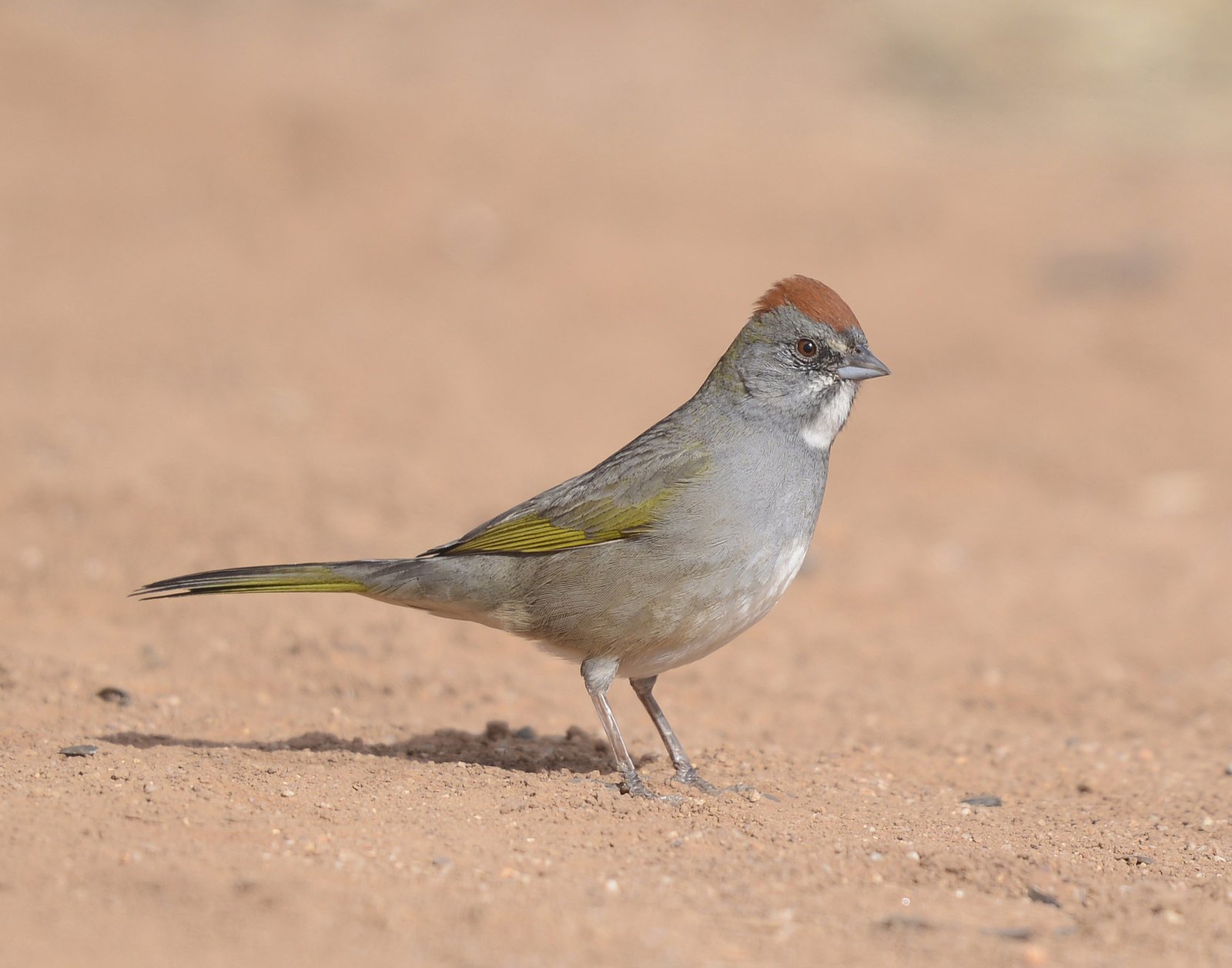
The Green-tailed Towhee is a slim towhee with a rufous crown, a white throat and olive-green upperparts. It breeds in mountain scrub in the western United States and winters in large numbers in northern and central Mexico. It lives hidden on the ground under shrubs, scratching in the litter with both feet.
Voice
The most frequent call is a mewing, cat-like meeoo; also a thin tseet. The song, given in spring on the wintering grounds too, starts with a few clear notes and ends in buzzy trills.
Recording: Ed Pandolfino — CC BY-NC-SA 4.0 · shortened to the first 60 s, mono · xeno-canto
Identification
16–18 cm. Crown bright rufous; face, neck and breast grey. Throat white, bordered by a white moustachial stripe and a dark malar stripe. Upperparts, wings and the fairly long tail olive-green, with yellowish-green edges to the flight and tail feathers. Belly whitish, flanks greyish brown. Bill conical and grey, eye reddish brown. The sexes are alike; juveniles are browner and streaked, without the rufous crown.
Confusion species
Rufous-crowned Sparrow Aimophila ruficeps also has a rufous crown but is smaller, with a brown, streaked back and no green. Olive Sparrow Arremonops rufivirgatus of north-eastern Mexico and the Caribbean lowlands is olive-green with two brown crown stripes and a grey head without a white throat. Chipping Sparrow Spizella passerina is much smaller, with a streaked brown back and a black eyestripe.
Habitat
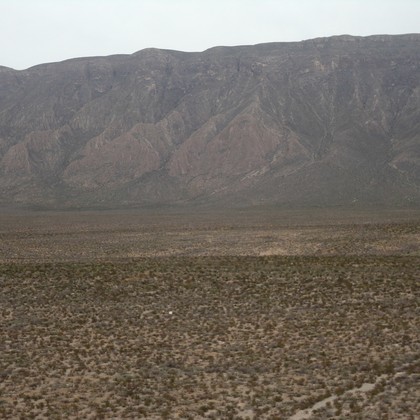
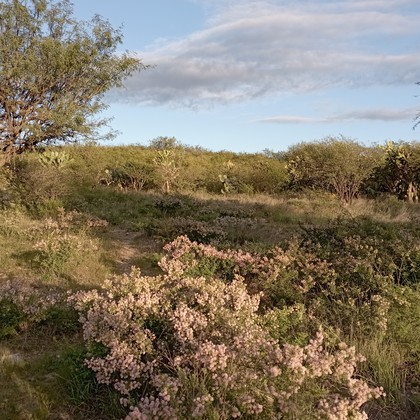
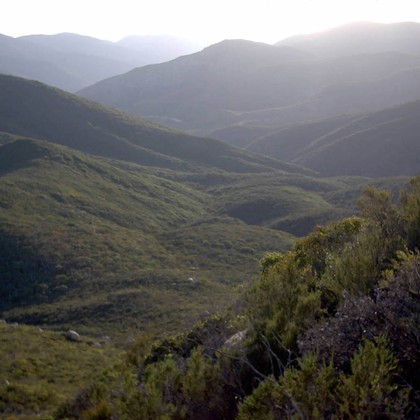
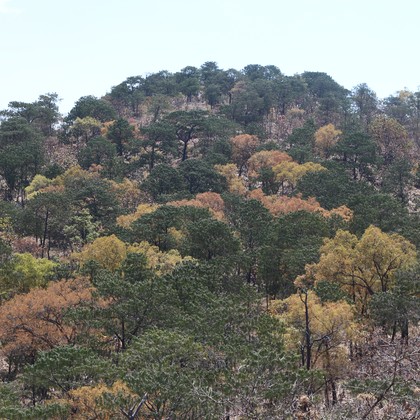
In winter dense scrub in semi-desert, thorn scrub, chaparral, rough grassland with shrubs, valleys with undergrowth along streams and the edges of oak and pine woodland; often near water. Breeds in scrub on mountain slopes. It searches the ground for seeds and insects, scratching in the litter with both feet together.
Where the bird is most at home, classified by the vegetation units of Mexico and Central America.

Range and movements
Breeds in the mountains of the western United States, locally to northern Baja California. Winters from the south-western United States through northern and central Mexico, including Baja California, south to about Jalisco, Guanajuato, Hidalgo and Puebla.
- Winter visitor (c. Oct–Mar)
- dark = core range, pale = thinly spread
How and when to look
In winter best found by walking along dense scrub and listening for the mewing call; when alarmed it flies low and fast to the next shrub.
Conservation status
Not threatened (LC). Common; in the guide area a numerous winter visitor.
Scientific name
Pipilo chlorurus | (Audubon, 1839)
Audubon described the species in 1839 as Fringilla chlorura; because it was later moved to another genus, the author and year stand in brackets. The genus Pipilo was introduced in 1816 by Vieillot. Pipilo is Latin for 'I chirp', from pipilare 'to chirp, to peep', after the call. chlorurus is Greek, from khlōros 'green' and -ouros '-tailed', after the olive-green tail. The specimen the first description was based on came from near Blackfoot, Idaho (USA).