All species › Waders, gulls and terns › Skimmers, noddies, terns and gulls › Short-billed Gull
Position in the tree Birds Aves › Birds with a flexible palate Neognathae › All other modern birds Neoaves › Birds of the elements Elementaves › Cranes and waders Gruimorphae
Short-billed Gull | Larus brachyrhynchus
Amerikaanse stormmeeuw | Gaviota piquicorta
The Short-billed Gull is a small, round-headed gull of north-western North America that was long regarded as a subspecies of the Common Gull of Europe and Asia. In the guide area it reaches the southern limit of its winter range: a scarce winter visitor along the Pacific coast of northern Baja California.
Voice
A high, mewing kee-ew, higher and thinner than in Ring-billed Gull; calls little in winter.
Recording: Nick Komar — CC BY-NC-SA 4.0 · converted to mono · xeno-canto
Identification
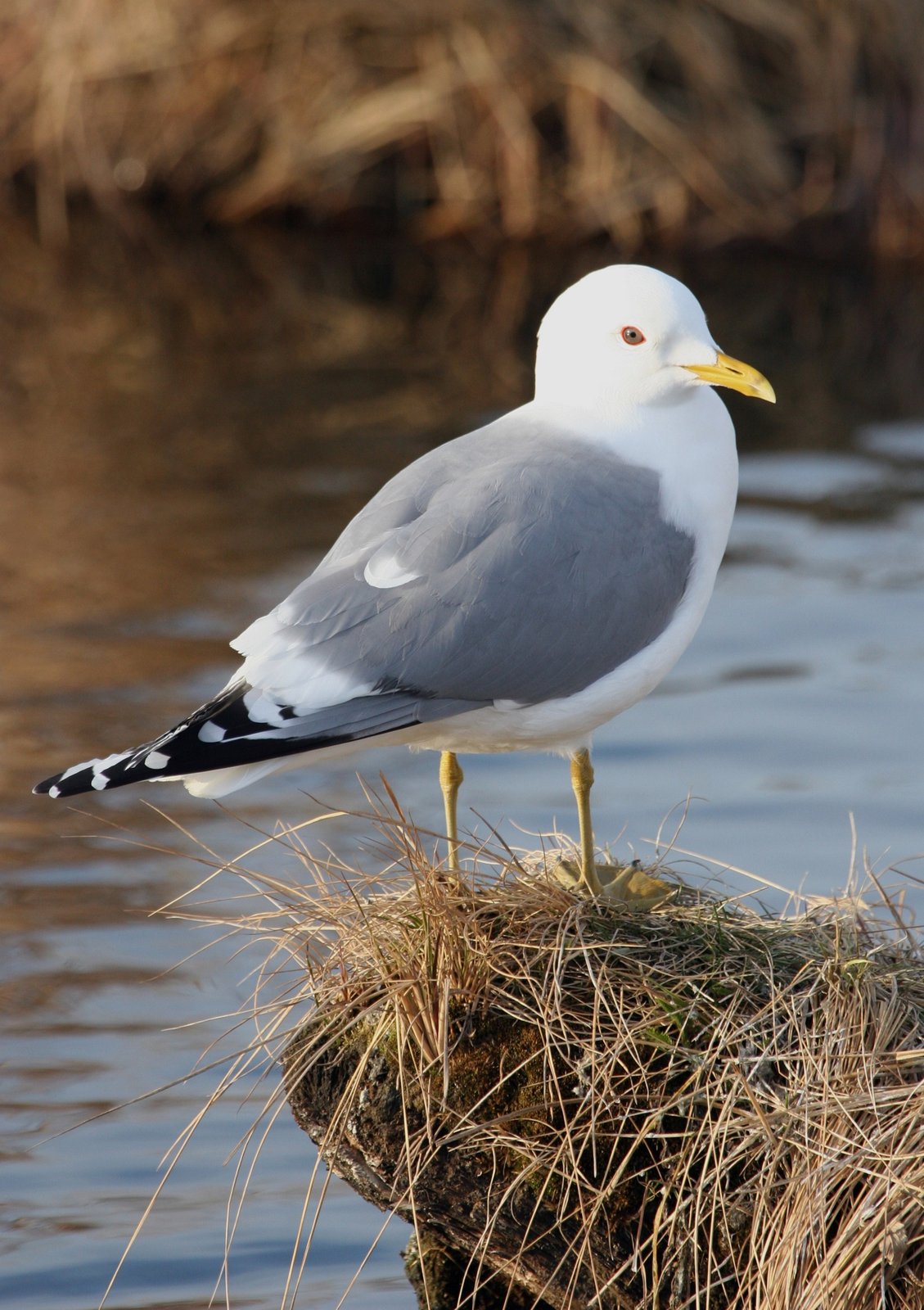
40–46 cm, a small gull with a rounded head, a large dark eye and a short, fine bill. Adults have a mid-grey mantle, darker than in Ring-billed Gull, black wingtips with large white mirrors, a broad white trailing edge to the wing, a yellow bill without a ring and greenish-yellow legs. In non-breeding plumage the head and neck are heavily smudged brown and the bill sometimes shows a faint dark band. Birds in their first winter are plain greyish brown, with a fine pink bill with a dark tip and a largely dark tail.
Confusion species
Ring-billed Gull Larus delawarensis is larger and paler grey, with a pale eye, a longer bill with a clear black ring and smaller white mirrors; first-year Ring-billed Gulls have a white tail with a narrow black band. California Gull Larus californicus is larger, with a longer bill with a red and black spot.
Habitat
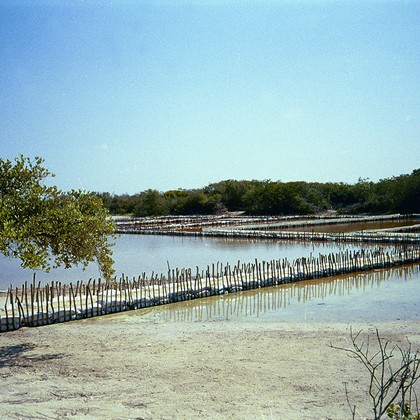
Beaches, estuaries, lagoons and harbours, and inshore waters close to the coast. It feeds while walking along the tideline, swimming and flying over the water.
Where the bird is most at home, classified by the vegetation units of Mexico and Central America.



Range and movements
In winter in small numbers along the Pacific coast of northern Baja California, mainly between Tijuana and Ensenada, and rare further south along the peninsula and in the northern Gulf of California. Outside the guide area the species breeds from Alaska to western Canada and winters along the Pacific coast from Alaska to California.
- Winter visitor (c. Oct–Mar)
- dark = core range, pale = thinly spread
How and when to look
Flocks of gulls on beaches and in estuaries between Tijuana and Ensenada in winter offer the best chance. The small, rounded head with the large dark eye and the short bill set it apart from Ring-billed Gull.
Conservation status
Not evaluated as a separate species; the IUCN includes it in Common Gull, which is not threatened globally. The population is large. In the guide area a scarce winter visitor with no breeding population.
Scientific name
Larus brachyrhynchus | Richardson, 1831
Richardson described the species in 1831 and placed it straight away in the genus where it still stands. The genus Larus was introduced in 1758 by Linnaeus. Larus is Latin, from Ancient Greek laros, and appears to have referred to a gull or another large seabird. brachyrhynchus is Greek, from brakhus 'short' and rhunkhos 'bill', after the short, slender bill. The specimen the first description was based on came from Great Bear Lake, Canada.