All species › Waders, gulls and terns › Skimmers, noddies, terns and gulls › Ring-billed Gull
Position in the tree Birds Aves › Birds with a flexible palate Neognathae › All other modern birds Neoaves › Birds of the elements Elementaves › Cranes and waders Gruimorphae
Ring-billed Gull | Larus delawarensis
Ringsnavelmeeuw | Gaviota de Delaware
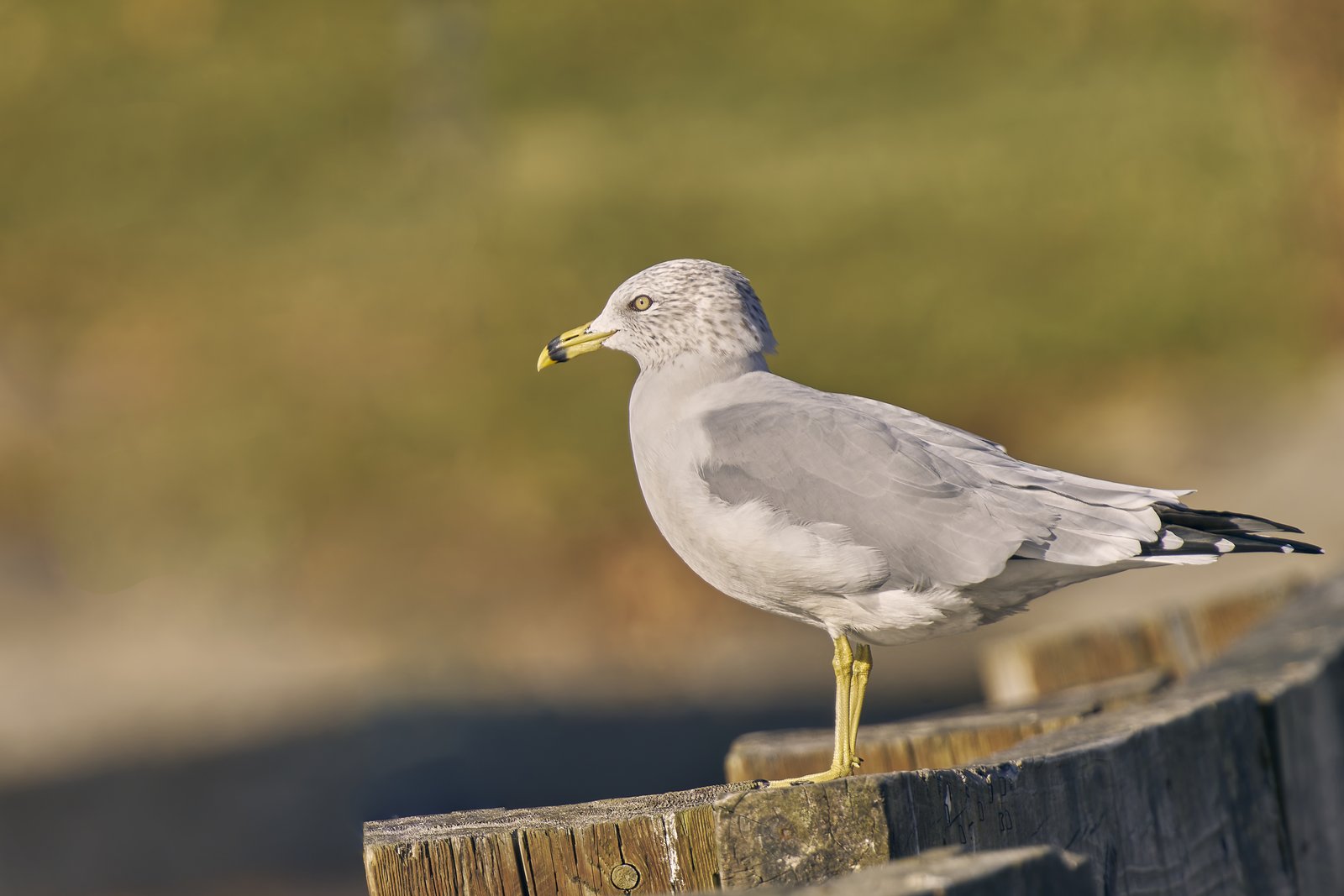
The Ring-billed Gull is one of the most widespread gulls of North America, well adapted to people and feeding in towns, on car parks and at rubbish dumps. In the guide area it is a winter visitor, most numerous in northern Mexico, on the coast and on inland lakes.
Voice
A high, mewing kee-ow and a series of laughing kyah-kyah-kyah calls, higher and thinner than in American Herring Gull.
Recording: Tom Cooney — CC BY-NC-SA 4.0 · converted to mono · xeno-canto
Identification
43–54 cm, with a fairly rounded head and a medium-sized yellow bill with a clear black ring just behind the tip. Adults have a pale grey mantle, black wingtips with small white mirrors, a pale eye with a red orbital ring and yellow legs. In non-breeding plumage the head is finely spotted brown. Adult plumage is reached in the third year. Birds in their first winter have a pale grey mantle, brown-mottled wing coverts, a white tail with a fairly narrow, irregular black terminal band, pink legs and a pink bill with a black tip.
Confusion species
California Gull Larus californicus is larger and darker grey, with a dark eye and a red and black spot on the bill. Short-billed Gull Larus brachyrhynchus is smaller and darker grey, with a short, fine bill without a ring and a dark eye. American Herring Gull Larus smithsonianus is clearly larger, with a heavier bill with a red spot instead of a ring, and pink legs. Laughing Gull Leucophaeus atricilla is smaller and dark grey above, with a dark bill and legs.
Habitat
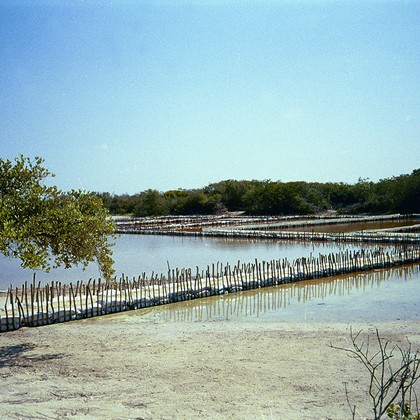
Beaches, harbours, lagoons, estuaries and mudflats, and inland lakes, reservoirs and rivers; also rubbish dumps, fields and town parks. It eats fish, insects, earthworms and refuse.
Where the bird is most at home, classified by the vegetation units of Mexico and Central America.




Range and movements
In winter common along the coasts of Baja California, Sonora and Sinaloa, along the Gulf coast of Tamaulipas and Veracruz and on lakes and reservoirs of northern and central Mexico, including around Mexico City. Further south less common, to the Yucatán Peninsula and Oaxaca, and scarce from Guatemala and Belize to Costa Rica and Panama. Outside the guide area the species breeds in Canada and the northern United States and winters across much of the United States.
- Winter visitor (c. Oct–Mar)
- dark = core range, pale = thinly spread
How and when to look
In winter on beaches, in harbours and on reservoirs in northern Mexico, often in flocks with other gulls. The black ring around the yellow bill of adults can be seen even at some distance.
Conservation status
Not threatened globally. The population is large and increased strongly during the last century. In the guide area a winter visitor with no breeding population.
Scientific name
Larus delawarensis | Ord, 1815
Ord described the species in 1815 and placed it straight away in the genus where it still stands. The genus Larus was introduced in 1758 by Linnaeus. Larus is Latin, from Ancient Greek laros, and appears to have referred to a gull or another large seabird. delawarensis refers to the Delaware River in eastern North America. The specimen the first description was based on came from the Delaware River near Philadelphia.