All species › Passerines › New World blackbirds, troupials and allies › Scott's Oriole
Position in the tree Birds Aves › Birds with a flexible palate Neognathae › All other modern birds Neoaves › Landbirds Telluraves › Falcons, parrots and passerines Australaves › Falcons and passerines Eufalconimorphae › Parrots and passerines Psittacopasserae
Scott's Oriole | Icterus parisorum
Scotts troepiaal | Bolsero tunero
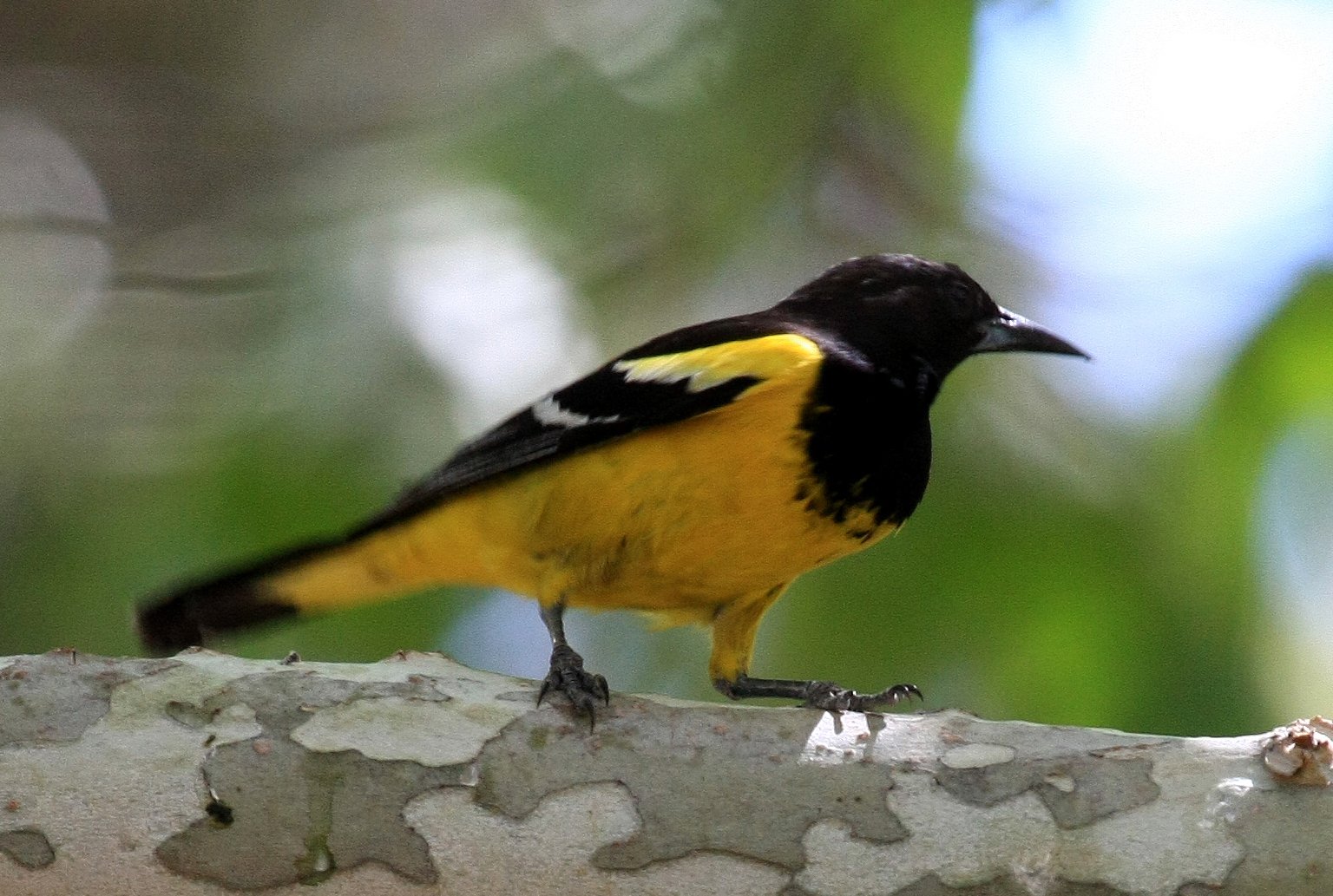
Scott's Oriole is a black-and-yellow oriole of dry, open country with yuccas and agaves. It breeds in the south-western United States and northern Mexico; northern birds move in winter to central and southern Mexico, while part of the population in Mexico stays year-round.
Voice
The song is a series of clear, full whistled notes, often heard throughout the day and also given by females. The call is a harsh chek and a dry rattle.
Recording: Paul Marvin — CC BY-NC-SA 4.0 · shortened to the first 60 s, mono · xeno-canto
Identification
21–23 cm. Fairly large, slender oriole with a straight, pointed bill. The male has a black head, back and breast; belly, rump and shoulder are lemon yellow. The wing is black with a yellow shoulder patch, a white wing bar and white edges to the flight feathers; the tail is black with a yellow base to the sides. The female is olive-yellow with a greyish olive, faintly streaked back and two white wing bars; older females often show some black on throat and face. Young males already have a black throat.
Confusion species
Audubon's Oriole Icterus graduacauda also has a black head, but an olive-yellow back. Black-vented Oriole Icterus wagleri has a black head and back, but an orange-yellow belly, black undertail coverts and no white wing bar. The male Hooded Oriole Icterus cucullatus has a yellow or orange head with only a black throat and mask; female Hooded Orioles have a thinner, slightly curved bill and a plain back.
Habitat
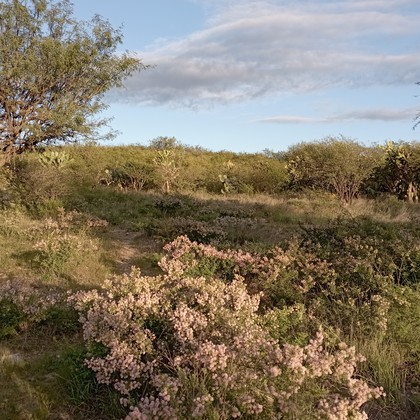
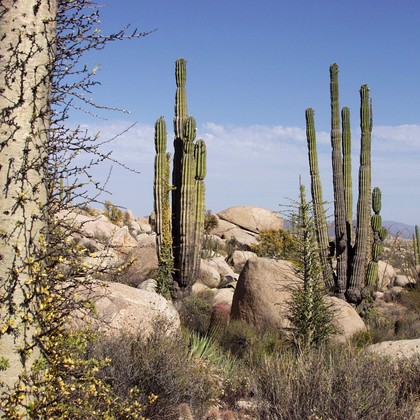
Dry slopes and plains with yuccas, agaves and Joshua trees, desert grassland, desert scrub, and open pinyon-juniper and oak woodland in the lower mountains. In winter also in dry scrub and villages. It eats insects, fruit and nectar of agave and aloe, among others. The nest often hangs beneath the leaves of a yucca.
Where the bird is most at home, classified by the vegetation units of Mexico and Central America.




Range and movements
Breeds in the south-western United States and northern Mexico, in the guide area in Baja California, Sonora, Chihuahua, Coahuila, Nuevo León and further south across the highlands to Zacatecas, San Luis Potosí and Hidalgo. Present year-round in southern Baja California and parts of the Mexican highlands. Northern birds winter in western and central Mexico, south to Guerrero and Oaxaca.
- Resident
- Summer visitor (c. Apr–Sep)
- Winter visitor (c. Oct–Mar)
- Passage (Mar–Apr, Oct–Nov)
- dark = core range, pale = thinly spread
How and when to look
In the breeding season often found by listening for the whistled song, delivered from the top of a yucca or shrub; the bird sings even in the hottest hours of the day.
Conservation status
Not threatened (LC). Fairly common in dry regions. Locally, suitable habitat is lost to land clearance and urban growth.
Scientific name
Icterus parisorum | Bonaparte, 1838
Bonaparte described the species in 1838 and placed it straight away in the genus where it still stands. The genus Icterus was introduced in 1760 by Brisson. Icterus is from Ancient Greek ikteros, a yellow bird usually taken to be the golden oriole, the sight of which was thought to cure jaundice. parisorum honours 'the brothers Paris', French naturalists and collectors in Mexico, after whom Bonaparte explicitly named the bird. The specimen the first description was based on came from Mexico.