All species › Tubenoses › Petrels, shearwaters and diving petrels › Sargasso Shearwater
Position in the tree Birds Aves › Birds with a flexible palate Neognathae › All other modern birds Neoaves › Birds of the elements Elementaves › Tropicbirds and waterbirds Phaethoquornithes › Core waterbirds Aequornithes
Sargasso Shearwater | Puffinus lherminieri
Sargassopijlstormvogel | Pardela de Sargazo
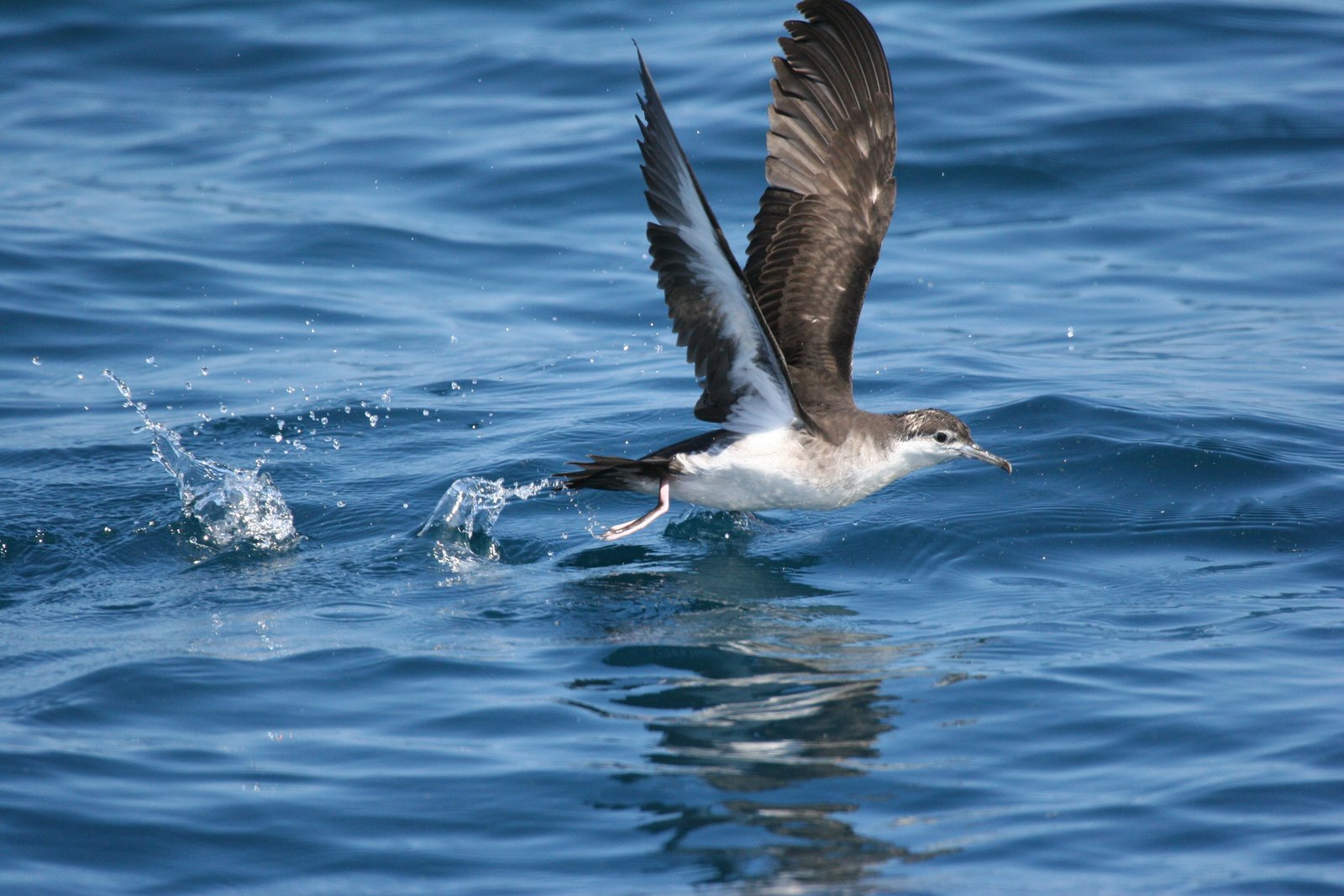
The Sargasso Shearwater is the small shearwater of the western Atlantic and the Caribbean. It was long included in Audubon's Shearwater, a species group that has since been split into several species; the birds off the Pacific coast belong to other species. The name refers to the Sargasso Sea, where many birds feed outside the breeding season. In the guide area it can be seen at sea off the Gulf and Caribbean coasts.
Voice
Silent at sea. In the colony at night twittering and mewing calls, both in the air and from the nest cavities.
Recording: William Mackin — CC BY-NC-SA 4.0 · converted to mono · xeno-canto
Identification
29–31 cm. A small, stocky, black-and-white shearwater with short, broad wings and a relatively long tail. Upperparts, head to below the eye and tail blackish brown; underparts and underwing white with a broad dark margin. The undertail coverts are dark, often the best feature. Bill slender and dark, legs pink. Flies low over the water with series of quick, fluttering beats and short glides; in strong wind it glides more. Sexes alike.
Confusion species
Manx Shearwater Puffinus puffinus is larger, with longer, narrower wings, white undertail coverts, a white crescent behind the ear coverts and a calmer flight with longer glides. The species does not occur on the Pacific side, where Galapagos Shearwater Puffinus subalaris closely resembles it.
Habitat
Open sea and coastal waters, also over deep water close to islands and reefs; often feeds at floating sargassum and with terns over schools of predatory fish. Eats small fish, squid and crustaceans, picked from the surface or caught in short dives. Breeds in rock crevices, cavities and burrows on small islets and cays, and visits the colonies only at night. Lays one white egg.
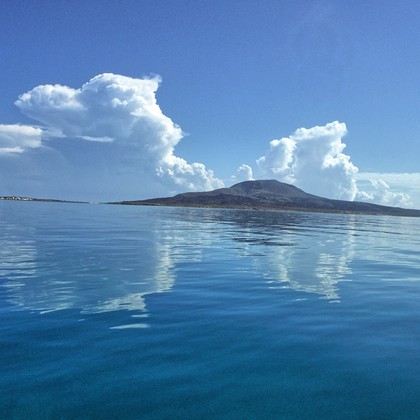
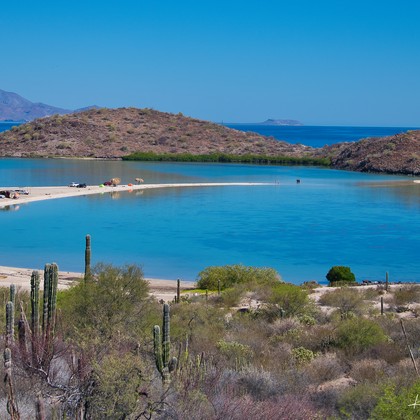
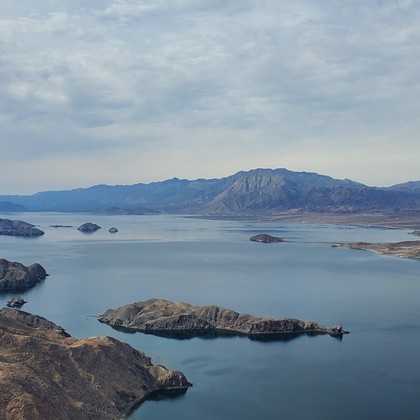
Where the bird is most at home, classified by the vegetation units of Mexico and Central America.
Range and movements
Most regular on the Caribbean side of Panama and Costa Rica; in Panama the species breeds on islets off Bocas del Toro, as far as known the only breeding site in the guide area. Further at sea in the Gulf of Mexico, including off Tamaulipas and Veracruz and over the Campeche Bank north of Yucatán, and more scarcely off the Caribbean coast of Belize, Honduras and Nicaragua. Absent from the Pacific side; older reports from there refer to birds now assigned to other species. Outside the guide area the species breeds in the Bahamas and scattered across the Antilles and moves to the Gulf Stream and the Sargasso Sea. At sea it is poorly surveyed, so its occurrence in the guide area is incompletely known.
- Resident
- Summer visitor (c. Apr–Sep)
- Passage (Mar–Apr, Oct–Nov)
- dark = core range, pale = thinly spread
How and when to look
Seawatches and boat trips around Bocas del Toro offer the best chance; elsewhere in the Gulf of Mexico mainly on pelagic trips in summer. The small size, quick fluttering flight and dark undertail are the best features. Colonies are vulnerable and are best not entered.
Conservation status
Not threatened according to the IUCN, which still assesses the species in a broader sense. Many colonies are small or have disappeared. Introduced rats, cats and mongooses, collection of eggs and chicks, disturbance and development of breeding islets are the main threats; at sea oil and plastic pollution play a role.
Scientific name
Puffinus lherminieri | Lesson, 1839
Lesson described the species in 1839 and placed it straight away in the genus where it still stands. The genus Puffinus was introduced in 1760 by Brisson. Puffinus comes from English puffin and its variants, the name for the cured nestling of the shearwater, once a delicacy. lherminieri honours the French naturalist Félix Louis L'Herminier (1779–1833), who worked on Guadeloupe and collected birds there. The specimen the first description was based on came from Antilles (Saint Barthélemy, Guadeloupe).