All species › Passerines › Wrens › Rufous-browed Wren
Position in the tree Birds Aves › Birds with a flexible palate Neognathae › All other modern birds Neoaves › Landbirds Telluraves › Falcons, parrots and passerines Australaves › Falcons and passerines Eufalconimorphae › Parrots and passerines Psittacopasserae
Rufous-browed Wren | Troglodytes rufociliatus
Roodbrauwwinterkoning | Chivirín ceja rufa
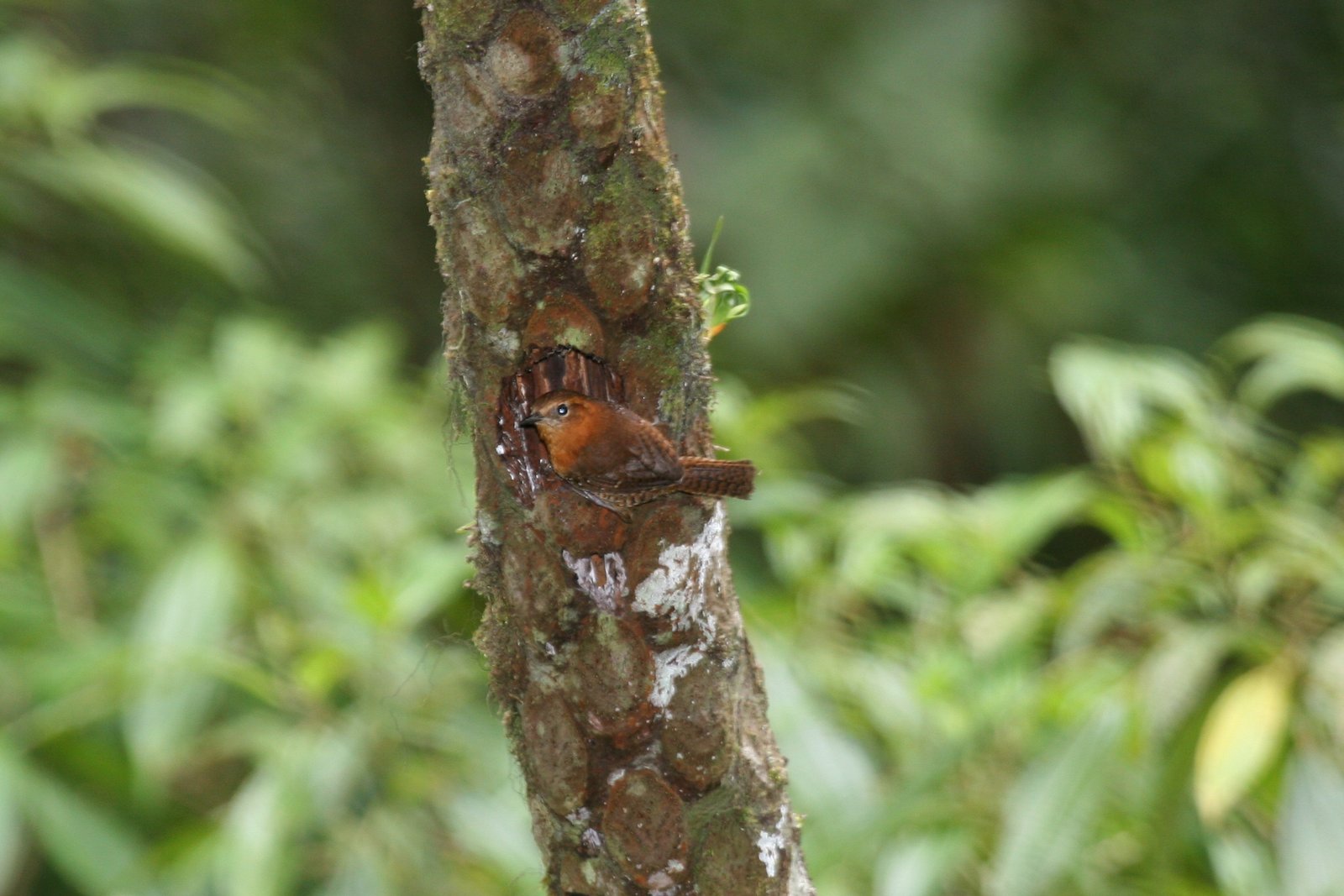
The Rufous-browed Wren is a small wren of the montane forests of northern Central America, recognised by its rufous supercilium and warm cinnamon throat and breast. It forages low in mossy undergrowth. In the guide area it lives from Chiapas to Nicaragua.
Voice
A high, clear song of rapid trills and whistles, thinner than that of the house wrens. Calls include a dry, rattling chatter.
Recording: GABRIEL LEITE — CC BY-NC-SA 4.0 · converted to mono · xeno-canto
Identification
10–11 cm. Crown and upperparts brown, wings and short tail with dark bars. A broad rufous to orange-brown supercilium above a dark eye-stripe; cheeks also warm-toned. Throat and breast warm cinnamon brown, belly paler. Flanks and undertail coverts clearly barred black. Bill thin and slightly curved. Male and female are alike.
Confusion species
Southern House Wren Troglodytes musculus and Northern House Wren Troglodytes aedon have a faint supercilium, less cinnamon on the breast and weaker flank barring; they live mainly in open country. Grey-breasted Wood Wren Henicorhina leucophrys has a grey breast, a white supercilium and a streaked face. Ochraceous Wren Troglodytes ochraceus is very similar but occurs only in Costa Rica and Panama.
Habitat
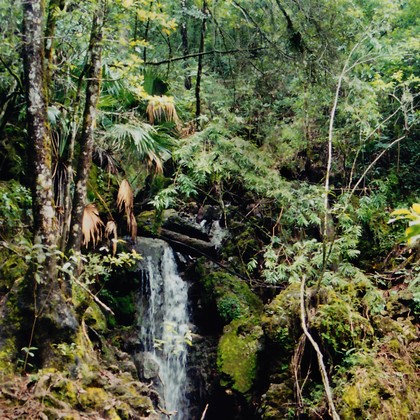
Undergrowth of humid montane forest, cloud forest and pine-oak forest, mainly above about 1800 m and high into the mountains. It forages low among moss, ferns, bromeliads and dense shrubs for insects and spiders.
Where the bird is most at home, classified by the vegetation units of Mexico and Central America.

Range and movements
Highlands of Chiapas in southern Mexico, through Guatemala, El Salvador and Honduras to northern Nicaragua. Does not occur outside the guide area.
- Resident
- dark = core range, pale = thinly spread
How and when to look
Search the mossy undergrowth of cloud forest and pine-oak forest in the highlands of Guatemala and Chiapas. The bird is often heard first and then appears briefly on a branch or in a bromeliad.
Conservation status
Not threatened. Fairly common in suitable montane forest, but declining locally through highland deforestation.
Scientific name
Troglodytes rufociliatus | Sharpe, 1882
Sharpe described the species in 1882 and placed it straight away in the genus where it still stands. The genus Troglodytes was introduced in 1809 by Vieillot. Troglodytes is Greek, from troglē 'hole, crevice' and dyein 'to creep into': 'cave-dweller', after the habit of disappearing into crevices and holes while foraging. rufociliatus is Latin, from rufus 'rufous' and cilium 'eyebrow', after the rufous supercilium. The specimen the first description was based on came from Volcán de Fuego, Sacatepéquez, Guatemala.