All species › Passerines › Wrens › Ochraceous Wren
Position in the tree Birds Aves › Birds with a flexible palate Neognathae › All other modern birds Neoaves › Landbirds Telluraves › Falcons, parrots and passerines Australaves › Falcons and passerines Eufalconimorphae › Parrots and passerines Psittacopasserae
Ochraceous Wren | Troglodytes ochraceus
Panamese bergwinterkoning | Soterrey ocroso
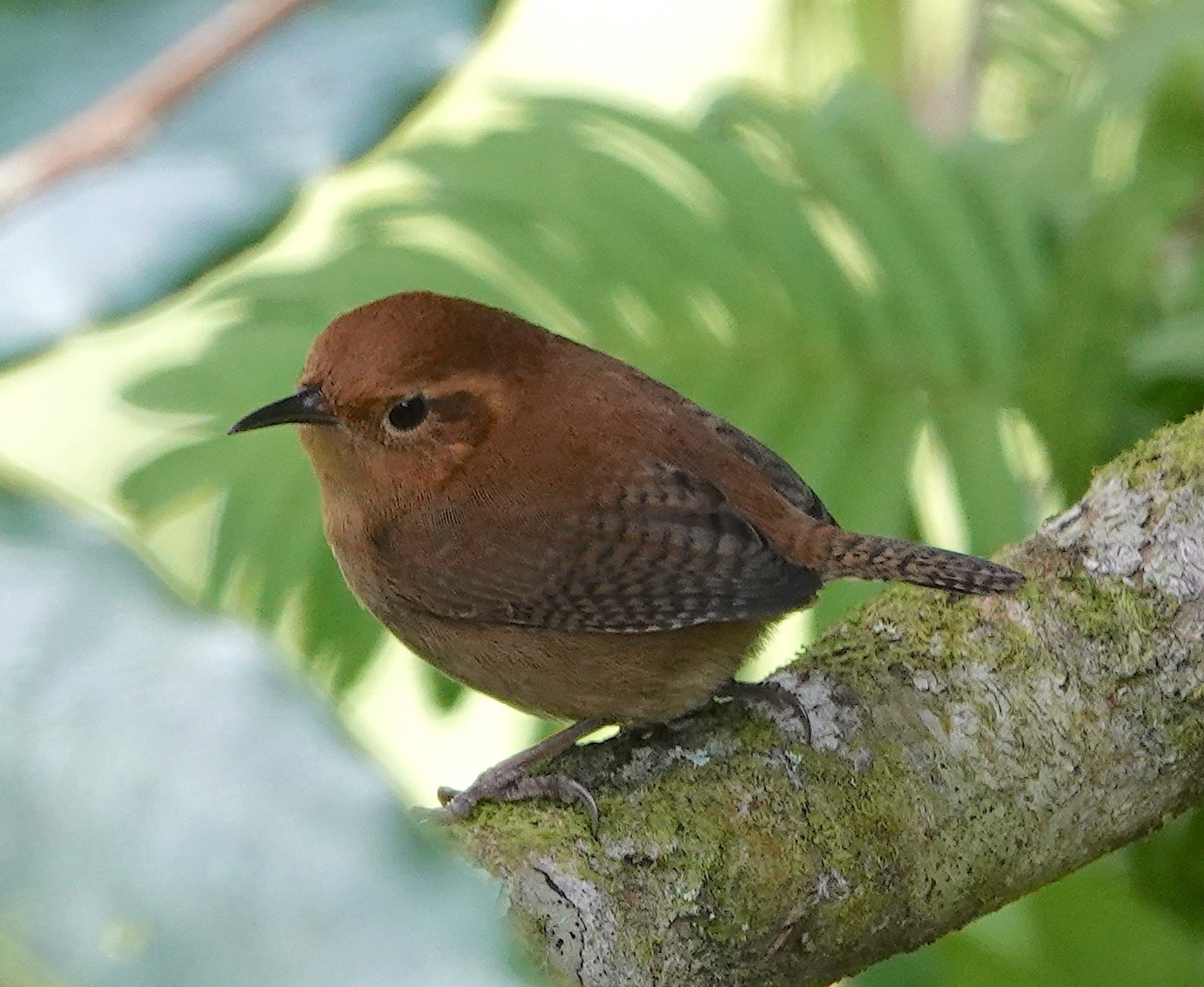
The Ochraceous Wren is a small, ochre-toned wren of the montane forests of Costa Rica and Panama. Unlike most wrens it often forages higher in the trees, among moss and epiphytes on branches and trunks. Despite the Dutch name, which refers to Panama, much of the population lives in Costa Rica.
Voice
A high, thin song of rapid trills and whistles. Calls include a soft, dry chatter.
Recording: Sue Riffe — CC BY-NC-SA 4.0 · converted to mono · xeno-canto
Identification
9–10 cm. Crown and upperparts warm rufous brown, wings and short tail with dark bars. A broad, bright ochre-buff supercilium above a dark eye-stripe. Face, throat and breast ochre buff, belly paler, flanks warmer and only faintly barred. Bill thin and slightly curved. Male and female are alike.
Confusion species
Southern House Wren Troglodytes musculus is duller, has a faint supercilium and lives in open country. Grey-breasted Wood Wren Henicorhina leucophrys has a grey breast, a white supercilium and a streaked face, and stays low. Timberline Wren Thryorchilus browni lives higher, near the treeline, and has a white supercilium and white in the wing.
Habitat
Humid montane forest and cloud forest, also forest edges and mature secondary forest, mainly from about 1000 to 2500 m, locally lower. It forages in the middle and upper levels of the forest among moss, bromeliads and other epiphytes for insects and spiders. Nests in moss among epiphytes.
Where the bird is most at home, classified by the vegetation units of Mexico and Central America.


Range and movements
Mountains of Costa Rica and Panama, with an isolated population in the mountains of eastern Panama. Does not occur, or barely occurs, outside the guide area.
- Resident
- dark = core range, pale = thinly spread
How and when to look
Regularly seen in cloud forest around Monteverde and in the Cordillera de Talamanca in Costa Rica, and in the Chiriquí highlands of Panama. Look for a small ochre bird creeping along mossy branches, often in mixed flocks.
Conservation status
Not threatened. Fairly common in montane forest; sensitive to deforestation at lower elevations.
Scientific name
Troglodytes ochraceus | Ridgway, 1882
Ridgway described the species in 1882 and placed it straight away in the genus where it still stands. The genus Troglodytes was introduced in 1809 by Vieillot. Troglodytes is Greek, from troglē 'hole, crevice' and dyein 'to creep into': 'cave-dweller', after the habit of disappearing into crevices and holes while foraging. ochraceus is Modern Latin for 'ochre-coloured', after the warm ochre-buff plumage. The specimen the first description was based on came from Volcán Irazú, Cartago, Costa Rica.