All species › Passerines › Wrens › Clarion Wren
Position in the tree Birds Aves › Birds with a flexible palate Neognathae › All other modern birds Neoaves › Landbirds Telluraves › Falcons, parrots and passerines Australaves › Falcons and passerines Eufalconimorphae › Parrots and passerines Psittacopasserae
Clarion Wren | Troglodytes tanneri
Clarionwinterkoning | Chivirín de Clarión
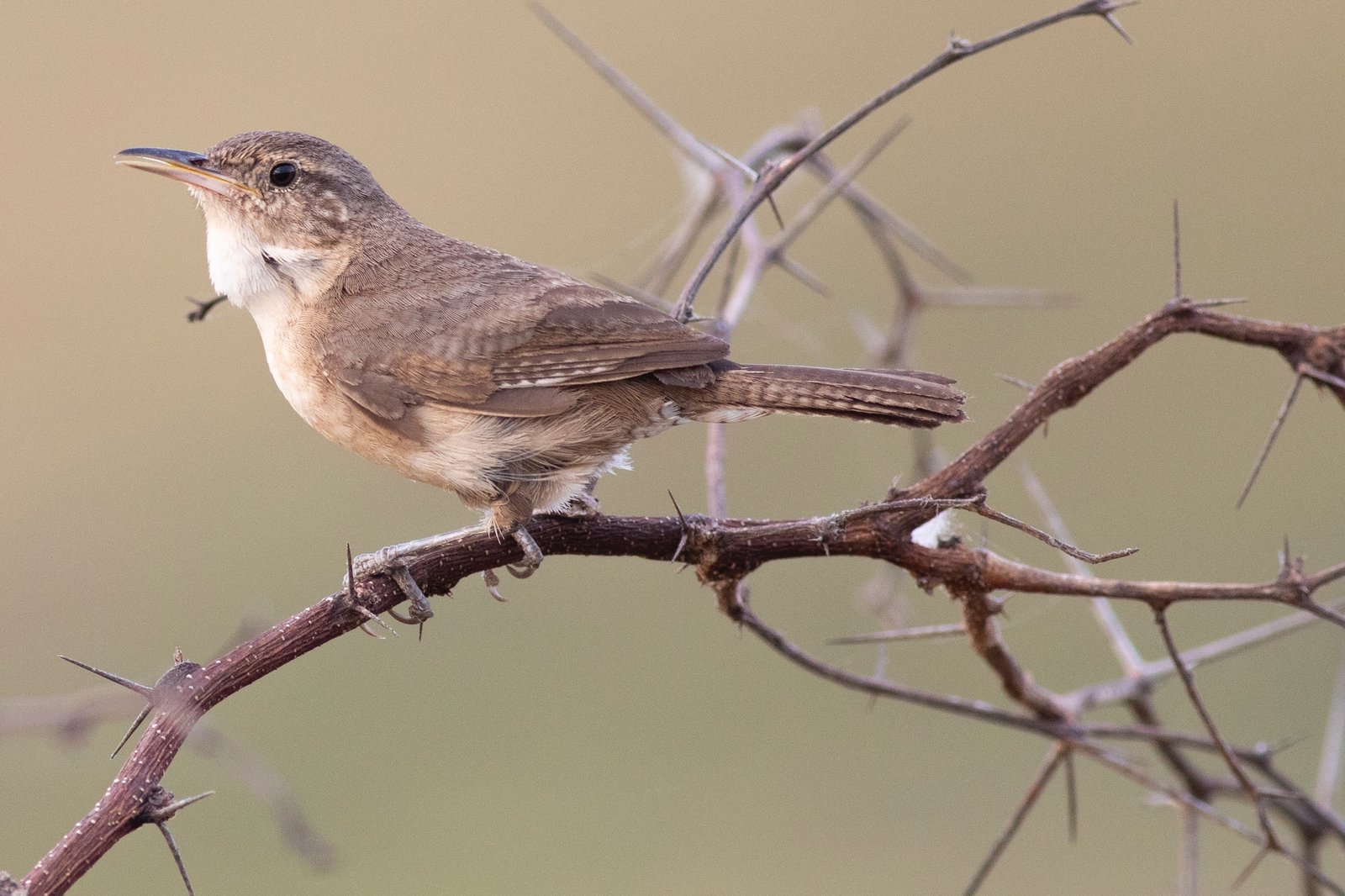
The Clarion Wren is a fairly large, greyish-brown wren with a long bill, found only on Isla Clarión, the westernmost and most remote of the Revillagigedo Islands. The entire world population lives on this one small island.
Voice
A varied song of clear trills and whistles. Calls include a dry, rattling chatter.
Recording: Alán Palacios — CC BY-NC-SA 4.0 · converted to mono · xeno-canto
Identification
13–14 cm. Upperparts greyish brown, wings and tail with dark bars. A pale supercilium. Underparts pale greyish buff, flanks slightly warmer. Bill long, fairly heavy and slightly curved. Male and female are alike.
Confusion species
No other wren occurs on Isla Clarión. Socorro Wren Troglodytes sissonii of Isla Socorro is smaller, with a shorter, thinner bill.
Habitat
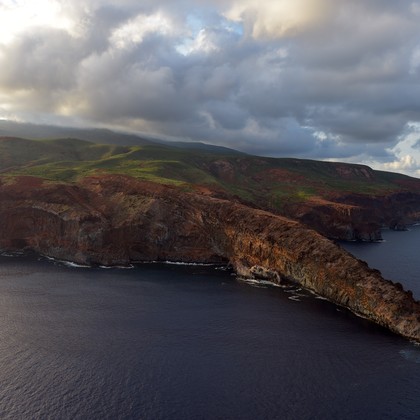
Scrub, cactus and vegetated rocky ground on the island. It forages low in vegetation and among rocks for insects and other small invertebrates.
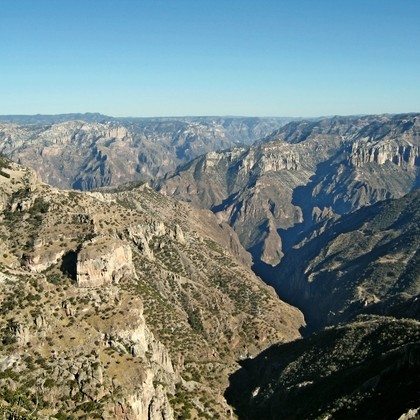
Where the bird is most at home, classified by the vegetation units of Mexico and Central America.

Range and movements
Endemic to Isla Clarión in the Revillagigedo Islands, Mexico. Does not occur outside the guide area.
- Winter visitor (c. Oct–Mar)
- Passage (Mar–Apr, Oct–Nov)
- dark = core range, pale = thinly spread
How and when to look
Isla Clarión is a protected area with a small naval post and is almost inaccessible to visitors. Sightings are rare.
Conservation status
Vulnerable. Its range is limited to one small island, where introduced mammals have damaged the vegetation. Any further habitat degradation or a newly introduced predator could affect the entire population.
Scientific name
Troglodytes tanneri | Townsend, 1890
Townsend described the species in 1890 and placed it straight away in the genus where it still stands. The genus Troglodytes was introduced in 1809 by Vieillot. Troglodytes is Greek, from troglē 'hole, crevice' and dyein 'to creep into': 'cave-dweller', after the habit of disappearing into crevices and holes while foraging. tanneri honours Zera Luther Tanner (1835–1906), US Navy officer and deep-sea explorer, commander of the research ship Albatross. The specimen the first description was based on came from Clarión Island, Revillagigedo Islands, Mexico.