All species › Passerines › Thrushes and allies › Rufous-backed Thrush
Position in the tree Birds Aves › Birds with a flexible palate Neognathae › All other modern birds Neoaves › Landbirds Telluraves › Falcons, parrots and passerines Australaves › Falcons and passerines Eufalconimorphae › Parrots and passerines Psittacopasserae
Rufous-backed Thrush | Turdus rufopalliatus
Roestruglijster | Mirlo dorso rufo
The Rufous-backed Thrush is a thrush of dry forest and semi-open country in western Mexico, with a grey head, rufous mantle and flanks and a yellow bill. It forages much on the ground and also visits villages, plantations and gardens. It occurs only in the guide area; the occasional vagrant reaches the southern United States.
Voice
The song is a series of unhurried, clear, whistled phrases with short pauses, somewhat softer and sweeter than that of American Robin. Calls include a drawn-out, plaintive tsieuw and a low chuk.
Recording: Manuel Grosselet — CC BY-NC-SA 4.0 · converted to mono · xeno-canto
Identification
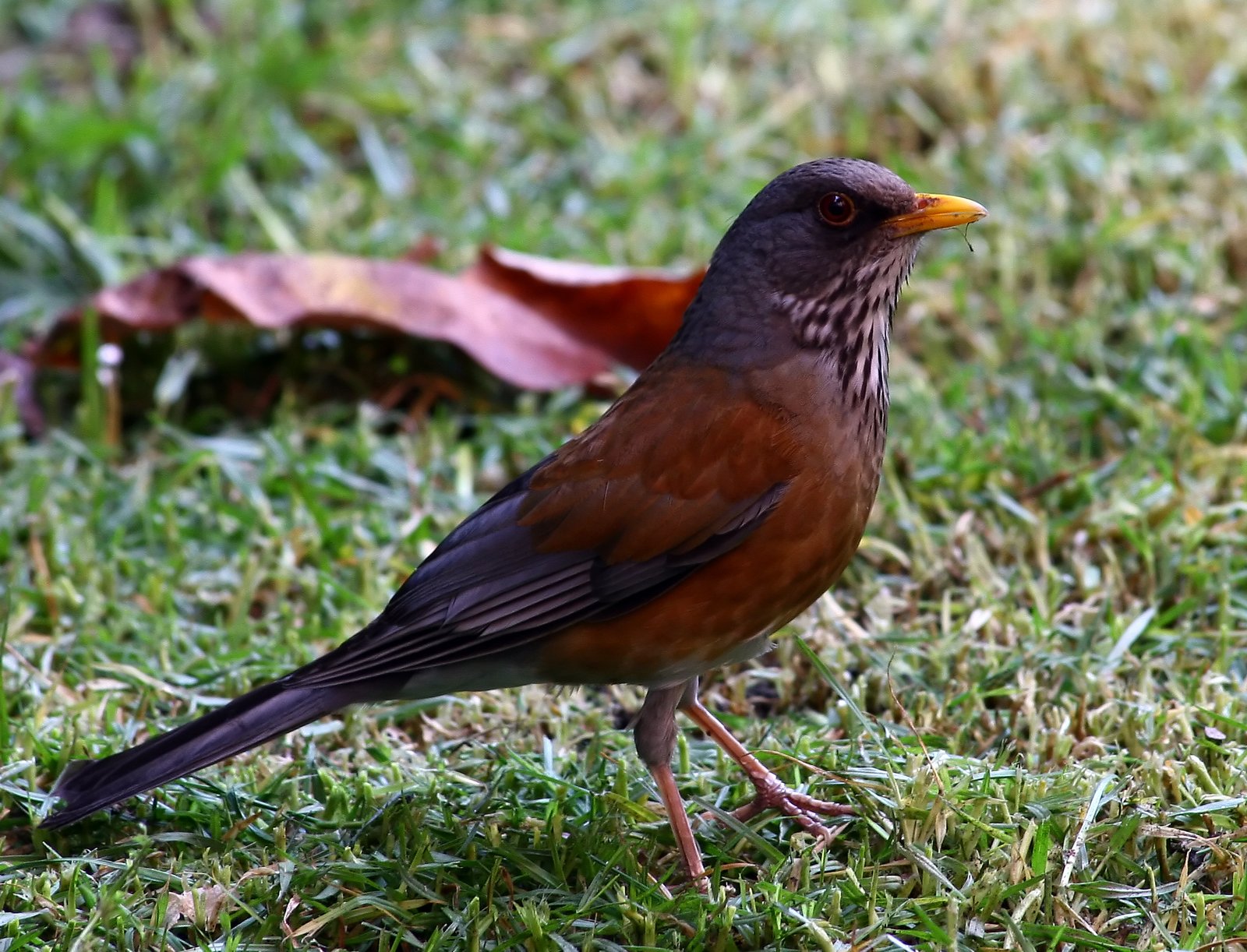
21–24 cm. Head and neck grey, mantle and scapulars bright rufous, wings and tail grey. Throat white with dark streaks. Breast and flanks orange-rufous, centre of belly and undertail white. Bill yellow, eye-ring yellow to orange-yellow. The female is slightly duller, with less contrast; juveniles have pale spots above and dark spots on the breast.
Confusion species
American Robin Turdus migratorius, which breeds or winters in parts of western Mexico, has a dark grey back without rufous, a darker head with white arcs around the eye and uniformly orange-red underparts. White-throated Thrush Turdus assimilis is brown, without a rufous back, and has a white crescent below the throat. Clay-colored Thrush Turdus grayi is uniformly buffy brown.
Habitat
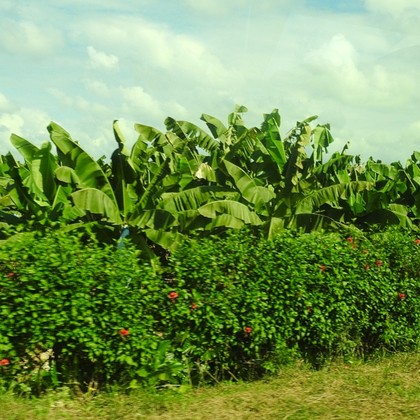
Tropical dry forest, thorn scrub, gallery forest and woodland along streams and ravines, from sea level to about 1600 m; also plantations, orchards, villages, parks and gardens. It searches the ground and leaf litter for invertebrates and eats fruit in trees and shrubs.
Where the bird is most at home, classified by the vegetation units of Mexico and Central America.




Range and movements
Endemic to the guide area: the Pacific slope of Mexico, from southern Sonora through Sinaloa, Nayarit, Jalisco, Colima, Michoacán and Guerrero to Oaxaca, inland to Morelos and southern Puebla; also on the Islas Marías. Vagrants have been recorded in the south-western United States.
- Resident
- dark = core range, pale = thinly spread
How and when to look
Occurs regularly around San Blas in Nayarit and Álamos in Sonora, and in the dry forests of Colima and Jalisco. It often forages on the ground under shrubs and in gardens.
Conservation status
Not threatened (LC). Common within its range and tolerant of disturbed land, as long as trees and shrubs remain.
Scientific name
Turdus rufopalliatus | de Lafresnaye, 1840
De Lafresnaye described the species in 1840 and placed it straight away in the genus where it still stands. The genus Turdus was introduced in 1758 by Linnaeus. Turdus is the ordinary Latin word for 'thrush'. rufopalliatus is Latin, from rufus 'rufous' and palliatus 'cloaked', after the rufous mantle and back. The specimen the first description was based on came from Acapulco, Guerrero, Mexico (designated; originally given in error as Monterey, California).