All species › Gannets and cormorants › Boobies and gannets › Nazca Booby
Position in the tree Birds Aves › Birds with a flexible palate Neognathae › All other modern birds Neoaves › Birds of the elements Elementaves › Tropicbirds and waterbirds Phaethoquornithes › Core waterbirds Aequornithes
Nazca Booby | Sula granti
Nazcagent | Bobo de Nazca
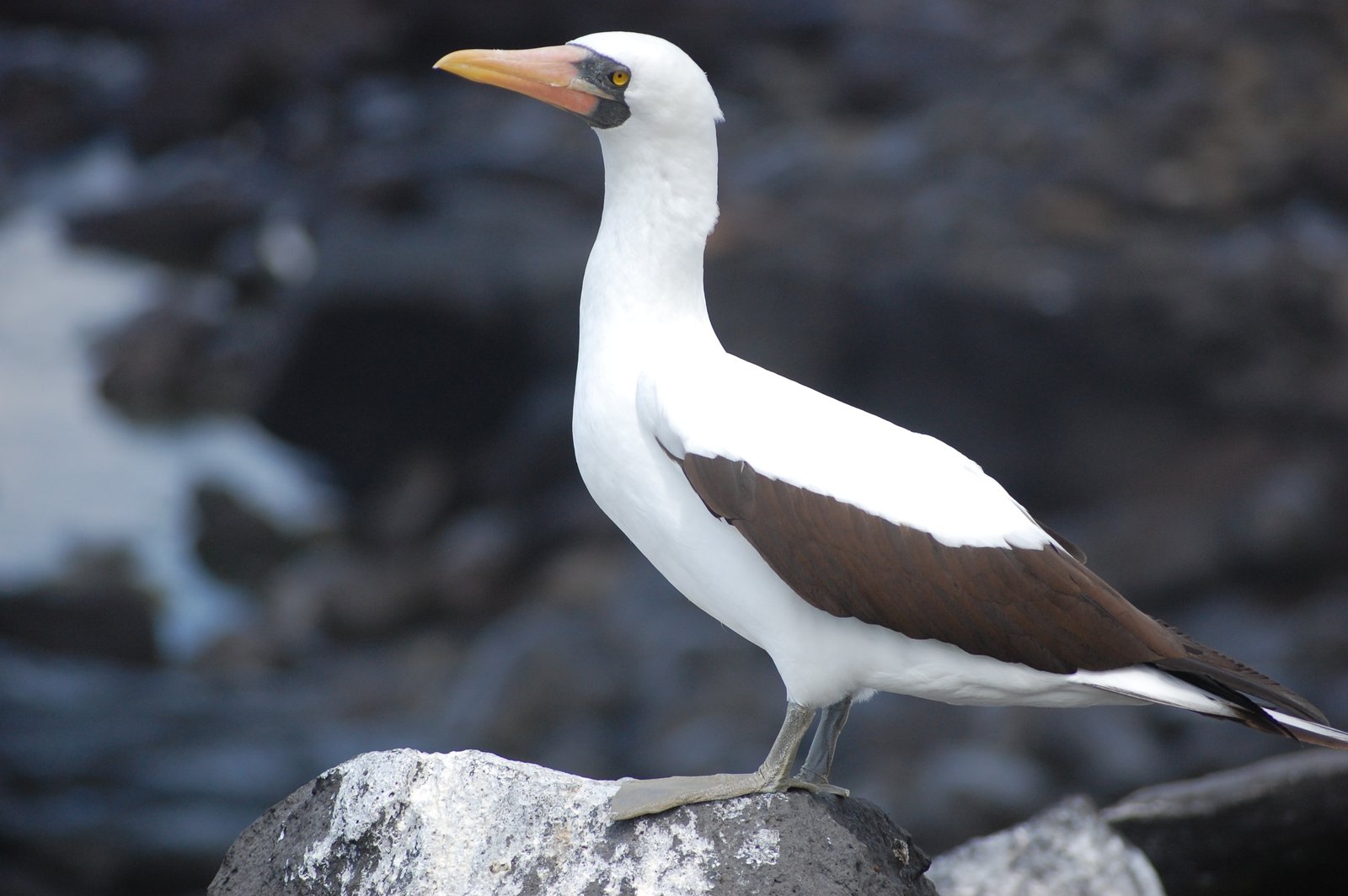
The Nazca Booby is a large, white booby of the eastern Pacific that was treated as a subspecies of Masked Booby until the end of the twentieth century. It is best told from Masked Booby by its orange-pink bill. In the guide area it breeds on the Revillagigedo Islands and is elsewhere a visitor to the open sea, mostly in the south off Costa Rica and Panama.
Voice
Silent at sea, noisy at the colony. The male gives a thin, whistled fiew, the female a loud, hoarse honking honk.
Recording: Bram Vogels — CC BY-NC-SA 4.0 · converted to mono · xeno-canto
Identification
81–92 cm, bulky, with long, pointed wings. Adults are white, with black primaries and secondaries giving the wing a broad black trailing edge, and a black tail. The bare skin around the bill and eye forms a black mask. The bill is orange-pink to salmon, the eye orange-yellow, the legs greyish olive. The sexes are alike but differ in voice; females are slightly larger. Juveniles are brown on the head, neck and upperparts, with a white belly and often a narrow or indistinct white collar; the bill is greyish to yellowish. Adult plumage is reached in about three years.
Confusion species
Masked Booby Sula dactylatra is almost identical in shape and plumage, but adults have a yellow to greenish-yellow bill and a yellow eye; juveniles of the two species often cannot be safely separated in the field, and hybrids also occur on the Revillagigedo Islands. The white morph of Red-footed Booby Sula sula is smaller, with a white tail, red legs, a blue bill and a black carpal patch on the underwing. Blue-footed Booby Sula nebouxii has a brown back and upperwing and blue feet.
Habitat
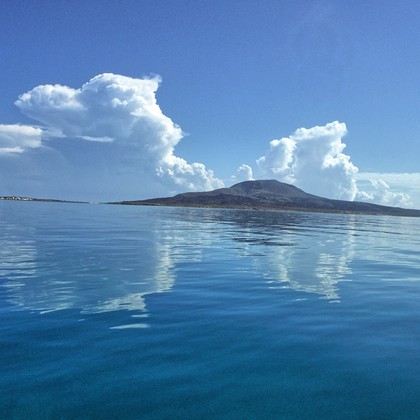
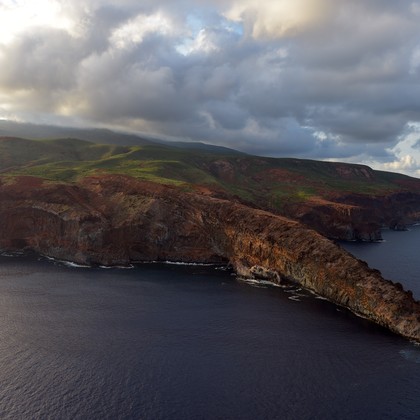
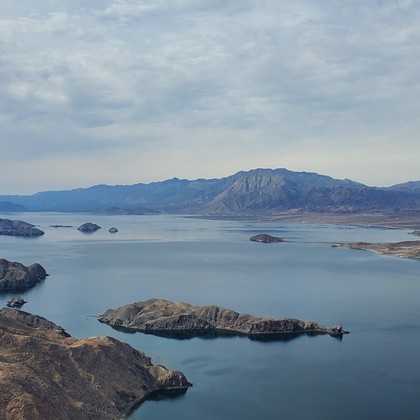
Open, deep water far offshore, where the birds plunge steeply from a great height for sardines, flying fish and squid. They breed on bare ground on level areas and slopes of remote volcanic islands, without a real nest. Of the two eggs almost always only one chick is raised: the older chick pushes the younger one out of the nest.
Where the bird is most at home, classified by the vegetation units of Mexico and Central America.
Range and movements
In the guide area the species breeds on the Revillagigedo Islands, especially San Benedicto. Away from the colonies it is seen at sea off the Pacific coast from Mexico to Panama, most often far off Costa Rica and Panama, including around Cocos Island and in the Gulf of Panama. Very rare on the Caribbean side and in the Gulf of Mexico. Outside the guide area it breeds mainly on the Galápagos Islands, Clipperton, Malpelo off Colombia and La Plata off Ecuador.
- Resident
- Summer visitor (c. Apr–Sep)
- Winter visitor (c. Oct–Mar)
- Passage (Mar–Apr, Oct–Nov)
- dark = core range, pale = thinly spread
How and when to look
Pelagic trips off the Pacific coast of Costa Rica and Panama and boat trips to Cocos Island offer the best chances. For any large, white booby with a black trailing edge to the wing, the bill colour is the key feature.
Conservation status
Not threatened. The population is large and breeds largely on protected islands. Threats are introduced predators, entanglement in fishing gear and food shortage in El Niño years.
Scientific name
Sula granti | Rothschild, 1902
Rothschild described the species in 1902 and placed it straight away in the genus where it still stands. The genus Sula was introduced in 1760 by Brisson. Sula goes back to súla, the Old Norse and Icelandic word for the gannet; the name passed to the boobies. granti honours a certain Grant; Rothschild did not explain the name. The British ornithologist Claude Henry Baxter Grant (1878–1958) is often named, but William Robert Ogilvie-Grant (1863–1924) is also possible; not verified. The specimen the first description was based on came from Culpepper (Darwin) Island, Galápagos.