All species › Gannets and cormorants › Boobies and gannets › Cocos Booby
Position in the tree Birds Aves › Birds with a flexible palate Neognathae › All other modern birds Neoaves › Birds of the elements Elementaves › Tropicbirds and waterbirds Phaethoquornithes › Core waterbirds Aequornithes
Cocos Booby | Sula brewsteri
Cocosgent | Bobo de Cocos
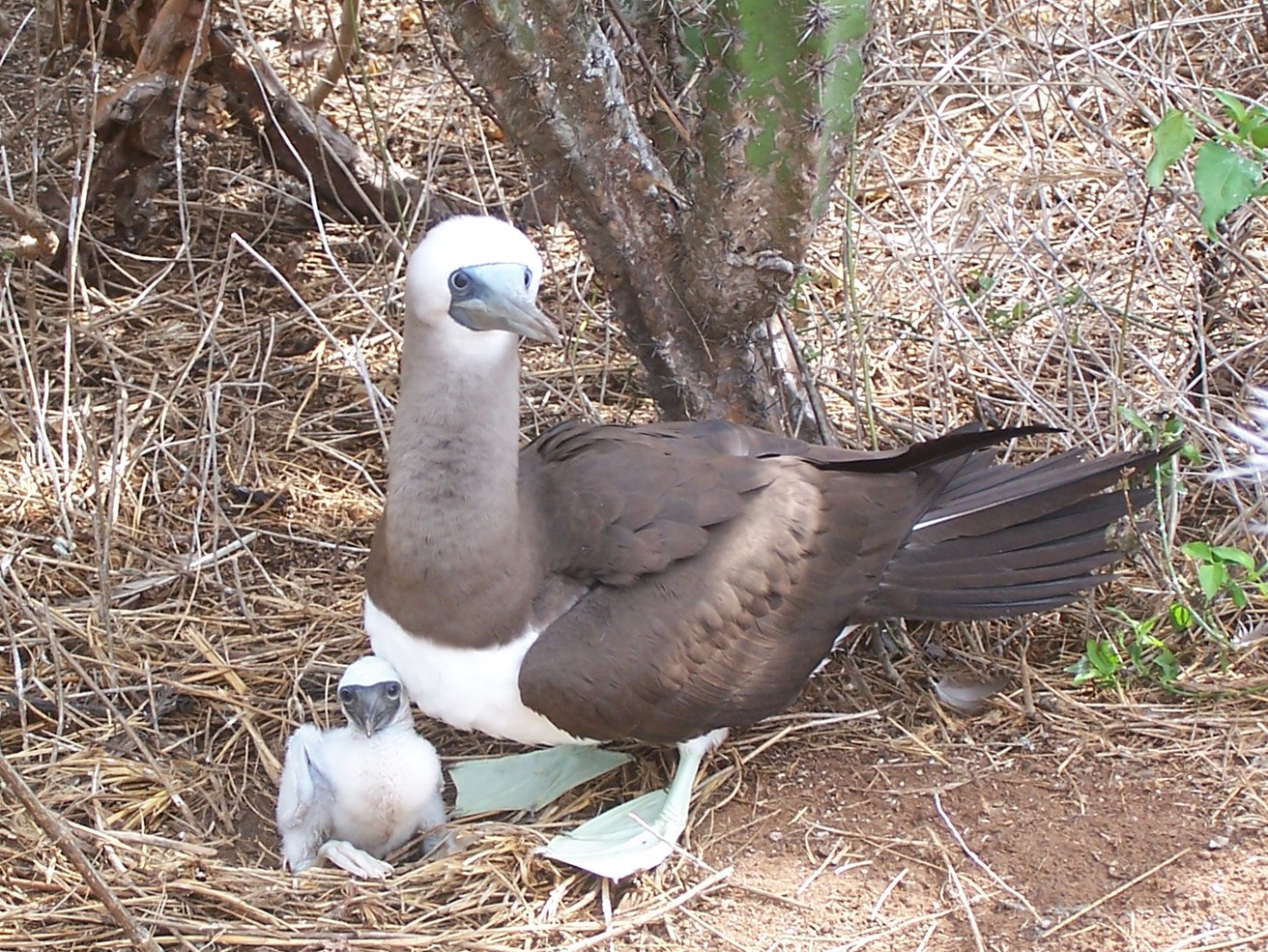
The Cocos Booby is the booby of the Pacific coast of the guide area and was long treated as a subspecies of Brown Booby. It has recently been recognised as a separate species, based on differences in plumage and behaviour. It is common year-round along the coast, from the Gulf of California to the Gulf of Panama, and like Brown Booby often fishes close inshore.
Voice
Silent at sea. At the colony the male gives a high, whistled schew, the female a low, hoarse honking honk.
Recording: Julie Hall — CC BY-NC 4.0 · converted to mono · iNaturalist
Identification
64–80 cm; females are larger than males. Shape and pattern as in Brown Booby: dark brown upperparts, head and breast, a sharply demarcated white belly and an underwing with a white centre and a broad dark margin. The male has a greyish-white head and upper neck, grading into the brown of the neck; this is palest in birds from the Gulf of California and less pronounced in birds from the south. The male's bill is greyish and the bare facial skin blue-grey. The female has a dark brown head, often with a paler band on the forehead, and a yellowish to pinkish bill. The legs are yellow to greenish yellow. Juveniles are brown with a pale brown, mottled belly and cannot be told from juvenile Brown Boobies.
Confusion species
Brown Booby Sula leucogaster occurs on the Caribbean side and is very rare on the Pacific side; the male has a dark brown head and a yellow bill. The brown morph of Red-footed Booby Sula sula is uniformly brown below and has red legs, or greyish-yellow ones in juveniles. Blue-footed Booby Sula nebouxii has blue feet, a streaked pale brown head and a white patch on the rump and lower back. Juvenile Masked Boobies Sula dactylatra and Nazca Boobies Sula granti are larger and have a white collar.
Habitat
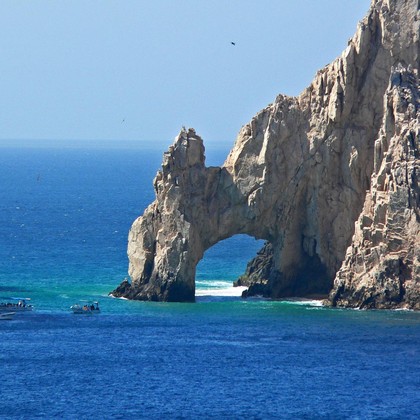
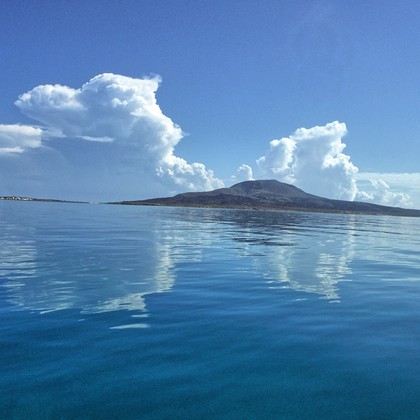
Coastal waters, bays, harbours and open sea over the continental shelf, also around oceanic islands. It plunges at a shallow angle from low height for schooling fish such as sardines and anchovies. It rests on buoys, boats, rocks and piles. It breeds in colonies on the ground on rocky islets, cliffs and bare island slopes, with a simple nest of twigs and debris.
Where the bird is most at home, classified by the vegetation units of Mexico and Central America.




Range and movements
Breeds on numerous islands in the Gulf of California, such as San Pedro Mártir and Espíritu Santo, on Isla Isabel and the Islas Marías off Nayarit and on the Revillagigedo Islands. Further south it breeds on islets off the Pacific coast of Central America, on Cocos Island and in the Gulf of Panama. Year-round along the whole Pacific coast from Baja California and Sonora to Panama. Birds in Mexico belong to the subspecies S. b. brewsteri, those in Central America to S. b. etesiaca. Outside the guide area on Clipperton, along the coast of Colombia and increasingly in California and on islands in the central Pacific.
- Resident
- dark = core range, pale = thinly spread
How and when to look
Along the Pacific coast it can be seen almost anywhere from headlands, piers and ferries, for example in the Gulf of California, at Puntarenas in Costa Rica and from the Amador Causeway in Panama City. Colonies can be visited by boat at Isla Isabel and in the Gulf of California. Males are recognised by the pale head; females need more care.
Conservation status
Not evaluated as a separate species; the IUCN includes it in Brown Booby, which is not threatened globally. The population is large. Colonies are vulnerable to introduced predators and disturbance; rats and cats have been removed from several breeding islands in the Gulf of California.
Scientific name
Sula brewsteri | Goss, 1888
Goss described the species in 1888 and placed it straight away in the genus where it still stands. The genus Sula was introduced in 1760 by Brisson. Sula goes back to súla, the Old Norse and Icelandic word for the gannet; the name passed to the boobies. brewsteri honours the American ornithologist William Brewster (1851–1919). The specimen the first description was based on came from San Pedro Mártir Island, Gulf of California, Mexico.