All species › Gamebirds › New World quail › Mountain Quail
Position in the tree Birds Aves › Birds with a flexible palate Neognathae › Fowl Galloanserae
Mountain Quail | Oreortyx pictus
Bergkwartel | Codorniz de montaña
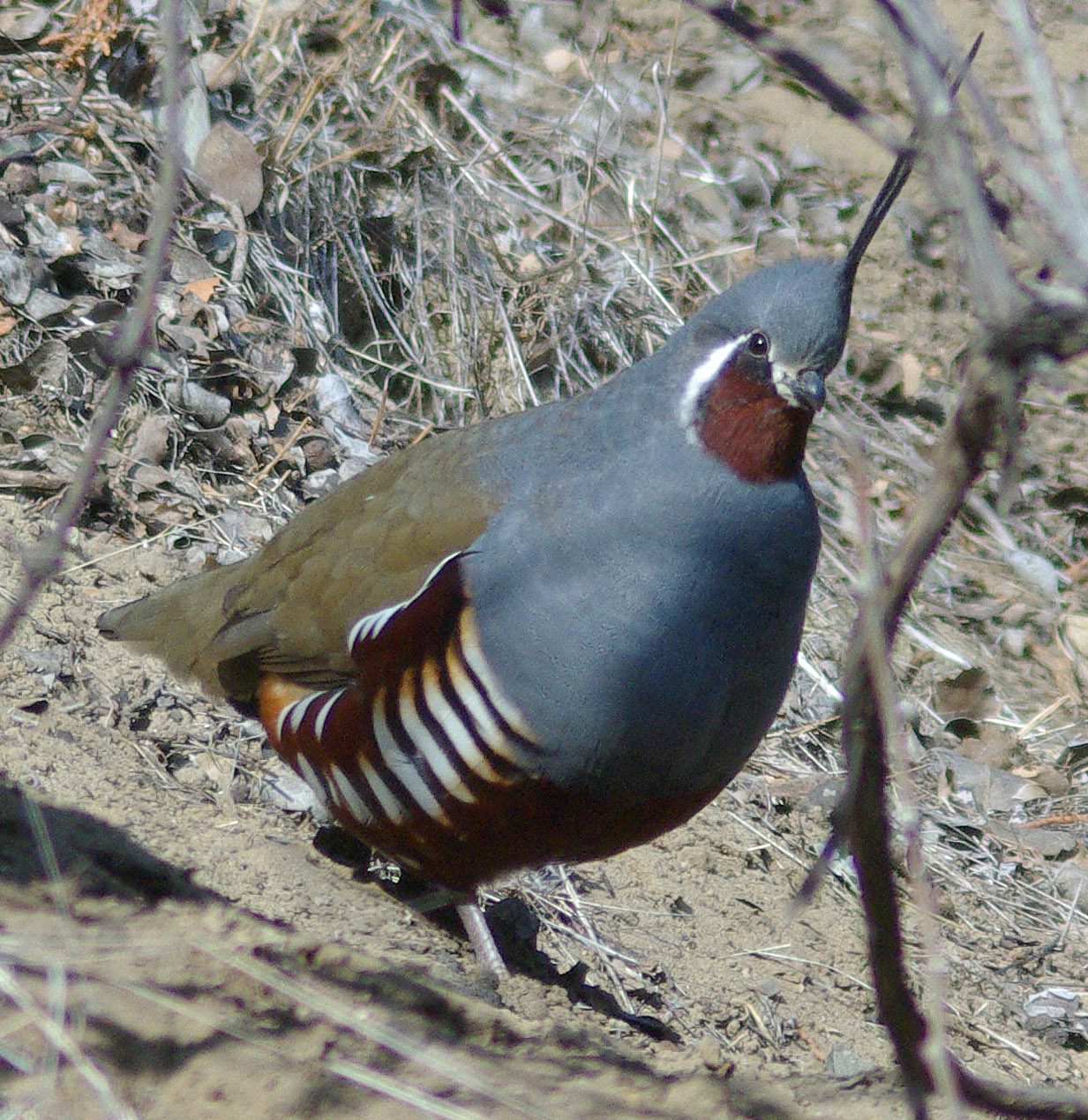
The Mountain Quail is the largest quail in North America and reaches the guide area only in northern Baja California. It lives in dense scrub and open montane forest and can be recognised by the two long, straight feathers that stick up from the head like a plume.
Voice
In spring the male calls from a rock or stump a loud, hollow kyork or quark, repeated at intervals and carrying far. Scattered members of a covey find each other with a series of whistled calls; when alarmed, a soft, rapid chattering.
Recording: Ed Pandolfino — CC BY-NC-SA 4.0 · shortened to the first 60 s, mono · xeno-canto
Identification
26–28 cm; a large, compact quail with a crest of two long, narrow black feathers that stand straight up or slightly backwards. The head, neck and breast are slate-grey, the throat chestnut with a white border that runs up to the eye. The flanks are chestnut with broad white and black bars, the upperparts olive-brown. Male and female are very similar; the female has on average a shorter plume and a slightly browner head. The subspecies in the guide area is O. p. confinis.
Confusion species
California Quail Callipepla californica partly shares the same area, but is smaller, has a forward-curled, teardrop-shaped plume, a scaled belly and, in the male, a black throat with a white border. Mountain Quail has a straight, pointed plume, a chestnut throat and white-and-black barred flanks.
Habitat
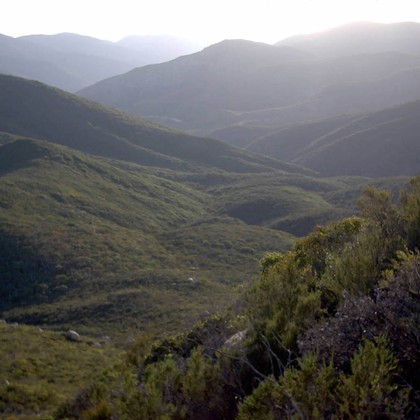
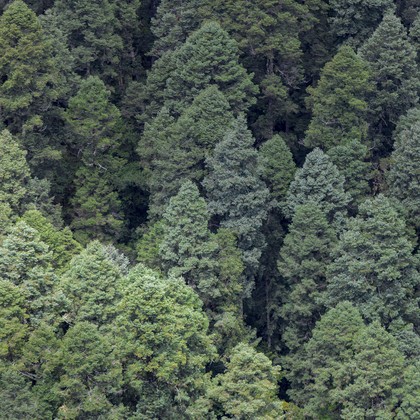
Dense chaparral and scrub on mountain slopes, open pine forest and mixed conifer forest with a rich shrub layer, often near water. It lives in pairs in the breeding season and in coveys outside it. When disturbed it prefers to run rather than fly. It eats seeds, buds, berries, bulbs and insects. The nest is a scrape on the ground under cover.
Where the bird is most at home, classified by the vegetation units of Mexico and Central America.

Range and movements
In the guide area only in northern Baja California, in the Sierra de Juárez and the Sierra de San Pedro Mártir. Outside the guide area in the western United States, from Washington and Idaho to California and Nevada.
- Resident
- Summer visitor (c. Apr–Sep)
- dark = core range, pale = thinly spread
How and when to look
In Sierra de San Pedro Mártir National Park the chances are best in spring, when the males call early in the morning. Outside the breeding season coveys are sometimes seen at water holes and along dirt roads through the scrub.
Conservation status
Not threatened. In northern Baja California restricted to the higher ranges; the population there is small but lies largely within protected areas.
Scientific name
Oreortyx pictus | (Douglas, 1829)
Douglas described the species in 1829 as Ortyx picta; because it was later moved to another genus, the author and year stand in brackets. The genus Oreortyx was introduced in 1858 by Baird. Oreortyx is Greek, from oros 'mountain' and ortux 'quail': 'mountain quail'. pictus is Latin for 'painted', after the colourful pattern of head and flanks. The specimen the first description was based on came from headwaters of the Umpqua River near the Calapooya Mountains, Oregon, USA.