All species › Storks › Storks › Maguari Stork
Position in the tree Birds Aves › Birds with a flexible palate Neognathae › All other modern birds Neoaves › Birds of the elements Elementaves › Tropicbirds and waterbirds Phaethoquornithes › Core waterbirds Aequornithes
Maguari Stork | Ciconia maguari
Magoeari | Cigüeña maguari
The Maguari Stork is a South American stork of wet grasslands and marshes that has been recorded in the guide area only as a vagrant, not a native species. The first bird was seen in Costa Rica in 2013; since then there have been a few records from Panama.
Voice
Almost silent away from the breeding site. In greeting the birds give a hoarse, hissing, two-syllable whistle and clatter their bills.
Recording: Naelin — CC BY 4.0 · Converted to mp3, mono, full length · iNaturalist
Identification
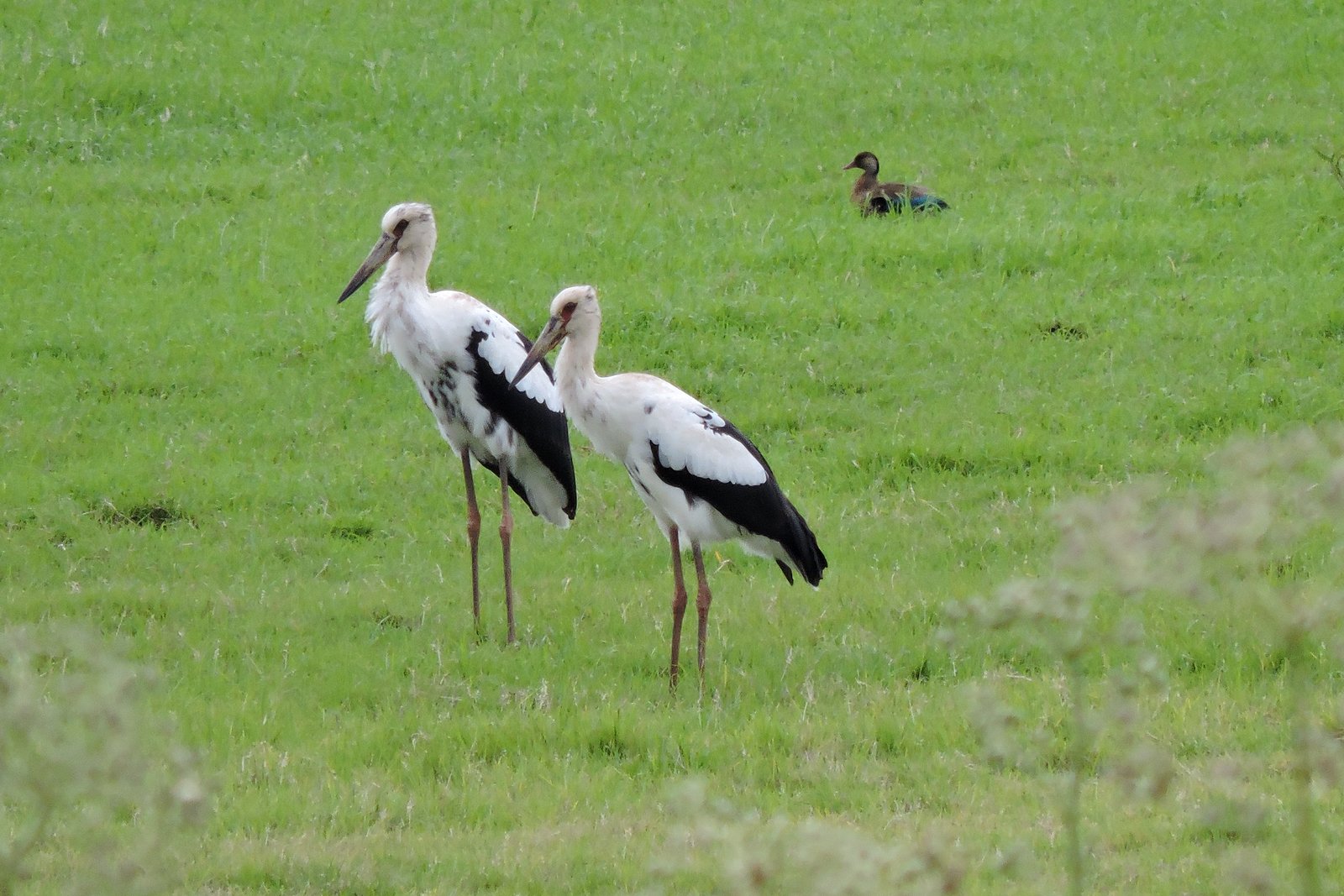
97–110 cm, a large, long-legged stork. The plumage is white, with black flight feathers, black greater coverts and a black, forked tail, beneath which the white undertail coverts project. The bill is straight, long and bluish grey, with a dark red tip. The skin around the eye and on the throat is bare and orange-red; the eye is pale yellow to white. The legs are red. The sexes are alike. Juveniles are duller, with a dark bill and blackish areas in the plumage. It flies with the neck outstretched and the legs trailing; in flight the wing is white with a broad black rear half.
Confusion species
Wood Stork Mycteria americana has a similar black-and-white wing pattern, but a bare grey head and neck, a slightly decurved dark bill and black legs with pink feet. Jabiru Jabiru mycteria is larger, with all-white wings, a bare black head and neck with a red band and a heavy black bill.
Habitat
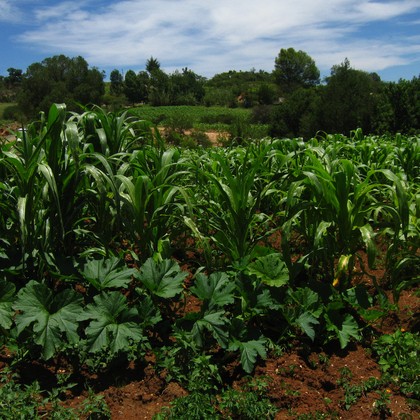
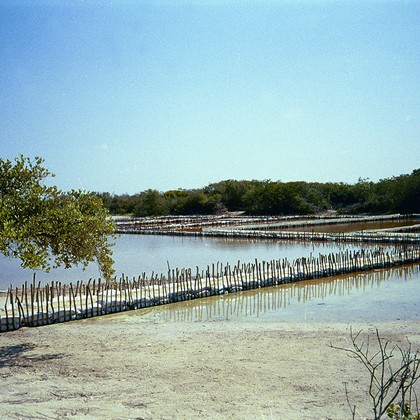
Wet grasslands, open marshes, flooded savannas, rice fields and the shores of shallow pools. It forages on foot in shallow water and damp grass for fish, frogs, snakes and large insects. Birds in the guide area have been seen in coastal wetlands with shrimp ponds, in rice fields and on wet pastures.
Where the bird is most at home, classified by the vegetation units of Mexico and Central America.



Range and movements
A small number of records in the guide area, including one bird at Chomes on the Gulf of Nicoya in Costa Rica in September 2013, two birds at Juan Hombrón in Coclé province in Panama in May 2014, and one bird at Bayano in Panamá province in July and September 2017. Outside the guide area in South America east of the Andes, from Colombia, Venezuela and the Guianas to southern Argentina.
- Summer visitor (c. Apr–Sep)
- Winter visitor (c. Oct–Mar)
- Passage (Mar–Apr, Oct–Nov)
- dark = core range, pale = thinly spread
How and when to look
A large white stork with a black rear half to the wing, a straight grey bill and red legs in the lowlands of Costa Rica or Panama deserves a second look. Comparison with Wood Stork, which is common in the same habitat, is always needed.
Conservation status
Not threatened globally. In the guide area a vagrant with no regular presence.
Scientific name
Ciconia maguari | (Gmelin, 1789)
Gmelin described the species in 1789 as Ardea Maguari; because it was later moved to another genus, the author and year stand in brackets. The genus Ciconia was introduced in 1760 by Brisson. Ciconia is the Latin word for 'stork'. maguari is the Tupi name for this stork, via Marcgrave's Brazilian account. The specimen the first description was based on came from northeastern Brazil.