All species › Birds of prey › Kites, Old World vultures, eagles and hawks › Long-winged Harrier
Position in the tree Birds Aves › Birds with a flexible palate Neognathae › All other modern birds Neoaves › Landbirds Telluraves › Raptors, owls, kingfishers and woodpeckers Afroaves › Hawks and owls Hieraves
Long-winged Harrier | Circus buffoni
Buffons kiekendief | Gavilán planeador
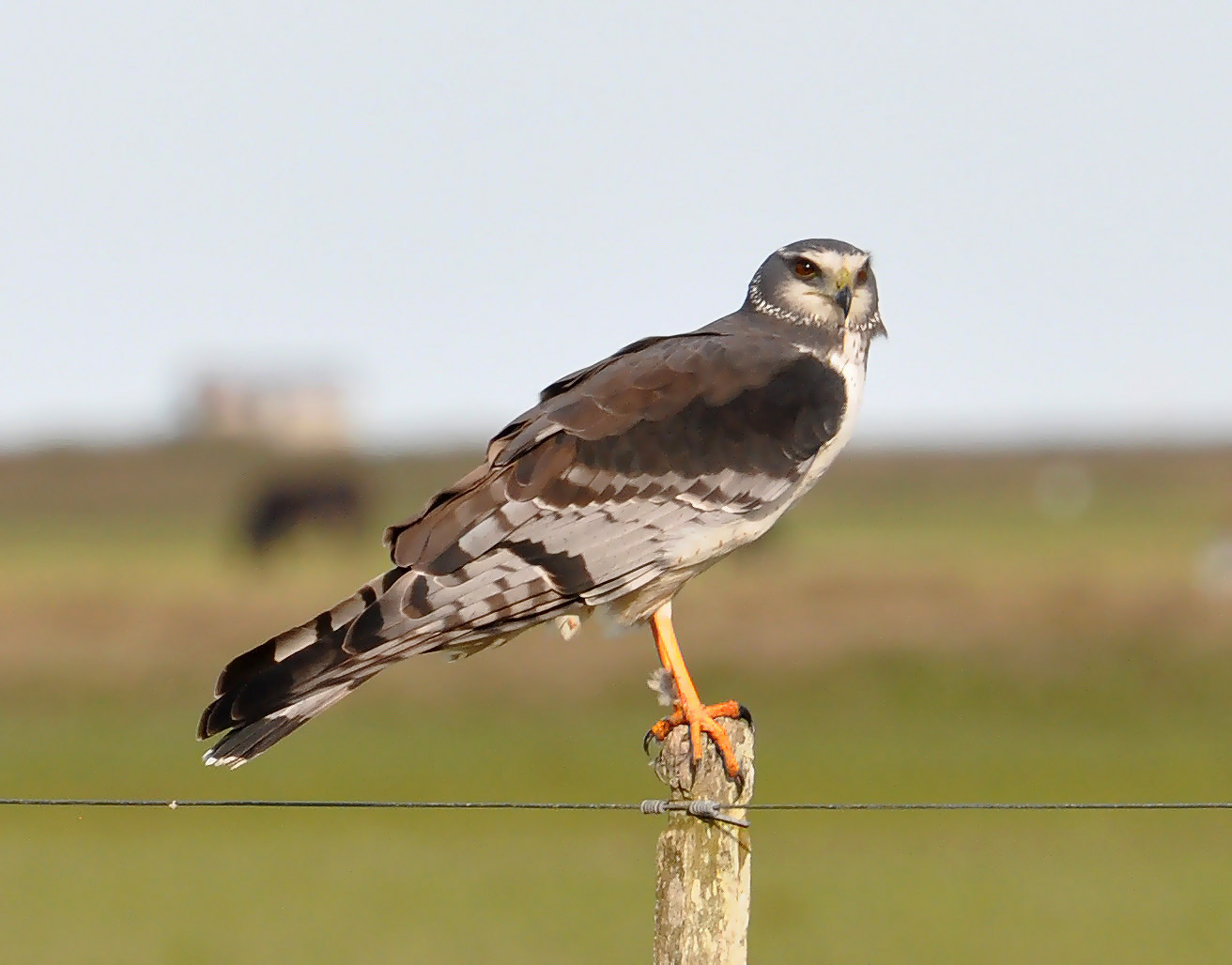
The Long-winged Harrier is a large harrier with long, narrow wings and a long tail that hunts low and buoyantly, wings held in a shallow V, over marshes, wet grassland and rice fields for small birds, rodents, frogs and reptiles. It occurs in a pale and a dark morph. In the guide area it lives only in eastern Panama, where it has been seen increasingly often since the start of this century in the marshes and rice fields of Darién and Panamá province.
Voice
Usually silent. At the nest a high, shrill kee-kee-kee and a whistled piping.
Recording: Marcelo Villegas — CC BY-NC-SA 4.0 · converted to mono · xeno-canto
Identification
46–60 cm, with long, narrow wings, a long, banded tail and long yellow legs; the female is larger than the male. Pale birds have dark brown to blackish upperparts, a white rump, a white forehead and white supercilium, a dark breast band and otherwise white, lightly streaked underparts; the grey flight feathers are barred black below. Dark birds are almost entirely blackish brown, with a white rump and grey, black-barred flight feathers and tail. Males show more grey on the wings than females. Young birds are brown above and creamy with dark streaks below.
Confusion species
The Northern Harrier Circus hudsonius is smaller with shorter wings; males are pale grey, females and young birds brown with a white rump and an owl-like facial disc, but without a dark breast band. In Panama it is a rare winter visitor. The Snail Kite Rostrhamus sociabilis also hunts low over marshes, but has broader wings, a thin, strongly hooked bill and a white tail base.
Habitat
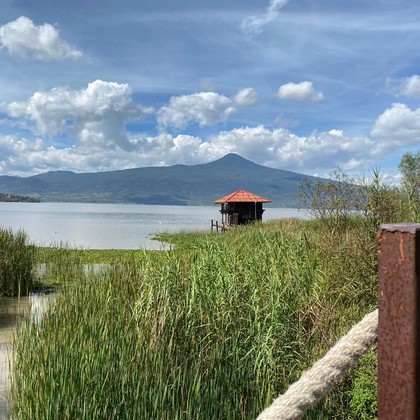
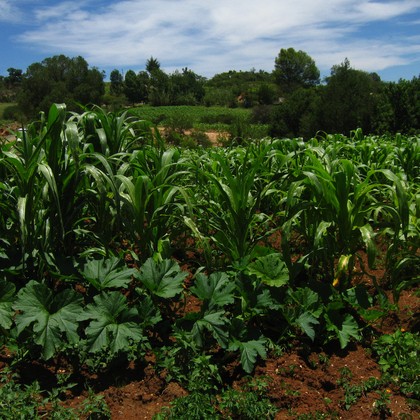
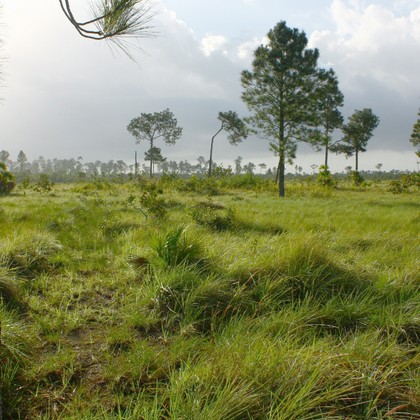
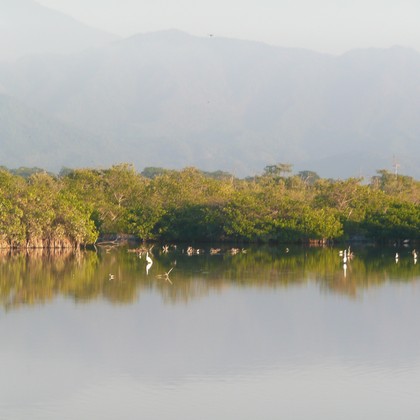
Freshwater marshes, wet grassland, rice fields and flooded pasture in the lowlands, also salt marsh and the edges of mangroves. It hunts in a low, gliding flight over open, flat ground and rests on the ground or on a low post.
Where the bird is most at home, classified by the vegetation units of Mexico and Central America.
Range and movements
In the guide area only in eastern Panama: in the marshes and rice fields around Matusagaratí, Yaviza and El Real in Darién, in Tocumen marsh near Panama City and in the rice fields east of it; also a few records from Coclé and Colón. Birds are seen there in every month; whether the species breeds there has not been confirmed. Only a few uncertain reports are known from the rest of the guide area. Outside the guide area in Colombia, Venezuela, Trinidad, the Guianas and much of South America east of the Andes, south to Argentina.
- Resident
- Passage (Mar–Apr, Oct–Nov)
- dark = core range, pale = thinly spread
How and when to look
In the Matusagaratí marshes near Metetí in Darién and in the surrounding rice fields, birds glide low over water and grass. In the dry season, from January to April, these areas can be reached by road.
Conservation status
Not threatened. In the guide area it is rare and depends on a small number of marshes that are under pressure from drainage for rice growing and cattle ranching; the rise in records may be linked to the spread of rice fields and to more observers.
Scientific name
Circus buffoni | (Gmelin, 1788)
Gmelin described the species in 1788 as Falco Buffoni; because it was later moved to another genus, the author and year stand in brackets. The genus Circus was introduced in 1799 by De Lacépède. Circus is from the Ancient Greek kirkos, a bird of prey named for its circling flight. buffoni honours the French naturalist Georges-Louis Leclerc, Comte de Buffon (1707–1788). The specimen the first description was based on came from northeastern Brazil.