All species › Passerines › Tyrant flycatchers and allies › Lesser Kiskadee
Position in the tree Birds Aves › Birds with a flexible palate Neognathae › All other modern birds Neoaves › Landbirds Telluraves › Falcons, parrots and passerines Australaves › Falcons and passerines Eufalconimorphae › Parrots and passerines Psittacopasserae
Lesser Kiskadee | Philohydor lictor
Kleine kiskadie | Bienteveo menor
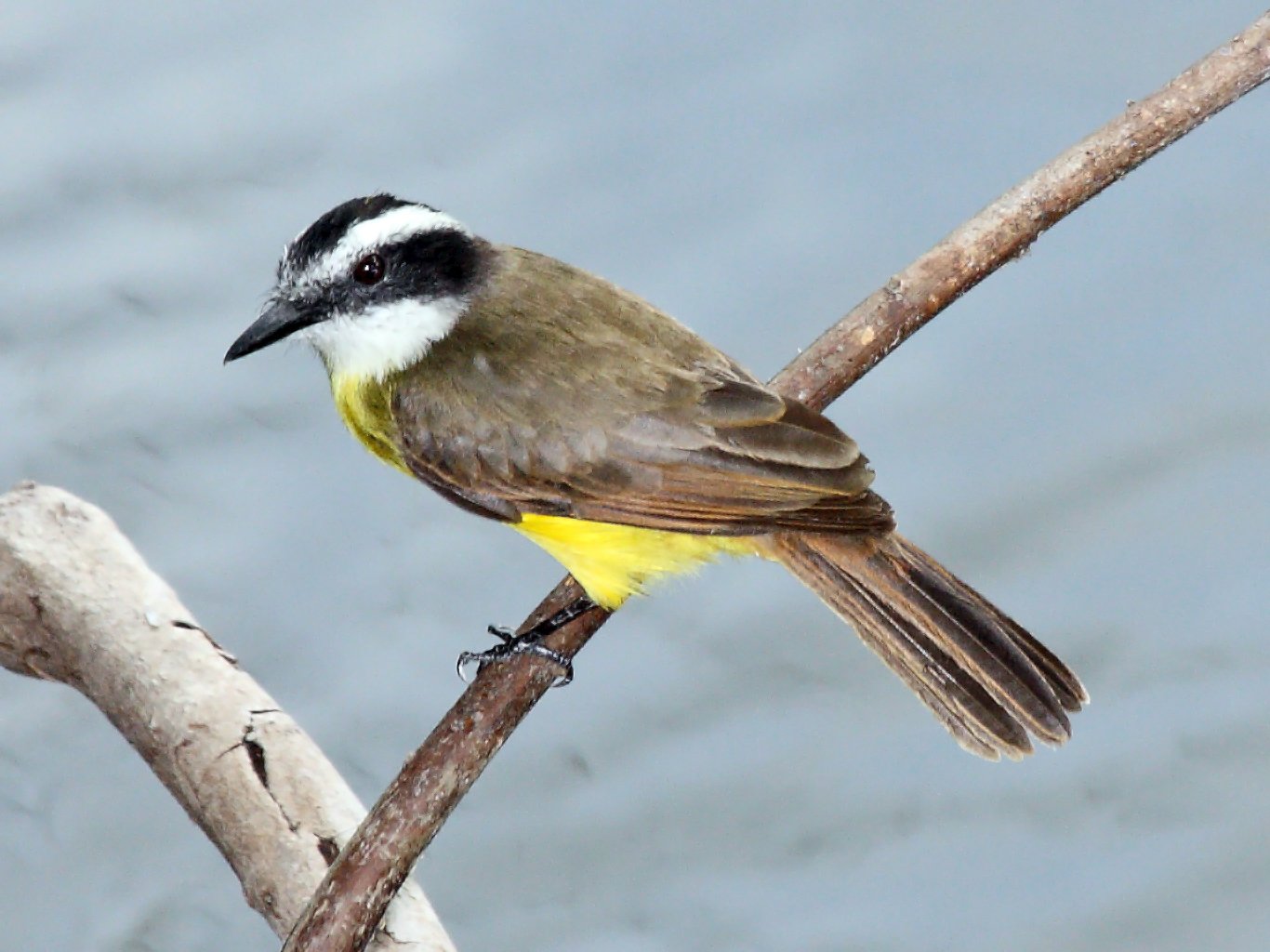
The Lesser Kiskadee is a scaled-down version of the Great Kiskadee with a strikingly long, slender bill, and is almost always tied to water. It perches low on branches over sluggish rivers, creeks and lagoons and catches insects above or close to the water surface. In the guide area it lives only in eastern Panama.
Voice
A hoarse, nasal, falling call, something like dzeeeur, often repeated, and shorter chattering.
Recording: Dante Buzzetti — CC BY-NC-SA 4.0 · converted to mono · xeno-canto
Identification
17 cm, with a long, slender black bill. Crown black with a concealed yellow crown patch, a broad white supercilium and a black mask through the eye. Back olive-brown, wings and tail brown with narrow pale to rusty edges. Throat white, rest of the underparts bright yellow. Male and female are alike.
Confusion species
Great Kiskadee Pitangus sulphuratus is much larger and heavier, with a thicker bill and distinct rufous edges to the wings and tail, and also lives far from water. Social Flycatcher Myiozetetes similis and Rusty-margined Flycatcher Myiozetetes cayanensis have a short, stubby bill.
Habitat
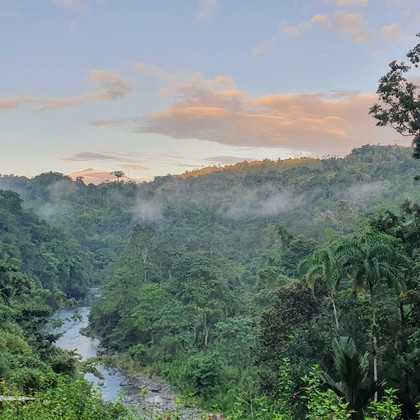
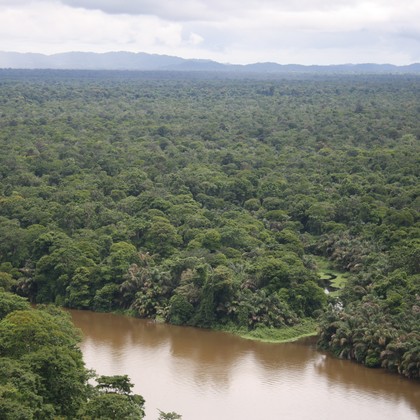
Banks of sluggish rivers, creeks, lagoons, marshes and ponds with overhanging shrubs or trees, in the lowlands. It perches low over the water and catches insects in short sallies, often just above the water surface. The cup-shaped nest is built on a branch or in a shrub over water.
Where the bird is most at home, classified by the vegetation units of Mexico and Central America.



Range and movements
In the guide area only in eastern Panama. Outside the guide area in northern Colombia and over much of tropical South America east of the Andes, to Amazonia and eastern Brazil.
- Resident
- dark = core range, pale = thinly spread
How and when to look
Best seen on a boat trip or from the bank along rivers and lagoons in eastern Panama, where it perches low on branches over the water.
Conservation status
Not threatened. Widespread in South America; in the guide area restricted to eastern Panama and local there.
Scientific name
Philohydor lictor | (Lichtenstein, 1823) (GBIF: Pitangus lictor)
Lichtenstein described the species in 1823 as L[anius] Lictor; because it was later moved to another genus, the author and year stand in brackets. The genus Philohydor was introduced in 1984 by Lanyon. Philohydor is Greek, from philos 'loving' and hudōr 'water': 'water-lover', after its preference for waterside habitats. lictor is Latin for a Roman magistrate's bodyguard, who carried out sentences. The specimen the first description was based on came from Belém, Pará, Brazil.