All species › Passerines › New World sparrows › Large-footed Finch
Position in the tree Birds Aves › Birds with a flexible palate Neognathae › All other modern birds Neoaves › Landbirds Telluraves › Falcons, parrots and passerines Australaves › Falcons and passerines Eufalconimorphae › Parrots and passerines Psittacopasserae
Large-footed Finch | Pezopetes capitalis
Grootpootstruikgors | Cerquero patigrande
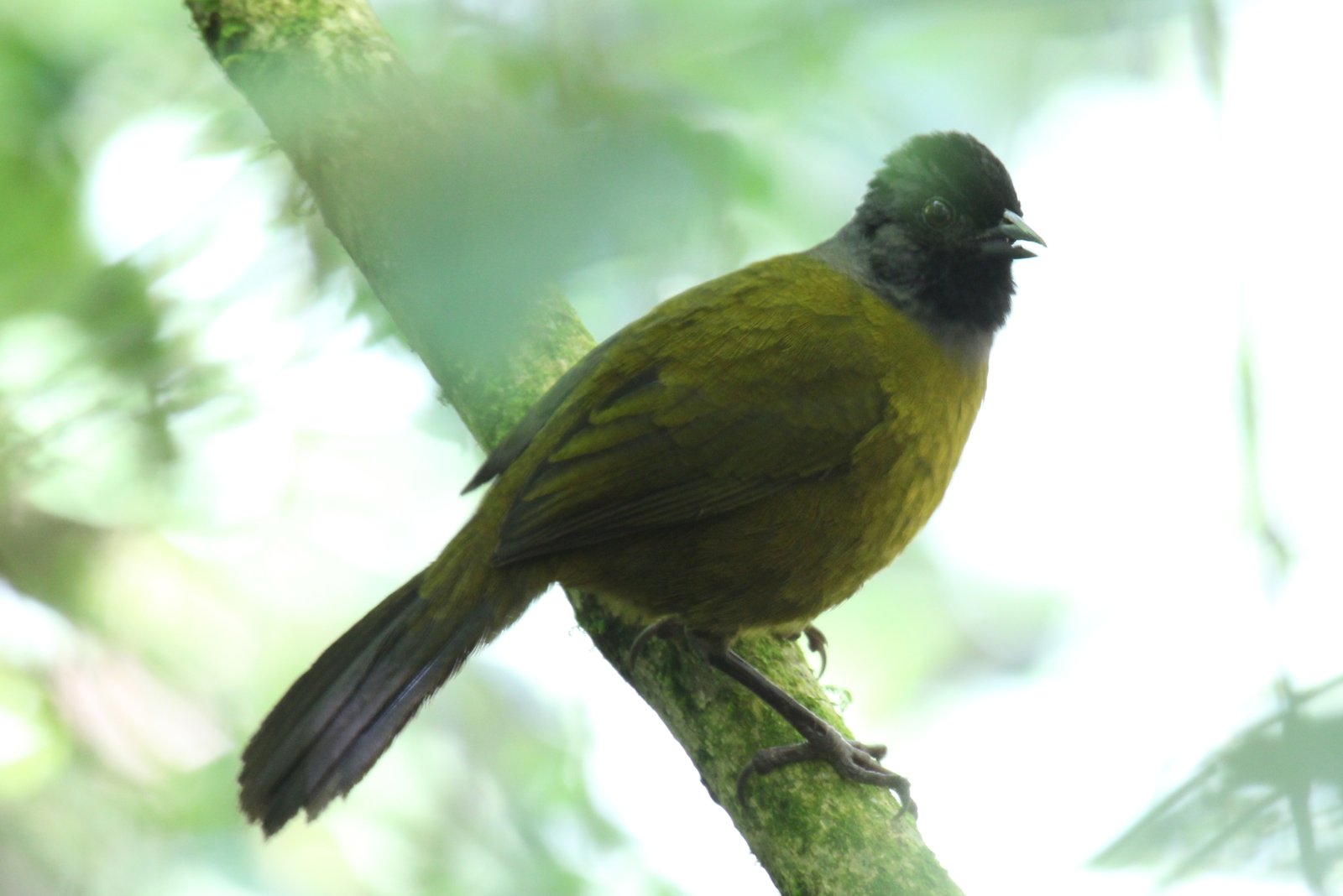
The Large-footed Finch is a large, stocky brushfinch of the high mountains of Costa Rica and western Panama. It lives on the ground in dense bamboo thickets and forest edges and turns over leaf litter by scratching backwards with both feet at once. The species occurs only in the guide area.
Voice
The call is a high, thin tseet. The song is a varied series of clear whistles and short trills, often given at dusk or dawn from dense cover.
Recording: Daniel Lane — CC BY-NC-SA 3.0 · shortened to the first 60 s, mono · xeno-canto
Identification
19–21 cm. Large and heavily built, with long, strong dark legs and big feet. Forehead, face and throat black; crown and nape grey. Upperparts olive-green, wings and tail dark olive. Underparts olive-grey with a yellowish tinge, flanks and undertail coverts warm olive-brown. Bill conical and black, eye dark. The sexes are alike; juveniles are duller, with dark streaks below.
Confusion species
Yellow-thighed Brushfinch Atlapetes tibialis lives in the same mountains but is smaller and slimmer, mostly slate-grey to blackish, with yellow thighs. Chestnut-capped Brushfinch Arremon brunneinucha has a chestnut crown and a white throat. Costa Rican Brushfinch Arremon costaricensis has a black head with grey stripes and a white throat. Volcano Junco Junco vulcani of the highest peaks is smaller and greyish brown, with a pink bill and yellow eye.
Habitat
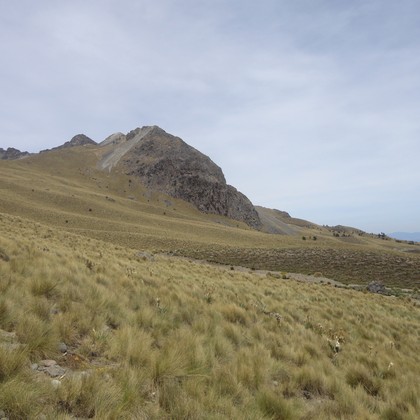
Undergrowth of oak forest and montane rainforest above about 2150 m, especially dense bamboo (Chusquea), forest edges, rough clearings and scrub at the edge of the páramo up to about 3400 m. It searches the ground for seeds, insects and small fruits. The nest is a cup placed low in dense scrub or bamboo.
Where the bird is most at home, classified by the vegetation units of Mexico and Central America.

Range and movements
Endemic to the guide area: high mountains of Costa Rica (Cordillera Central and Cordillera de Talamanca) and adjacent western Panama (Chiriquí, up to Volcán Barú).
- Resident
- dark = core range, pale = thinly spread
How and when to look
Best found along bamboo and scrub edges on Cerro de la Muerte in Costa Rica, especially early in the morning, when it comes out of cover along road verges and in clearings; the rustling of scratching birds in the litter often gives it away.
Conservation status
Not threatened (LC). Small range, but locally fairly common and largely within protected areas.
Scientific name
Pezopetes capitalis | Cabanis, 1861
Cabanis described the species in 1861 and placed it straight away in the genus where it still stands. He introduced the genus Pezopetes in that same work. Pezopetes is Greek, from pezos 'on foot' and petēs 'flier': a bird that mainly walks and scratches on the ground. capitalis is Latin for 'of the head', from caput 'head', after the striking head pattern with black sides and rufous crown. The specimen the first description was based on came from Costa Rica.