All species › Passerines › Longspurs and snow buntings › Chestnut-collared Longspur
Position in the tree Birds Aves › Birds with a flexible palate Neognathae › All other modern birds Neoaves › Landbirds Telluraves › Falcons, parrots and passerines Australaves › Falcons and passerines Eufalconimorphae › Parrots and passerines Psittacopasserae
Chestnut-collared Longspur | Calcarius ornatus
Roodhalsgors | Escribano collar castaño
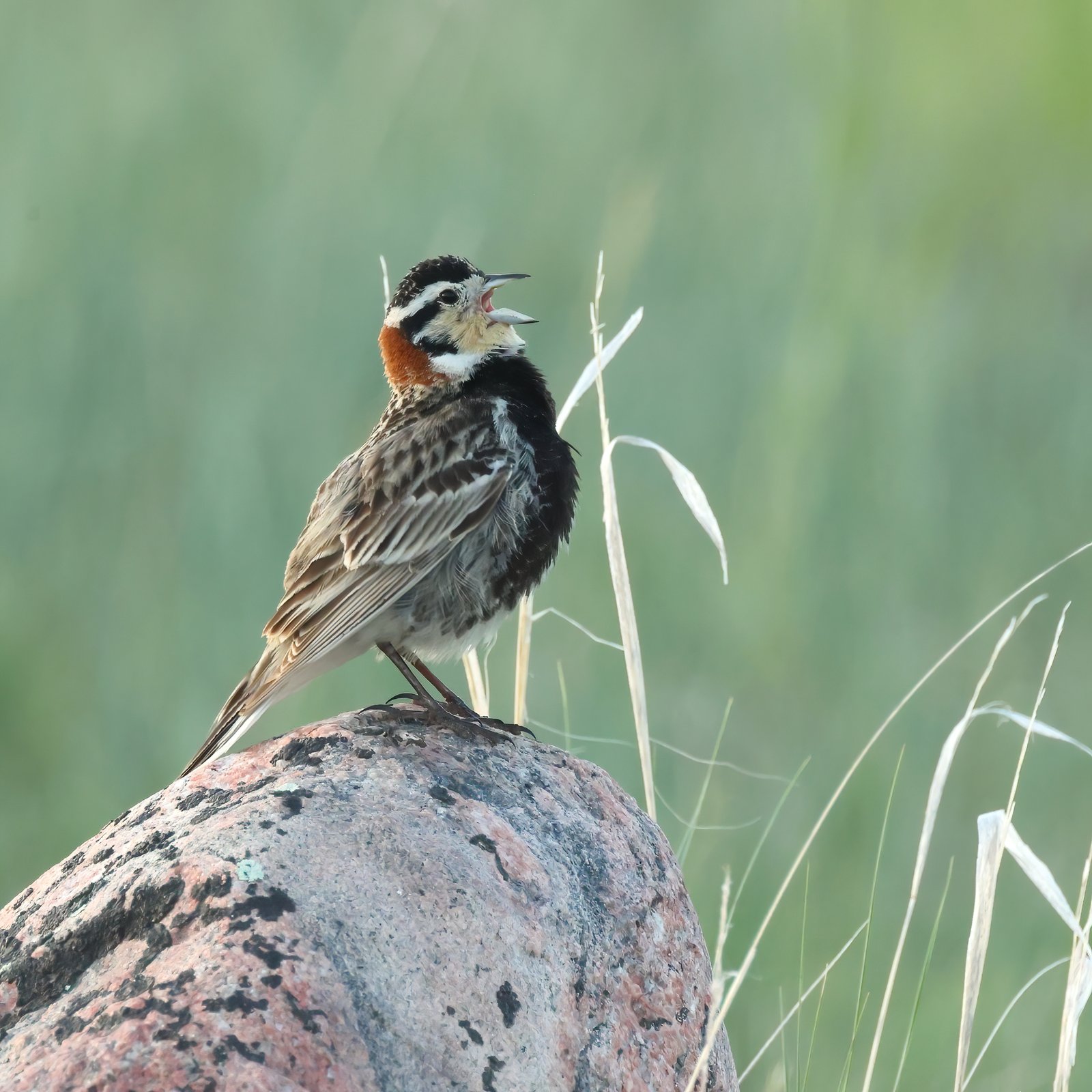
The Chestnut-collared Longspur is the smallest longspur, a breeder of the mixed-grass prairies of North America. The breeding male has a black belly and a chestnut nape. In the guide area it is a winter visitor to the grasslands of northern Mexico, where a large part of the world population winters.
Voice
In flight a distinctive, rolling kiddle-kiddle, often heard from flocks. The song, on the breeding grounds, is a short, clear and twittering phrase.
Recording: Matt Wistrand — CC BY-NC-SA 4.0 · converted to mono · xeno-canto
Identification
13–15 cm. Small, with a fairly small, pointed bill. In winter plumage dull buffy brown with fine streaks, a pale, plain head and pale underparts; males often already show traces of a chestnut nape and a dark belly. The tail is white with a dark triangle at the tip, conspicuous mainly on landing and in flight. The breeding male has a black crown, a black-and-white face pattern, a yellow throat, a chestnut nape and a black breast and belly.
Confusion species
Thick-billed Longspur Rhynchophanes mccownii is larger, has a thicker bill and a tail with a black inverted T. Lapland Longspur Calcarius lapponicus has a dark tail with white on the outer feathers and a rufous wing panel. Vesper Sparrow Pooecetes gramineus and Grasshopper Sparrow Ammodramus savannarum have little or no white in the centre of the tail.
Habitat
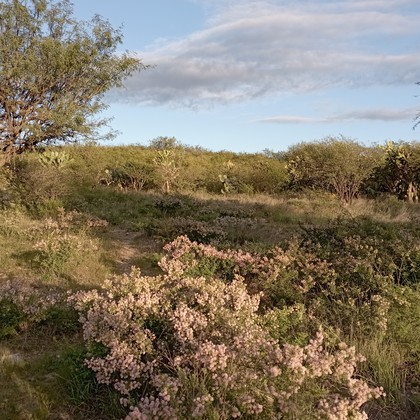
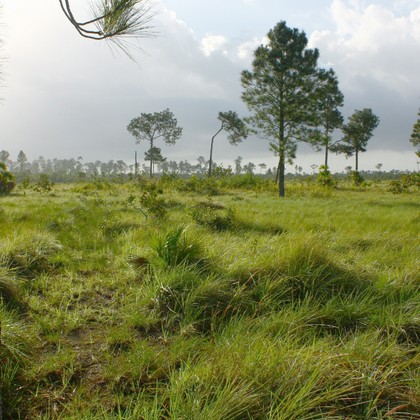
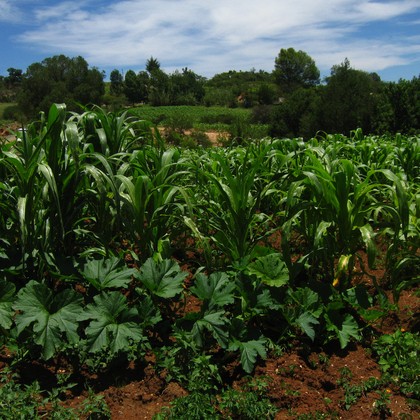
In winter plateau grassland with medium-height grass, semi-desert grassland, pastures and fallow fields. It forages on the ground for seeds in flocks, sometimes hundreds of birds, often with other grassland birds. It avoids very bare ground more than Thick-billed Longspur.
Where the bird is most at home, classified by the vegetation units of Mexico and Central America.

Range and movements
Breeds in the mixed-grass and shortgrass prairies of southern Canada and the northern Great Plains of the United States. Winters in the southern Great Plains, the south-western United States and northern Mexico, mainly on the grasslands of Chihuahua, Durango, Coahuila and Zacatecas, more scarcely in Sonora, Nuevo León and south to San Luis Potosí.
- Winter visitor (c. Oct–Mar)
- dark = core range, pale = thinly spread
How and when to look
Look for it on the grasslands of the Chihuahuan Desert, for example around Janos in Chihuahua; flushed flocks give themselves away by the rolling call and the tail pattern.
Conservation status
Vulnerable (VU). The world population has declined sharply over a few decades through conversion of prairie to cropland, both on the breeding grounds and in the wintering areas of northern Mexico, where grasslands are disappearing rapidly.
Scientific name
Calcarius ornatus | (Townsend, 1837)
Townsend described the species in 1837 as Plectrophanes ornata; because it was later moved to another genus, the author and year stand in brackets. The genus Calcarius was introduced in 1802 by Bechstein. Calcarius is from Latin calcaria 'spurs', after the long claw on the hind toe. ornatus is Latin for 'adorned', after the male's colourful breeding plumage with its chestnut nape. The specimen the first description was based on came from Platte River, western Nebraska (USA).