All species › Waders, gulls and terns › Skimmers, noddies, terns and gulls › Grey Gull
Position in the tree Birds Aves › Birds with a flexible palate Neognathae › All other modern birds Neoaves › Birds of the elements Elementaves › Cranes and waders Gruimorphae
Grey Gull | Leucophaeus modestus
Grijze meeuw | Gaviota gris
The Grey Gull is a gull of the cold Humboldt Current along the west coast of South America, and a vagrant in the guide area, not a native species. It breeds in a place that is exceptional for a gull: in colonies in the middle of the Atacama Desert, tens of kilometres from the sea, and the adults fly back and forth to the coast every day to feed. Only a few records are known here.
Voice
A nasal, mewing kwee-ah and short, hoarse calls; fairly silent away from the colonies.
Recording: Scott Olmstead — CC BY-NC-SA 4.0 · converted to mono · xeno-canto
Identification
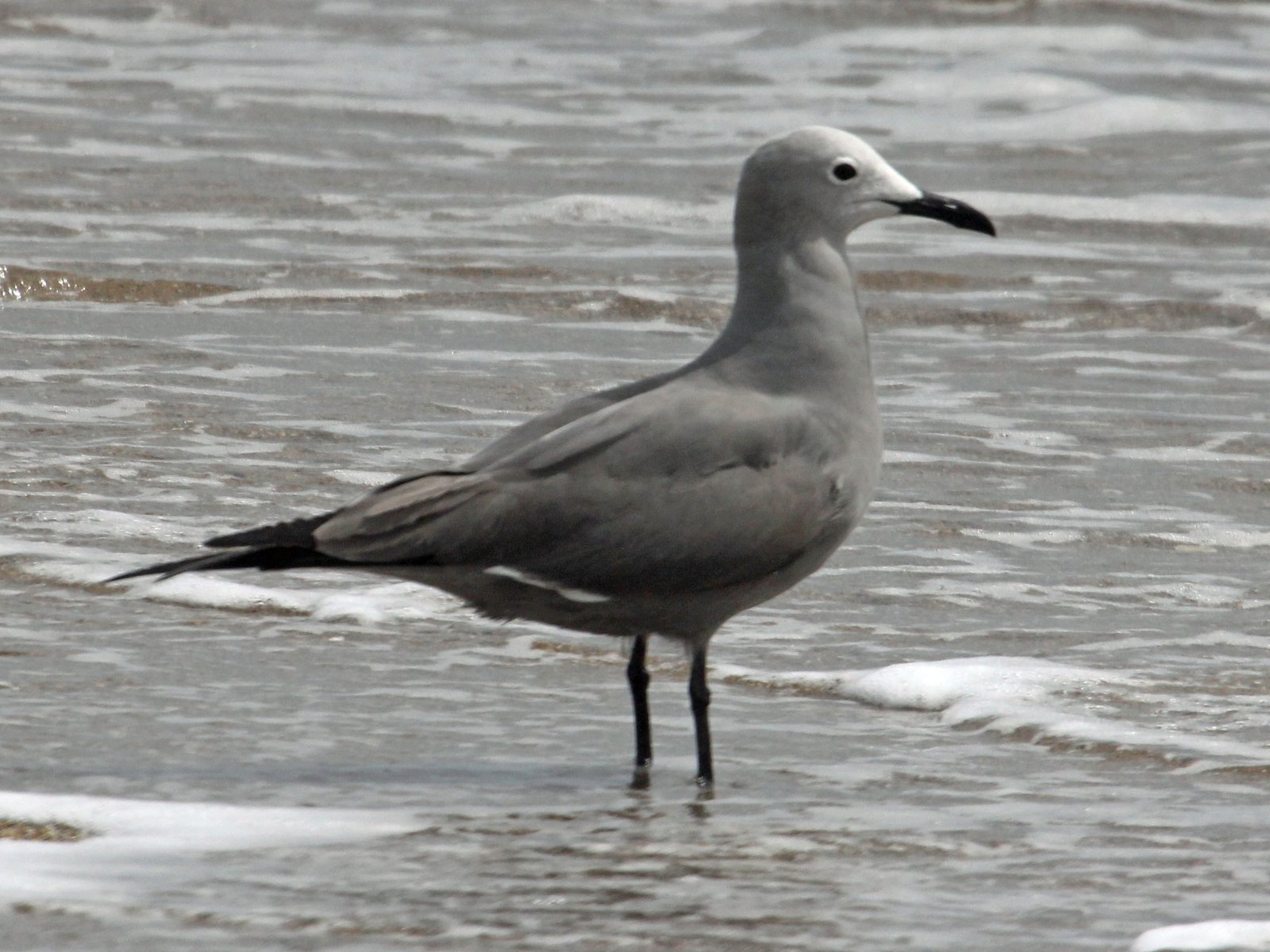
43–46 cm, a medium-sized gull that is almost entirely grey, with a black bill and black legs. Breeding adults have a pale, whitish head that contrasts sharply with the grey body; outside the breeding season the head is brownish grey. The wings are dark grey with blackish primaries and a broad white trailing edge to the secondaries, and the tail is grey with a black band and a white tip. Juveniles are plain greyish brown with pale fringes to the upperpart feathers and a dark tail.
Confusion species
Heermann's Gull Larus heermanni is also dark grey, but has a red bill with a black tip and a black tail with a white tip; it lives in north-western Mexico and occurs only exceptionally in the south of the guide area. Juvenile Laughing Gulls Leucophaeus atricilla and Franklin's Gulls Leucophaeus pipixcan have a white rump, a white belly and a pale tail with a black terminal band.
Habitat
Sandy beaches with surf, mudflats and inshore waters. It walks in flocks along the swash zone, catching small crabs and other invertebrates left by the retreating water.
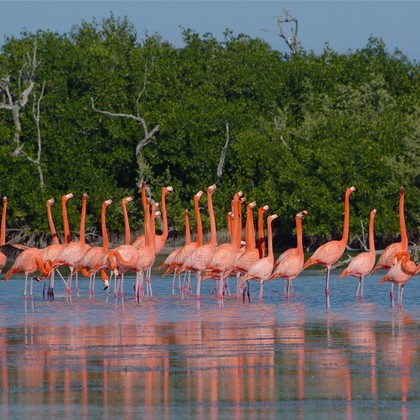
Where the bird is most at home, classified by the vegetation units of Mexico and Central America.


Range and movements
A small number of records in the guide area, on the Pacific coast of Costa Rica and Panama. Outside the guide area the species breeds in the desert of northern Chile and possibly southern Peru, and lives along the coast from Ecuador to central Chile.
How and when to look
Flocks of gulls on sandy beaches and mudflats on the Pacific coast of Panama offer the best chance. The all-grey body with black bill and legs is the best feature, even at a distance.
Conservation status
Not threatened globally. The breeding colonies in the desert are vulnerable to disturbance and to the construction of roads and mines. In the guide area a vagrant with no regular presence.
Scientific name
Leucophaeus modestus | (Tschudi, 1843)
Tschudi described the species in 1843 as Larus modestus; because it was later moved to another genus, the author and year stand in brackets. The genus Leucophaeus was introduced in 1855 by Bruch. Leucophaeus is Ancient Greek, from leukos 'white' and phaios 'dusky'. modestus is Latin for 'modest, plain', after the sober grey plumage. The specimen the first description was based on came from Lurín, south of Lima, Peru.