All species › Waders, gulls and terns › Skimmers, noddies, terns and gulls › Kelp Gull
Position in the tree Birds Aves › Birds with a flexible palate Neognathae › All other modern birds Neoaves › Birds of the elements Elementaves › Cranes and waders Gruimorphae
Kelp Gull | Larus dominicanus
Kelpmeeuw | Gaviota dominicana
The Kelp Gull is the large black-backed gull of the southern hemisphere, with a wide range along the coasts of South America, southern Africa, Australia and New Zealand and on subantarctic islands. In the guide area it is a vagrant, but the number of records is increasing. Some birds stay at the same site for a long time, and Kelp Gulls have been seen on the north coast of Yucatán since the 1990s.
Voice
A low, hoarse kyoo-kyoo and a long call of repeated laughing notes, lower than that of American Herring Gull.
Recording: African Bioacoustics Community — CC BY-NC-SA 4.0 · converted to mono · xeno-canto
Identification
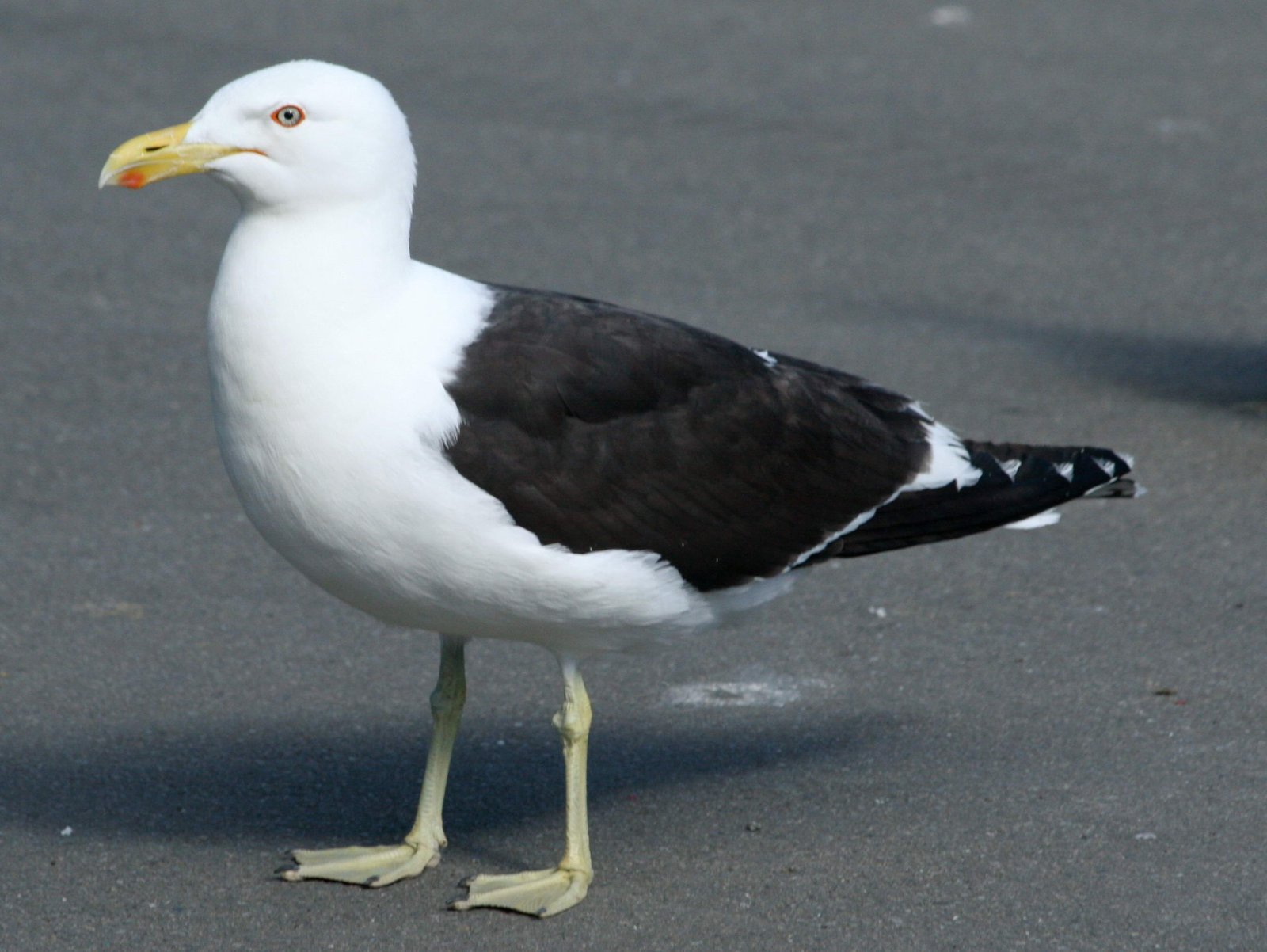
54–65 cm, a large, heavy gull with a thick yellow bill with a red spot, greenish-yellow to olive legs and a pale to dark eye. Adults have a white head and white underparts and a blackish mantle and wings, with a broad white trailing edge and little white in the wingtip, usually a single small white spot. The head stays almost white outside the breeding season as well. Juveniles are dark grey-brown with a black bill and acquire adult plumage in three to four years.
Confusion species
Lesser Black-backed Gull Larus fuscus is slimmer, with longer wings, bright yellow legs and a brown-streaked head in winter; the mantle is usually less black. Western Gull Larus occidentalis has pink legs and a greyer mantle, and Yellow-footed Gull Larus livens bright yellow legs; in the guide area both live mainly in north-western Mexico. Juveniles closely resemble juvenile American Herring Gulls Larus smithsonianus, and hybrids between the two species are known.
Habitat
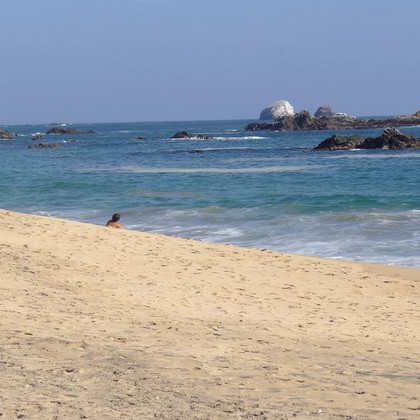
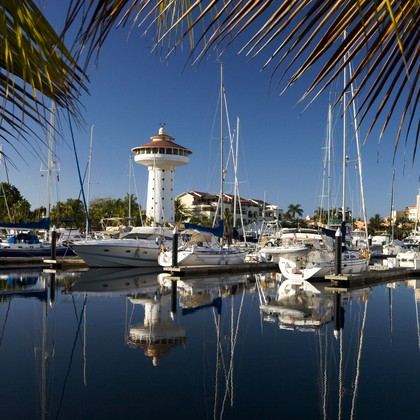
Sandy beaches, lagoons and fishing harbours, often among other gulls at fishing boats and refuse. In its own range also rocky coasts and inland waters.
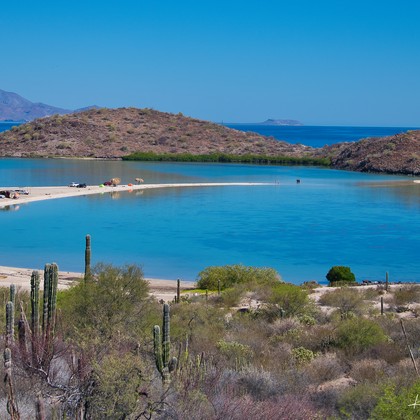
Where the bird is most at home, classified by the vegetation units of Mexico and Central America.

Range and movements
Most records come from the north coast of Yucatán, around Progreso, and from the Pacific coast of Panama, especially around the Bay of Panama. Also a few records in Tamaulipas and Sinaloa and on the Pacific coast of Central America, from El Salvador to Costa Rica. Outside the guide area the species breeds along the coasts of South America north to Peru and southern Brazil, in southern Africa, Australia and New Zealand and on subantarctic islands.
How and when to look
The harbours and beaches around Progreso in Yucatán and the coast near Panama City offer the best chance. A large gull with a blackish mantle and greenish-yellow legs among other gulls is worth a closer look.
Conservation status
Not threatened globally. The population is very large and increasing in many places. In the guide area a vagrant with no breeding population.
Scientific name
Larus dominicanus | Lichtenstein, 1823
Lichtenstein described the species in 1823 and placed it straight away in the genus where it still stands. The genus Larus was introduced in 1758 by Linnaeus. Larus is Latin, from Ancient Greek laros, and appears to have referred to a gull or another large seabird. dominicanus refers to the Dominican friars, whose black-and-white habit recalls this gull's black back and white head and underparts. The specimen the first description was based on came from coast of Brazil.