All species › Cuckoos › Cuckoos › Greater Ani
Position in the tree Birds Aves › Birds with a flexible palate Neognathae › All other modern birds Neoaves › Doves, turacos and allies Columbaves › Bustards, turacos and cuckoos Otidimorphae
Greater Ani | Crotophaga major
Grote ani | Garrapatero mayor
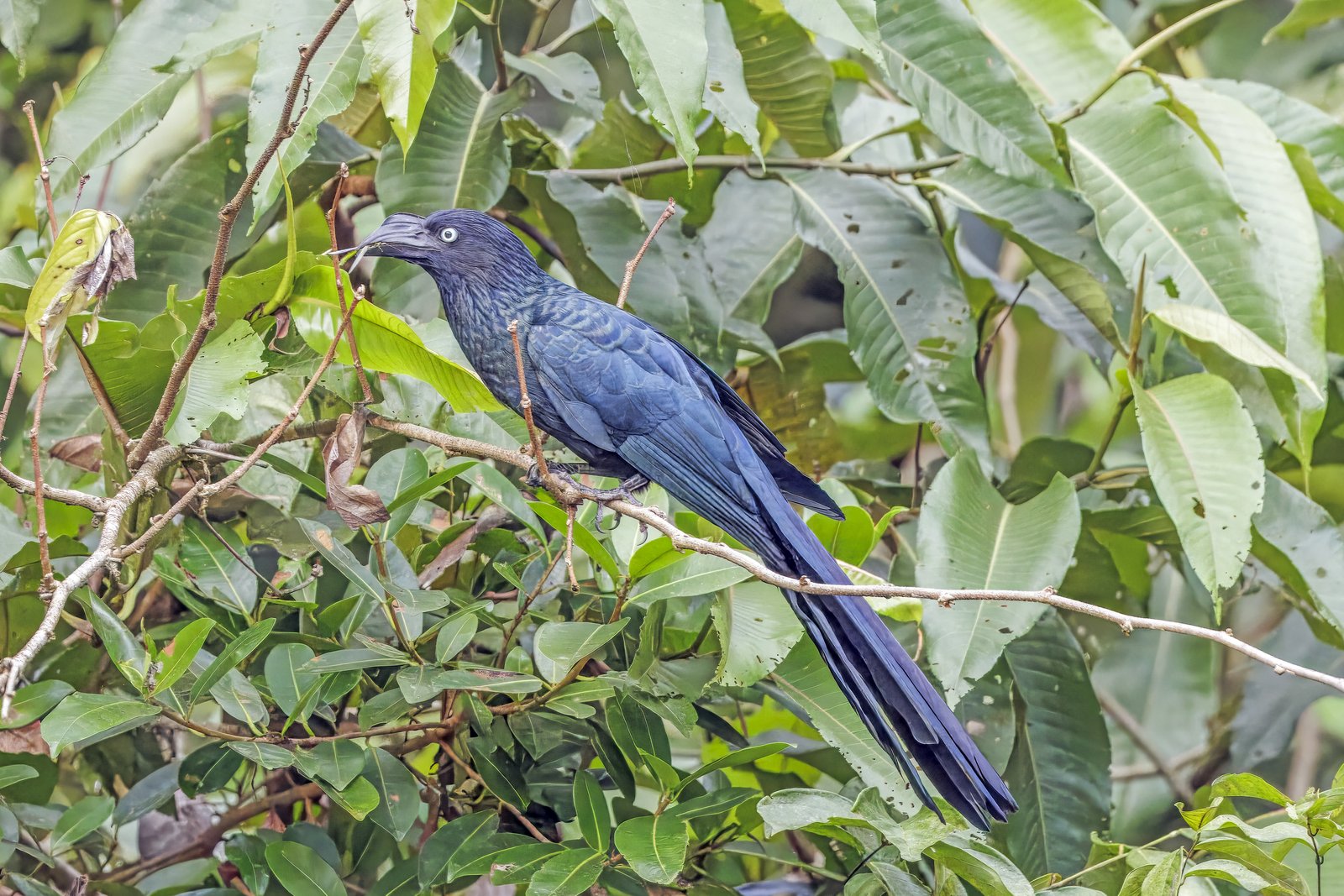
The Greater Ani is the largest of the guide area's three anis: a black, blue-glossed cuckoo with a long tail and a conspicuous pale eye, moving in noisy groups through waterside vegetation. In the guide area it occurs only in Panama, at the northern edge of a large South American range. Like all anis it breeds in groups, several pairs sharing a single nest.
Voice
Groups produce a bubbling, cackling chorus reminiscent of turkeys, including a repeated, hollow kro-koro. Also growling, hissing and buzzing sounds, and a harsh alarm when disturbed. The calls carry far over water.
Recording: Odirlei Vieira da Fonseca — CC BY-NC-SA 4.0 · shortened to the first 60 s, mono · xeno-canto
Identification
46–48 cm, about half of it tail. Entirely black with a strong blue to blue-green gloss on the head, breast and wings; the mantle feathers have bronze-green edges, so the back looks scaly in good light. The iris is white to yellowish white in adults and dark in young birds. The bill is black, deep and laterally compressed, with a high ridge on the upper mandible that runs onto the forehead. The tail is long, broad and rounded. Flight is heavy, a few beats alternating with glides, usually low over the water. The sexes are alike.
Confusion species
Smooth-billed Ani Crotophaga ani and Groove-billed Ani Crotophaga sulcirostris are much smaller, lack the blue gloss and have a dark eye. The male Great-tailed Grackle Quiscalus mexicanus also has a pale eye and a long tail, but has a thin, pointed bill and a keel-shaped tail, and walks briskly on the ground. Giant Cowbird Molothrus oryzivorus has a conical bill, a much shorter tail and a ruff of erectile neck feathers.
Habitat
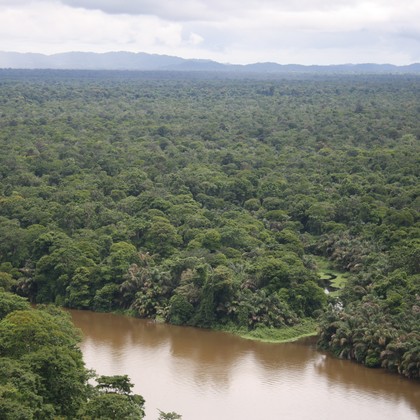
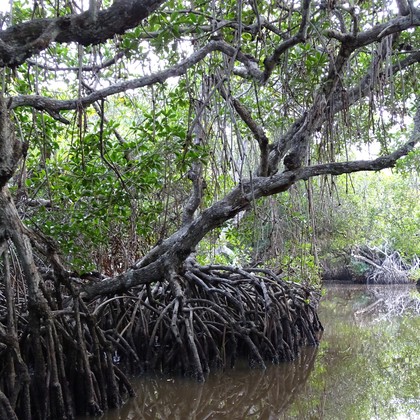
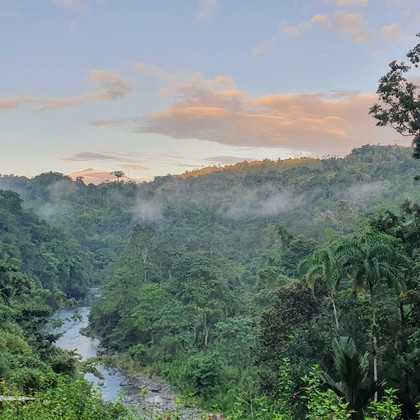
Dense scrub and woodland along rivers, lakes, marshes and mangroves in the lowlands, also gallery forest and the edges of flooded forest. Groups forage in the vegetation and on the ground at the water's edge, mainly on large insects, also other invertebrates, small lizards and frogs and some fruit. After foraging the birds often sit drying with spread wings. The nest is a cup of twigs over or close to water, in which several females lay their blue eggs; all group members incubate and feed the young.
Where the bird is most at home, classified by the vegetation units of Mexico and Central America.


Range and movements
In the guide area only in Panama, mainly in the centre and east of the country: around the Panama Canal and Gatún Lake, along the Chagres and Bayano rivers and in Darién; rare further west. Outside the guide area in the tropical lowlands of South America, from Colombia and Venezuela through the Guianas and the Amazon basin to northern Argentina.
- Resident
- dark = core range, pale = thinly spread
How and when to look
Boat trips on Gatún Lake and the Chagres offer the best chance; groups sit in the waterside vegetation and are usually first noticed by their bubbling calls. On sunny mornings they often perch with spread wings on an open branch, when the pale eye is clearly visible.
Conservation status
Least Concern. The species has a very large range in South America. In Panama it is locally common along water in the lowlands.
Scientific name
Crotophaga major | Gmelin, 1788
Gmelin described the species in 1788 and placed it straight away in the genus where it still stands. The genus Crotophaga was introduced in 1758 by Linnaeus. Crotophaga is Greek, from krotōn 'tick' and -phagos '-eating': 'tick-eater', as anis were thought to feed on ticks. major is Latin for 'greater', as it is the largest ani. The specimen the first description was based on came from Cayenne, French Guiana.