All species › Cuckoos › Cuckoos › Smooth-billed Ani
Position in the tree Birds Aves › Birds with a flexible palate Neognathae › All other modern birds Neoaves › Doves, turacos and allies Columbaves › Bustards, turacos and cuckoos Otidimorphae
Smooth-billed Ani | Crotophaga ani
Kleine ani | Garrapatero pico liso
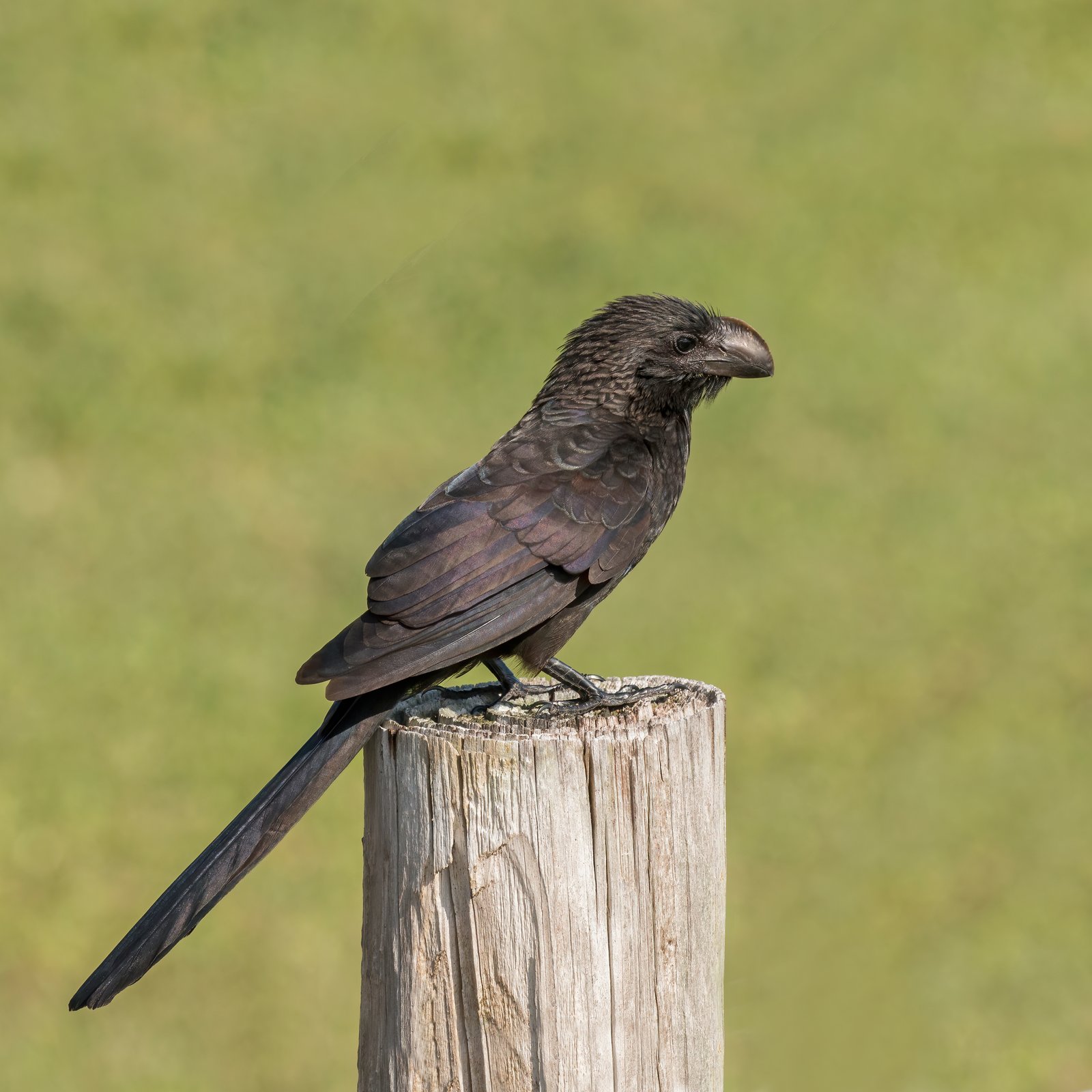
The Smooth-billed Ani is a scruffy-looking black cuckoo with a long, loosely attached tail and a deep, humped bill, moving in noisy groups through pastures and scrub. In the guide area it is the southern ani: common in Panama and in southern and eastern Costa Rica, and also found on a few Caribbean islands off Honduras and Nicaragua. Further north Groove-billed Ani takes its place.
Voice
The usual call is a plaintive, rising, somewhat whining oo-leek, repeated by group members one after another in flight and on landing. While foraging the birds keep contact with soft clucking and grunting notes; danger brings a harsh, rattling alarm.
Recording: José María Loaiza B. — CC BY-NC-SA 4.0 · converted to mono · xeno-canto
Identification
30–36 cm, about half of it tail. Entirely dull black, in good light with a bronze or purple gloss and fine scaling on the head, neck and mantle. The bill is black, very deep and laterally compressed, with a smooth, high hump on the upper mandible that rises above the line of the crown and often shows a small notch at the base; grooves are absent. The eye is dark. The wings are short and rounded, the tail long and loosely attached; it pumps the tail on landing. Flight is weak: a few quick beats alternating with glides. The sexes are alike; young birds have a lower bill without the high hump.
Confusion species
Groove-billed Ani Crotophaga sulcirostris is slightly smaller, with an evenly curved bill without a high hump and with three or four grooves on the side, and gives a two-syllable chee-ho; young birds of both species are best told by call. In Costa Rica and Panama, where both occur, Groove-billed Ani more often chooses drier country. Greater Ani Crotophaga major is much larger, blue-glossed and has a pale eye. Great-tailed Grackle Quiscalus mexicanus has a thin, pointed bill and a sleeker outline.
Habitat
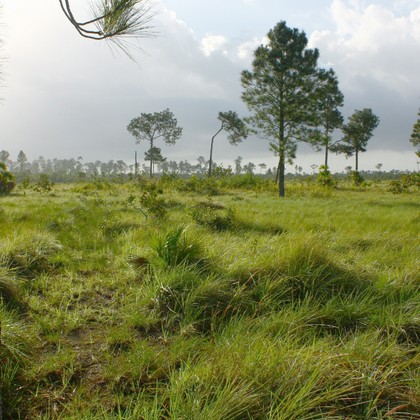
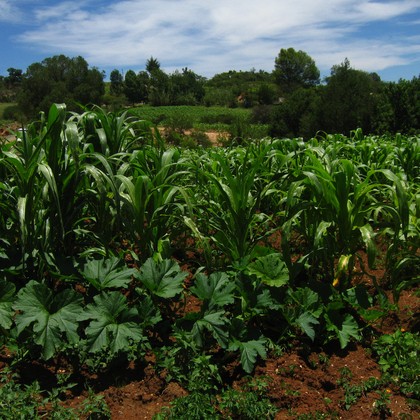
Open and semi-open country with scattered bushes and trees: cattle pastures, savanna, field edges, roadsides, rough ground, gardens and village edges, also the edges of marshes and mangroves; mainly in the lowlands, locally up to about 1500 m. Groups forage on the ground and low in vegetation, often with grazing cattle, on grasshoppers and other large insects, also lizards, frogs and some fruit. Several pairs build a large cup of twigs together in a dense bush or tree; the females lay in the same nest and all group members incubate and feed the young.
Where the bird is most at home, classified by the vegetation units of Mexico and Central America.




Range and movements
In the guide area common in the lowlands throughout Panama, including the islands, and in Costa Rica in the Caribbean lowlands and the south of the Pacific side, including the Valle del General and the Golfo Dulce area. Also on the Bay Islands and Swan Islands of Honduras and the Corn Islands of Nicaragua; elsewhere in the north of the guide area only a few records. Outside the guide area in southern Florida, on the Caribbean islands and over much of South America to northern Argentina.
- Resident
- dark = core range, pale = thinly spread
How and when to look
In Panama almost anywhere in open lowland country, especially in cattle pastures and along roadsides; small groups often perch in full view on fences, bushes and wires. The plaintive oo-leek as a group takes off gives the species away even when the birds are out of sight.
Conservation status
Least Concern. The species benefits from deforestation and cattle ranching and has been spreading in Costa Rica since the last century.
Scientific name
Crotophaga ani | Linnaeus, 1758
Linnaeus described the species in 1758 and placed it straight away in the genus where it still stands. He introduced the genus Crotophaga in that same work. Crotophaga is Greek, from krotōn 'tick' and -phagos '-eating': 'tick-eater', as anis were thought to feed on ticks. ani comes from the Tupí name Anim for this bird ('social bird'; compare Guaraní Anó). The specimen the first description was based on came from Jamaica.