All species › Passerines › New World blackbirds, troupials and allies › Great-tailed Grackle
Position in the tree Birds Aves › Birds with a flexible palate Neognathae › All other modern birds Neoaves › Landbirds Telluraves › Falcons, parrots and passerines Australaves › Falcons and passerines Eufalconimorphae › Parrots and passerines Psittacopasserae
Great-tailed Grackle | Quiscalus mexicanus
Langstaarttroepiaal | Zanate mexicano
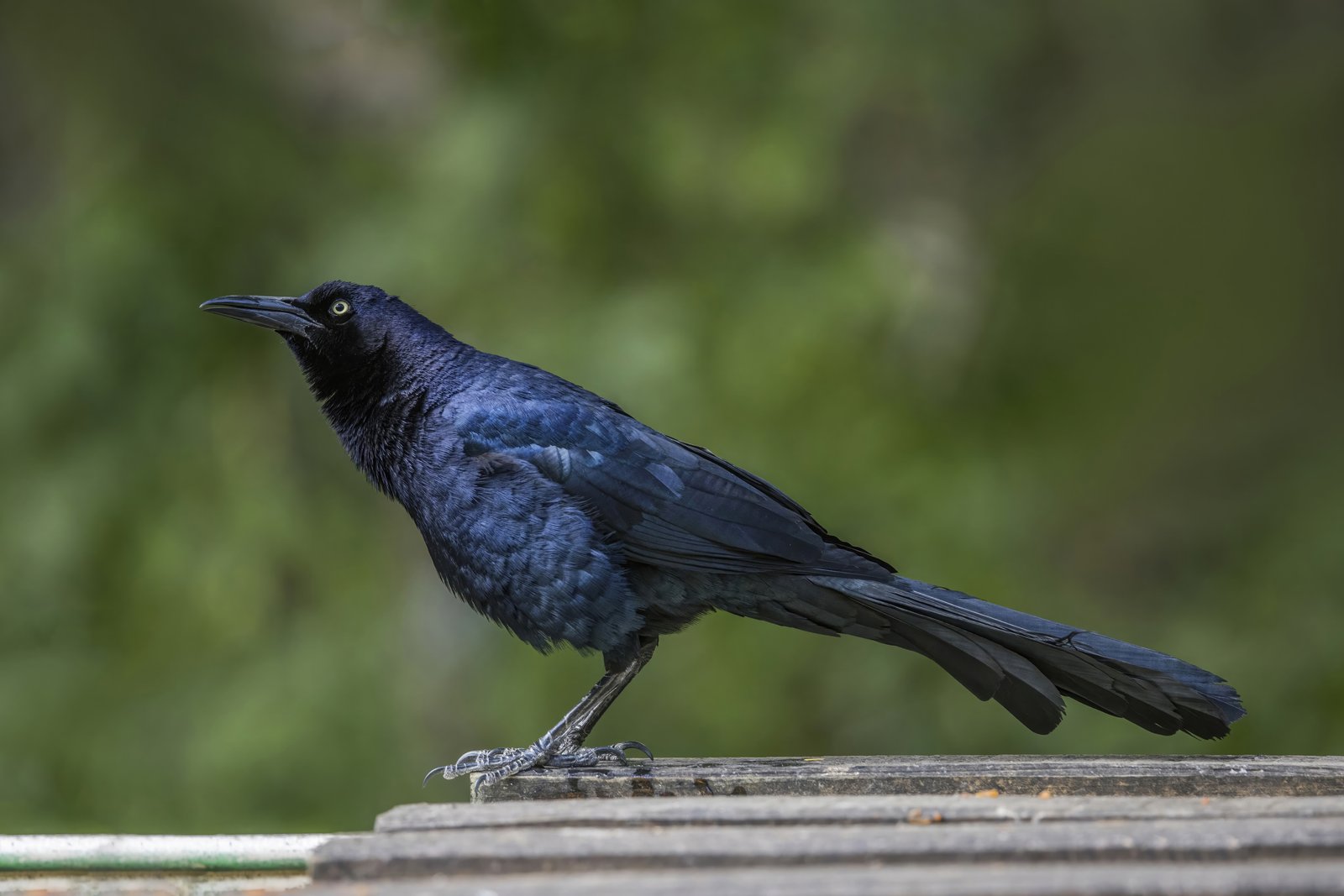
The Great-tailed Grackle is one of the best-known birds of the guide area: noisy groups populate plazas, parks, beaches and rubbish dumps from northern Mexico to Panama. Males are glossy black with a very long, keeled tail, females much smaller and brown.
Voice
Highly varied and loud: sharp rising and falling whistles, dry rattles, clacking and grating sounds and a high, piercing klee-klee. The call is a hard chack. Groups at a roost are very noisy in the evening.
Recording: Manuel Grosselet — CC BY-NC-SA 4.0 · shortened to the first 60 s, mono · xeno-canto
Identification
32–46 cm; the male is much larger than the female. Male entirely black with a strong purple-blue gloss; eye pale yellow. Bill long, heavy and pointed. Tail very long and V-shaped, keeled especially in flight and display. Female smaller, with a shorter tail: upperparts dark brown, underparts warm buffy brown with a paler throat and a pale supercilium; eye yellow. Juveniles resemble the female but have a dark eye and faint streaks below.
Confusion species
Nicaraguan Grackle Quiscalus nicaraguensis, found only in Nicaragua and northern Costa Rica, is much smaller, with a shorter tail; the female is much paler below, almost white. Common Grackle Quiscalus quiscula, a vagrant in north-eastern Mexico, is smaller, with a shorter tail and a bronze back. Melodious Blackbird Dives dives has a dark eye and a square tail. Giant Cowbird Molothrus oryzivorus has a small head with a ruff and a red eye.
Habitat
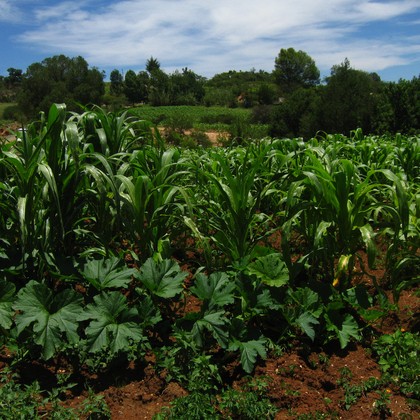
Towns and villages, plazas and parks, harbours and rubbish dumps, but also beaches, mangroves, lagoons, marshes, pastures and fields. It avoids closed forest and high mountains. It eats almost anything: insects, seeds, fruit, small vertebrates, eggs and food scraps. It breeds in colonies in trees or reeds and roosts in large groups, often in trees on plazas.
Where the bird is most at home, classified by the vegetation units of Mexico and Central America.






Range and movements
From the southern United States through Mexico and Central America to north-western South America. In the guide area common almost everywhere below the high mountains, from Baja California and northern Mexico to Panama, and also on many coastal islands. It has been expanding northwards for more than a century.
- Resident
- dark = core range, pale = thinly spread
How and when to look
Found in almost every town or village; displaying males fluff up their feathers, point the bill upwards and give a series of whistles. The size difference between males and females is then clearly visible.
Conservation status
Not threatened (LC). Very common and expanding; it benefits from towns, agriculture and forest clearance.
Scientific name
Quiscalus mexicanus | (Gmelin, 1788)
Gmelin described the species in 1788 as C[orvus] mexicanus; because it was later moved to another genus, the author and year stand in brackets. The genus Quiscalus was introduced in 1816 by Vieillot. Quiscalus goes back to Linnaeus's species name Gracula quiscula; where he got the word is uncertain, possibly from Taíno quisqueya, a name for Hispaniola. mexicanus means 'of Mexico', after the origin of the type specimen. The specimen the first description was based on came from vicinity of Veracruz, Mexico.