All species › Passerines › New World sparrows › Grasshopper Sparrow
Position in the tree Birds Aves › Birds with a flexible palate Neognathae › All other modern birds Neoaves › Landbirds Telluraves › Falcons, parrots and passerines Australaves › Falcons and passerines Eufalconimorphae › Parrots and passerines Psittacopasserae
Grasshopper Sparrow | Ammodramus savannarum
Sprinkhaangors | Gorrión chapulín
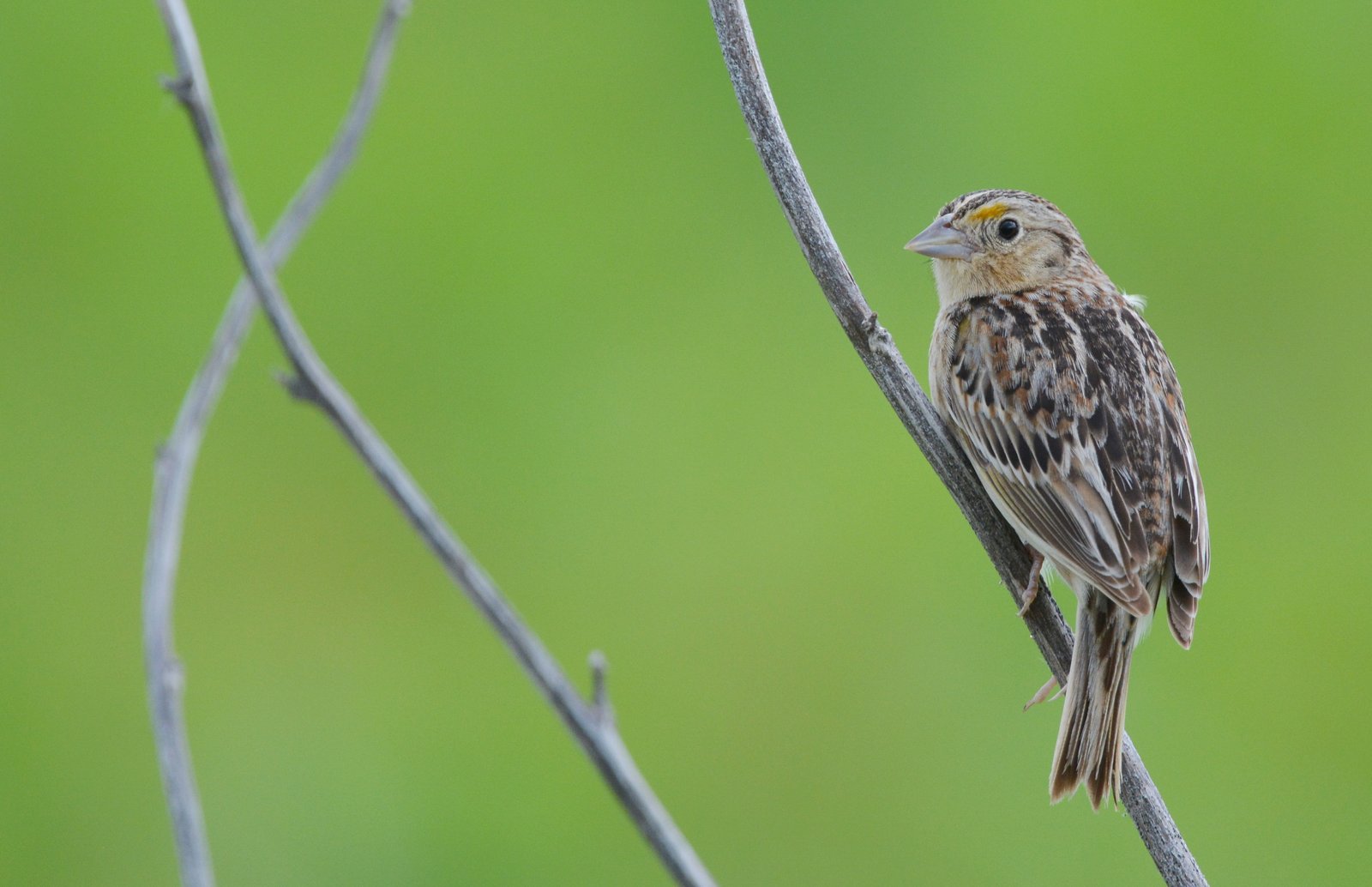
The Grasshopper Sparrow is a small, flat-headed sparrow of open grassland with a short tail and a fairly large bill. It is named after its high, buzzing song, which resembles the sound of a grasshopper. In the guide area resident birds live in scattered grasslands and pine savannas from Mexico to Panama; in winter they are joined by migrants from North America.
Voice
The song is a high, buzzing tik-tik-tssssss: one or two short ticks followed by a dry, insect-like trill that is inconspicuous. There is also a longer, twittering song. The call is a soft, high tsik.
Recording: Jeff Stewart — CC BY-NC-SA 4.0 · converted to mono · xeno-canto
Identification
11–13 cm. Stocky, with a flat head, a large conical bill and a short, pointed tail. Crown dark with a narrow pale central stripe; face plain buff with a yellow to orange spot in front of the eye and a white eye-ring. Back scaled and streaked grey and rufous. Breast and flanks of adults plain pale buff, without streaks; belly white. A small yellow patch at the bend of the wing. Juveniles have a finely streaked breast. The sexes are alike.
Confusion species
Savannah Sparrow Passerculus sandwichensis is clearly streaked on the breast and flanks, has a longer, notched tail and often yellow in the supercilium. Baird's Sparrow Centronyx bairdii, a scarce winter visitor to northern Mexico, has an ochre head with dark cheek spots and a narrow band of fine streaks across the breast. Botteri's Sparrow Peucaea botterii and Cassin's Sparrow Peucaea cassinii are larger, with a longer, rounded tail and a less flat head.
Habitat
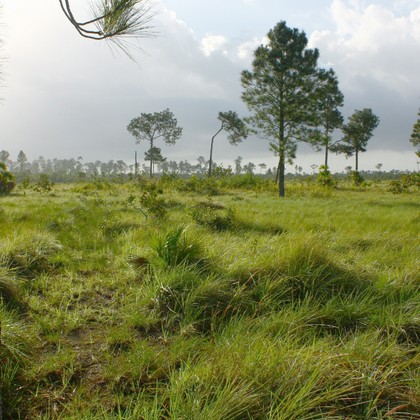
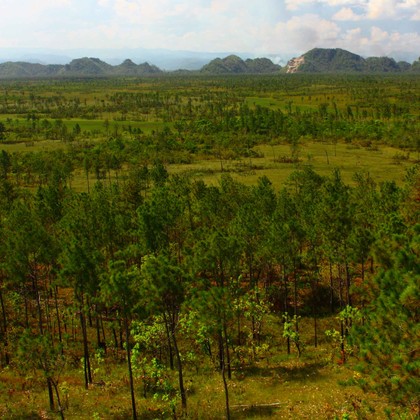
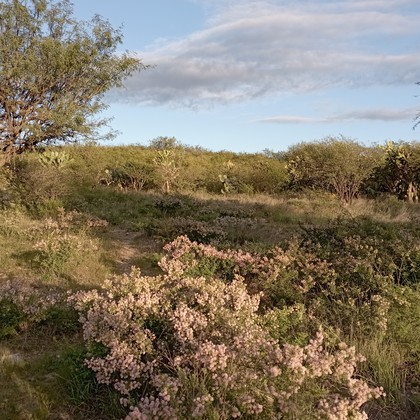
Open, fairly short grassland with scattered bushes, pine savanna and rough pasture; in winter also fallow fields, grain fields and grassy verges. It moves hidden among the grass and flies up only briefly and low. It eats insects, especially grasshoppers, and seeds.
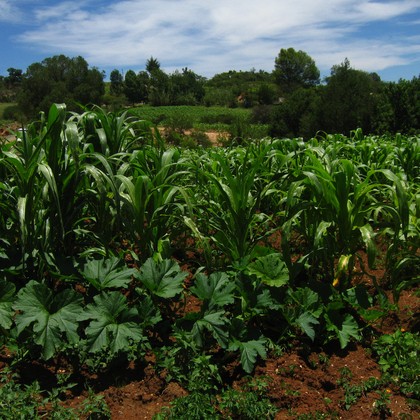
Where the bird is most at home, classified by the vegetation units of Mexico and Central America.

Range and movements
Breeds in southern Canada and much of the United States. Winters in the southern United States and in Mexico, especially in the north and along the Gulf Coast. In the guide area resident birds live locally in southern Mexico, in the pine savannas of Belize, Guatemala, Honduras and Nicaragua and in grasslands in Costa Rica and western Panama. Outside the guide area also in the Caribbean and in north-western South America.
- Resident
- Summer visitor (c. Apr–Sep)
- Winter visitor (c. Oct–Mar)
- Passage (Mar–Apr, Oct–Nov)
- dark = core range, pale = thinly spread
How and when to look
Best found in spring and early summer, when singing males perch on a grass stem, post or small bush. In winter it is seen almost only when a bird flushes briefly from underfoot.
Conservation status
Not threatened (LC). Widespread, but in North America it has declined strongly through the loss of grassland. The resident populations in the guide area are small and scattered and depend on open grassland and pine savanna.
Scientific name
Ammodramus savannarum | (Gmelin, 1789)
Gmelin described the species in 1789 as Fringilla savannarum; because it was later moved to another genus, the author and year stand in brackets. The genus Ammodramus was introduced in 1827 by Swainson. Ammodramus is Greek, from ammos 'sand' and -dromos 'runner': 'sand-runner'. savannarum is Modern Latin for 'of the savannahs', from Spanish zavana 'open, treeless plain', after its grassland habitat. The specimen the first description was based on came from Jamaica.