All species › Passerines › New World sparrows › Pirre Chlorospingus
Position in the tree Birds Aves › Birds with a flexible palate Neognathae › All other modern birds Neoaves › Landbirds Telluraves › Falcons, parrots and passerines Australaves › Falcons and passerines Eufalconimorphae › Parrots and passerines Psittacopasserae
Pirre Chlorospingus | Chlorospingus inornatus
Pirritangare | Clorospingo del Pirre
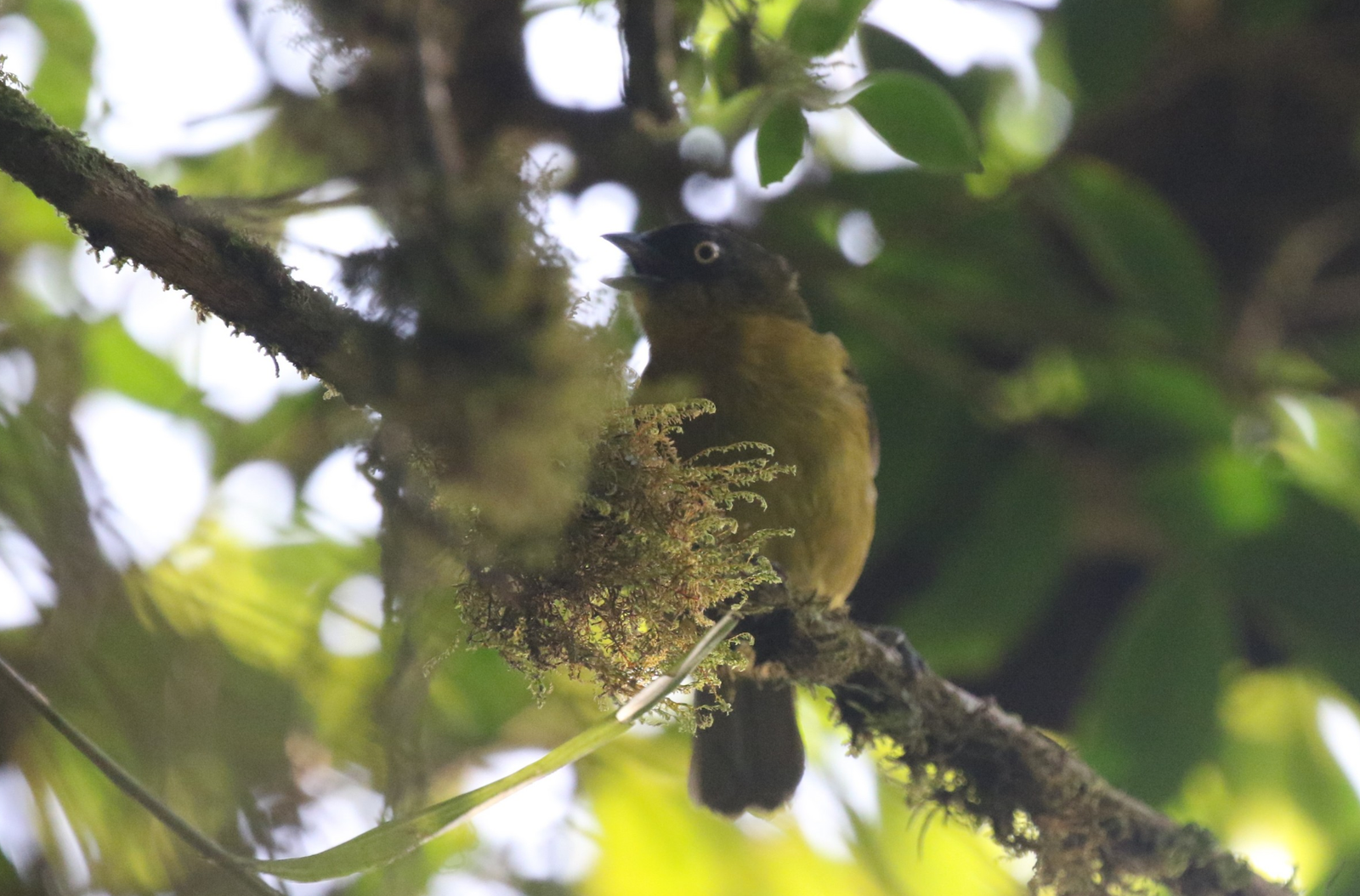
The Pirre Chlorospingus is a Chlorospingus with a dark head and yellow underparts that occurs only in the mountains of eastern Darién in Panama. It is named after Cerro Pirre, where it is best known. Little has been recorded about its habits.
Voice
Poorly described. Groups give sharp, high tsip calls, similar to those of other Chlorospingus species.
Recording: Cameron Rutt — CC BY-NC-SA 4.0 · shortened to the first 60 s, mono · xeno-canto
Identification
14–15 cm. Fairly large and sturdy. Crown and cheeks dark, sooty to blackish olive, without a white spot behind the eye; iris pale. Upperparts olive green. Throat and breast yellow to olive-yellow; belly paler yellow, flanks olive. Bill dark and fairly stout. The sexes are alike.
Confusion species
Tacarcuna Chlorospingus Chlorospingus tacarcunae, in the mountains of northern Darién and further west, has an olive, not dark, head and is slightly smaller; the two species live on different mountains, so in the field the location is the most useful guide.
Habitat
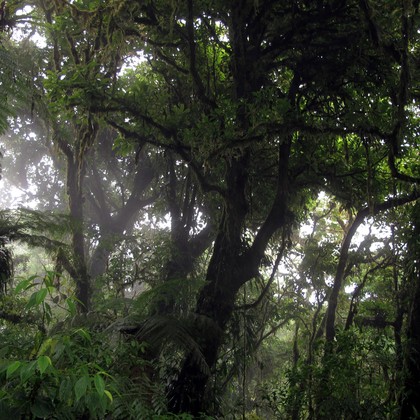
Humid montane forest and cloud forest, mainly between about 800 and 1,600 metres. It lives in small groups in the middle levels and joins mixed foraging flocks. It eats insects and small fruits.
Where the bird is most at home, classified by the vegetation units of Mexico and Central America.

Range and movements
Endemic to eastern Panama: the mountains of eastern and southern Darién, especially Cerro Pirre and the adjacent peaks of the Serranía de Pirre, and probably other isolated mountains in that area, such as Cerro Sapo.
- Resident
- dark = core range, pale = thinly spread
How and when to look
Only seen on a trip to the upper slopes of Cerro Pirre in Darién National Park; in the cloud forest near the summit it is one of the more conspicuous species in mixed foraging flocks.
Conservation status
Not threatened (LC). Very small range, but almost entirely within Darién National Park and in remote, largely undisturbed montane forest.
Scientific name
Chlorospingus inornatus | (Nelson, 1912)
Nelson described the species in 1912 as Hylospingus inornatus; because it was later moved to another genus, the author and year stand in brackets. The genus Chlorospingus was introduced in 1851 by Cabanis. Chlorospingus is Greek, from khlōros 'green' and spingos 'finch', after the olive-green upperparts. inornatus is Latin for 'unadorned', after the plain plumage without bold markings. The specimen the first description was based on came from Cerro Pirre, eastern Panama.