All species › Woodpeckers and allies › Woodpeckers › Gila Woodpecker
Position in the tree Birds Aves › Birds with a flexible palate Neognathae › All other modern birds Neoaves › Landbirds Telluraves › Raptors, owls, kingfishers and woodpeckers Afroaves › Mousebirds, rollers and woodpeckers Coraciimorphae › Trogons and cavity nesters Cavitaves › Hornbills, kingfishers and woodpeckers Picocoraciae › Kingfishers, bee-eaters and woodpeckers Picodynastornithes
Gila Woodpecker | Melanerpes uropygialis
Gilaspecht | Carpintero del desierto
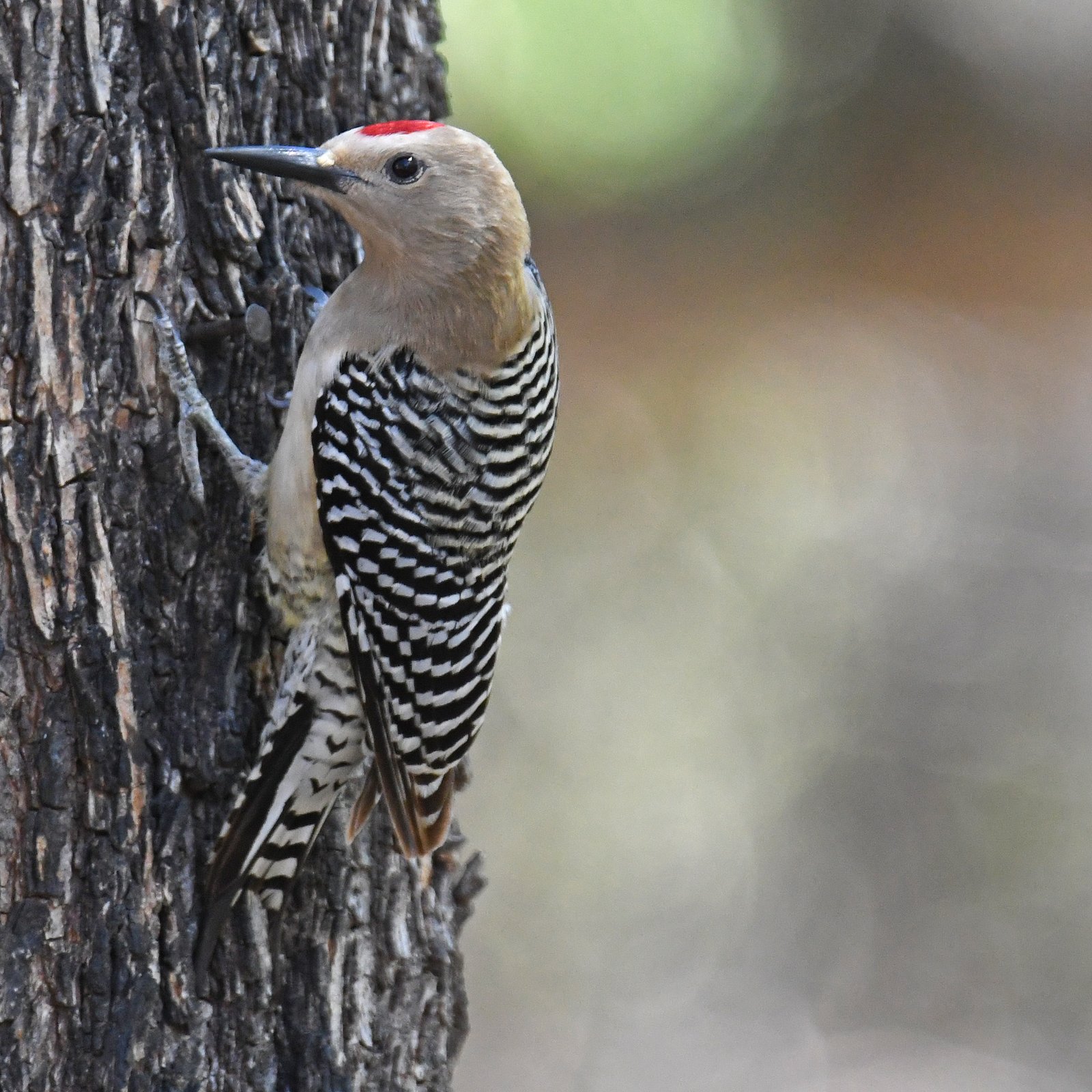
The Gila Woodpecker is the woodpecker of the Sonoran Desert and Baja California: a medium-sized, noisy bird with a finely barred black-and-white back and a plain greyish-brown head and underparts. It prefers to excavate its nest hole in a columnar cactus. In the guide area it lives in north-western Mexico.
Voice
A rolling, somewhat hoarse churrr, often from the top of a cactus or post. Also a sharp, rapidly repeated yip-yip-yip and, mainly in spring, a plaintive kee-oo, kee-oo. Drums in long, even rolls.
Recording: Pat Goltz — CC BY-NC-SA 4.0 · converted to mono · xeno-canto
Identification
20–24 cm. Head, neck and underparts plain greyish brown, the belly often washed pale yellow. Back, rump and wings finely barred black and white; the central tail feathers are also barred. The male has a small round red cap in the centre of the crown, which the female lacks. In flight a narrow white crescent at the base of the primaries. Juveniles are duller.
Confusion species
Golden-fronted Woodpecker Melanerpes aurifrons has a yellow-orange or red nape, yellow nasal tufts and black central tail feathers; in west-central Mexico the ranges meet and intermediate birds have been reported. Golden-cheeked Woodpecker Melanerpes chrysogenys has a black patch around the eye and a yellow nape. Ladder-backed Woodpecker Dryobates scalaris is smaller, with a black-and-white striped head. Gilded Flicker Colaptes chrysoides shares the cacti but is brown with a black breast band and spotted belly.
Habitat
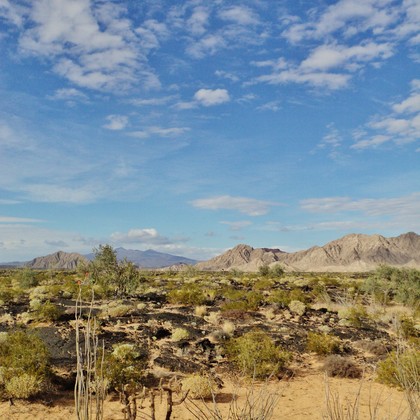
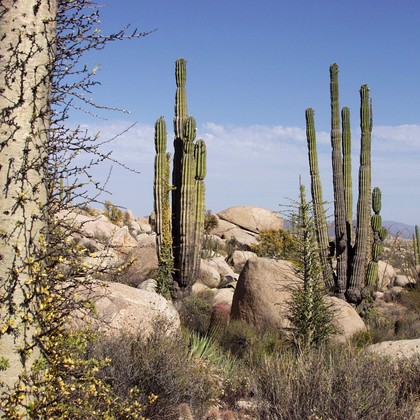
Low desert with columnar cacti such as saguaro and cardón, thorn scrub, gallery forest with cottonwood, willow and mesquite along rivers and dry washes, and further south also dry forest; mostly below about 1000 m. Also in villages and towns with palms, fruit trees and gardens.
Where the bird is most at home, classified by the vegetation units of Mexico and Central America.




Range and movements
Resident in north-western Mexico: Baja California and Baja California Sur, Sonora and Sinaloa, south into west-central Mexico (Nayarit and Jalisco). Outside the guide area in the south-western United States. Several subspecies are recognised, including cardonensis and brewsteri on the Baja California peninsula.
- Resident
- dark = core range, pale = thinly spread
How and when to look
Around Álamos in Sonora and in the cardón country around La Paz and Los Cabos in Baja California Sur. In the early morning the rolling churrr from cactus tops gives the bird away.
Conservation status
Not threatened. Common in Mexico; at the northern edge of the range numbers are declining through loss of desert and gallery forest and competition with starlings for nest holes.
Scientific name
Melanerpes uropygialis | (Baird, 1854)
Baird described the species in 1854 as Centurus uropygialis; because it was later moved to another genus, the author and year stand in brackets. The genus Melanerpes was introduced in 1832 by Swainson. Melanerpes is Greek, from melas 'black' and herpēs 'creeper': 'black creeper'. uropygialis is modern Latin, from uropygium 'rump', after the black-and-white barred rump. The specimen the first description was based on came from Bill Williams River, Arizona.